Brand Identity · Creative Strategy · Web · Marketing
American Jazz Academy
Setting the Stage
→
08
Content Strategy · Web · Social
Dole 'King of Juices'
255M Reached
→
About
Hands-on creative. Restless by design.
I'm a creative director who never stopped being a maker. Over 25 years, I've led integrated campaigns for Fortune 500 companies and built brands from the ground up, from co-founding Sensis, one of the country's leading multicultural agencies, to directing the creative vision behind Comoto's portfolio of motorcycle brands at $800M in annual revenue.
I specialize in the moments where strategy and instinct meet, where a brief becomes a belief, and a belief becomes a campaign people remember. My work spans digital, TV, print, social, experiential, and emerging platforms.
Off the clock: I shoot photographs, ride motorcycles, spin vinyl, play guitar, and cheer on Manchester United with my miniature dachshund Gus.
Creative Philosophy
"Storyteller with a passion for crafting connected experiences through branding, integrated campaigns, and design direction."
A category was surging. Honda needed a home for it.
Adventure motorcycling had become the fastest-growing segment in powersports, but Honda had no dedicated digital home to match that momentum or serve the community forming around it.
The timing was charged: Honda was preparing to release the Africa Twin, one of the most anticipated motorcycles in the brand's history. The launch needed more than a product page. It needed a world, one that could sustain nine months of anticipation before the bike even arrived.
ClientAmerican Honda Motor Company
AgencyDailey & Associates
Year2015 – 2016
Scope360° Campaign — Digital, Print, App, POP
My RoleCreative Direction, Art Direction, UI/UX, Photography
The Challenge
Build anticipation for nine months without showing your hand.
The Africa Twin wouldn't launch for nearly a year. The task was to create a teaser experience that earned return visits, without revealing the full product. Every content module had to feel like a reward. The site needed to feel alive.
The Approach
Build the world first. Let the motorcycle arrive into it.
Rather than lead with product, we led with culture. The "True Adventure" platform positioned Honda at the center of the adventure riding community through original editorial, video, and photography. Riders came for the stories, stayed for the bike.
Adventure Web Hub
"A digital home built to outlast the hype cycle of a single launch."
The site was designed as an evolving editorial platform, not a microsite. Original storytelling, video, and photography gave riders a reason to return long before the Africa Twin arrived, and long after the campaign moved on to the next chapter.
"The product details had to feel as alive as the world it launched into."
Once the Africa Twin arrived, the product page gave riders the specs, configurations, and photography they'd been waiting nine months for, presented with the same editorial craft as the rest of the hub rather than a standard spec sheet.
"The adventure didn't end when riders left the screen."
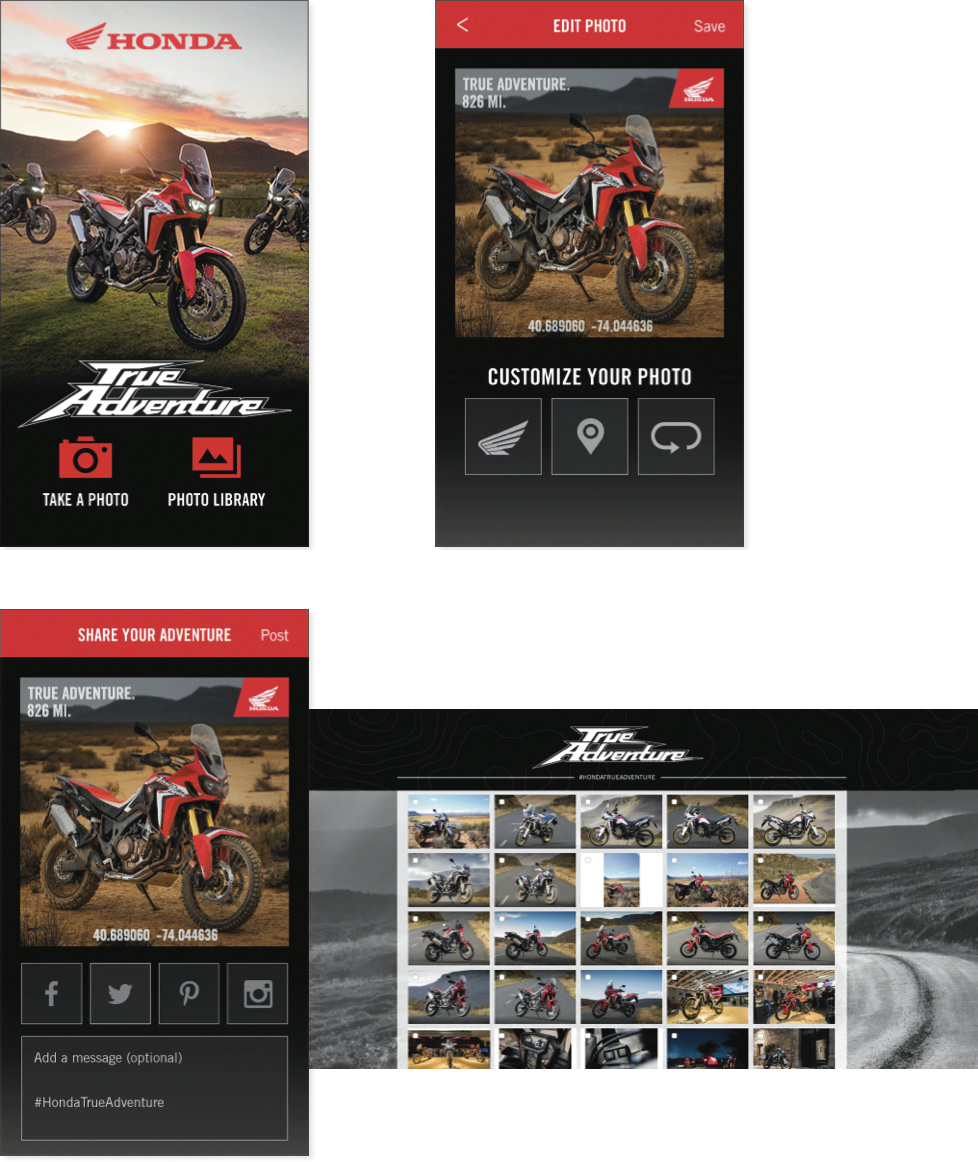
The companion iOS app let riders tag their own adventures with GPS coordinates and share them to a live community feed, turning the campaign into a platform riders carried with them on the road. It extended the "True Adventure" world beyond the website and into the rides themselves.
iOS AppGPS Adventure TaggingCommunity Feed
Print Advertising
"Print that sold a feeling before it sold a motorcycle."
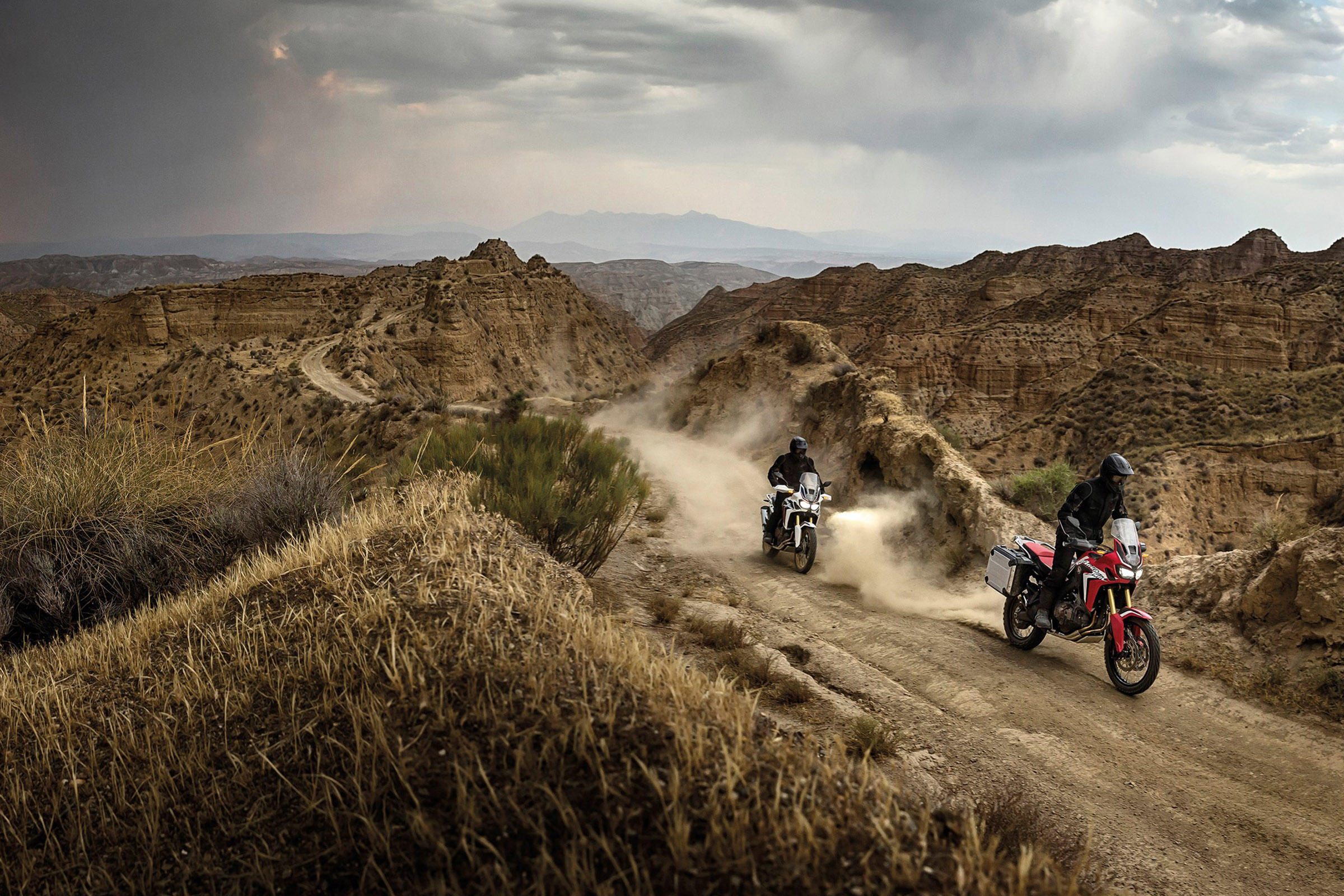
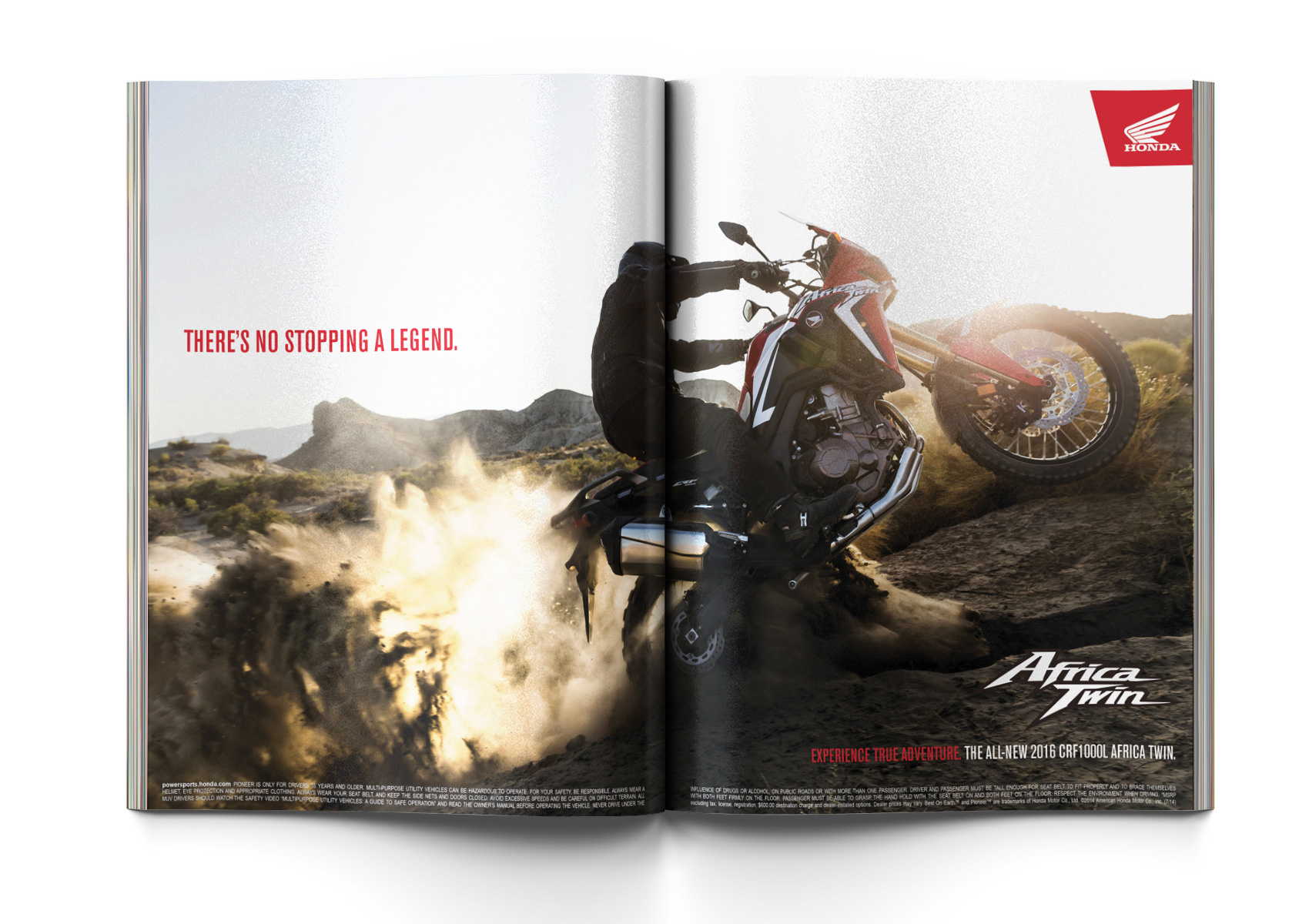
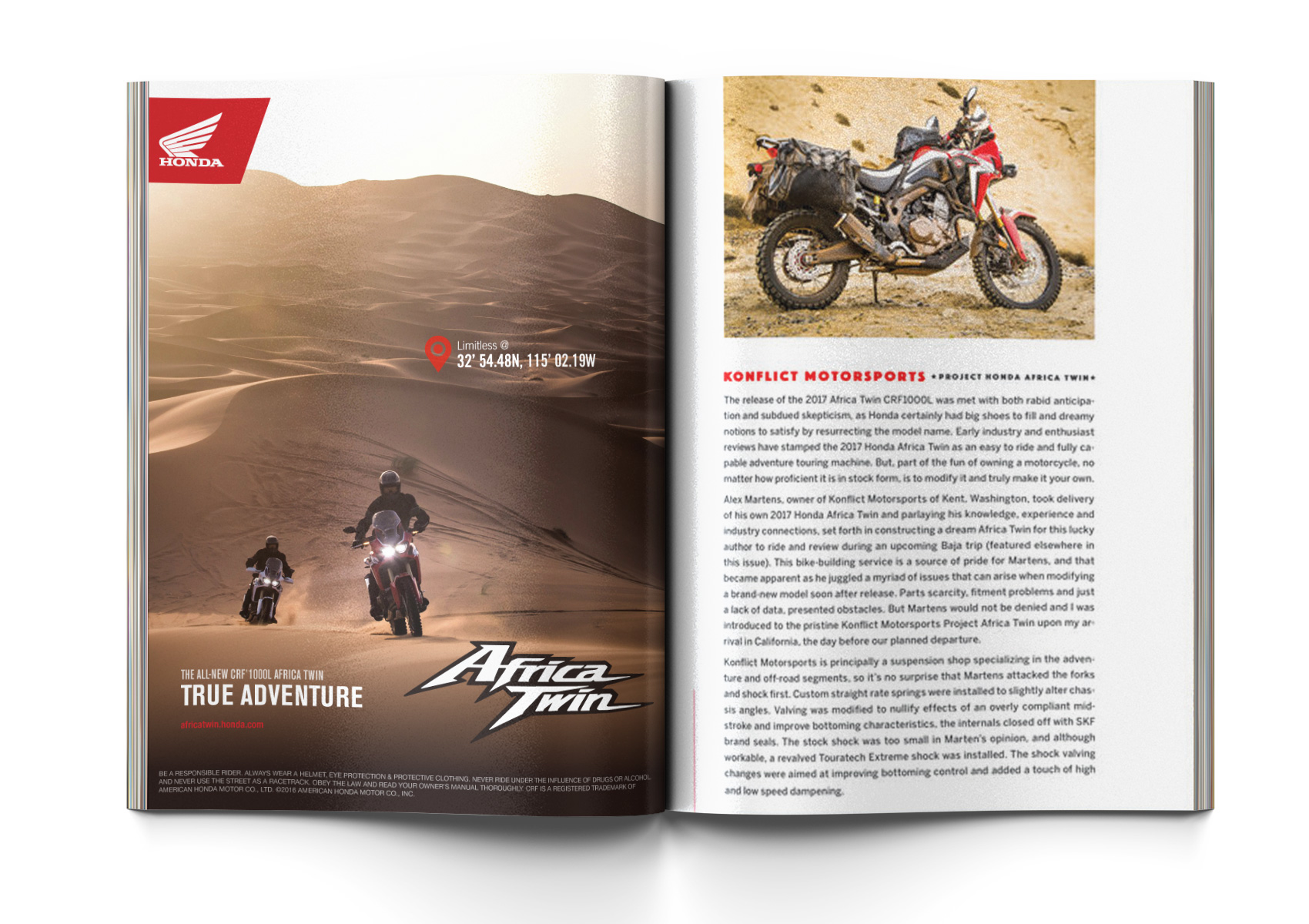
Full-page print ads anchored by dramatic landscape photography across powersports enthusiast publications.
POP & Retail
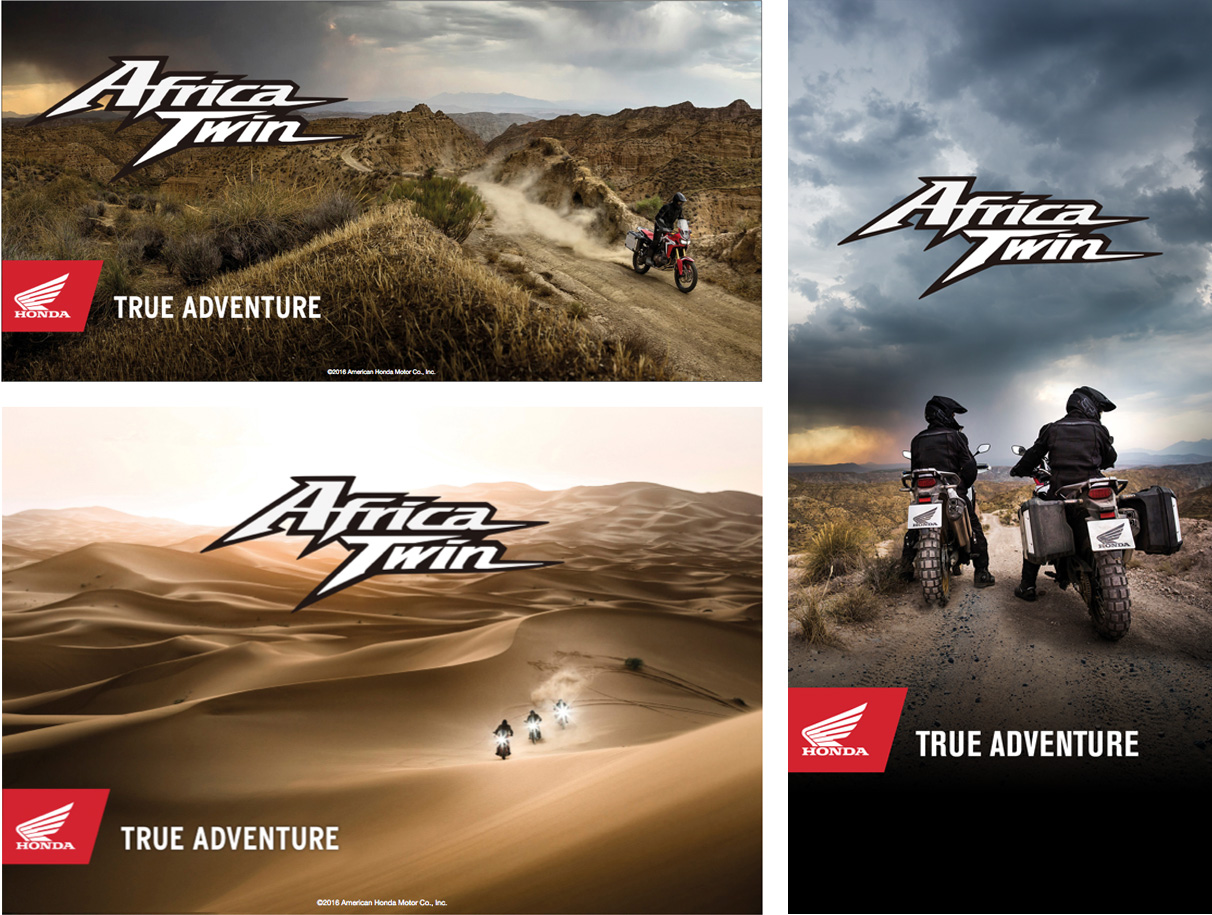
Dealership POP: Point-of-purchase posters hung throughout Honda dealerships nationwide.
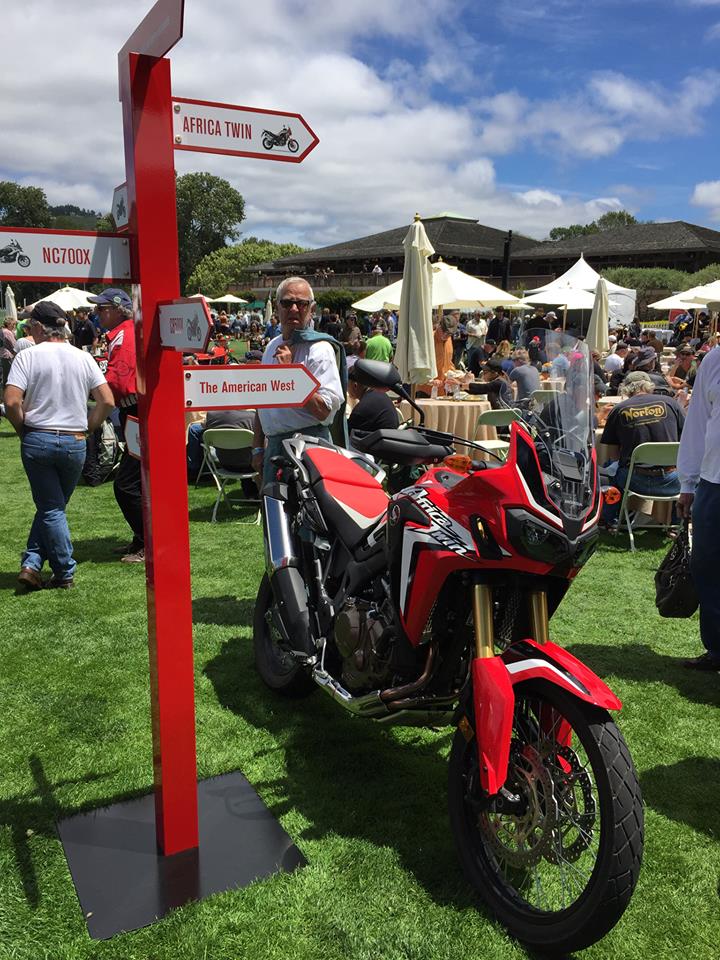
Event Signage: Large-format signage carrying the campaign into Honda's experiential activations.
Reflection
"The best campaigns don't just sell a product — they give people a reason to belong to something. True Adventure gave Honda's growing community a place to call home."
This project required orchestrating an unusually broad deliverable set: digital platform, print, POP, and a companion app, under a single unifying creative idea. The challenge was keeping the platform feeling editorial and aspirational while still driving measurable product consideration across a nine-month runway.
Tap a new, younger audience. Make history doing it.
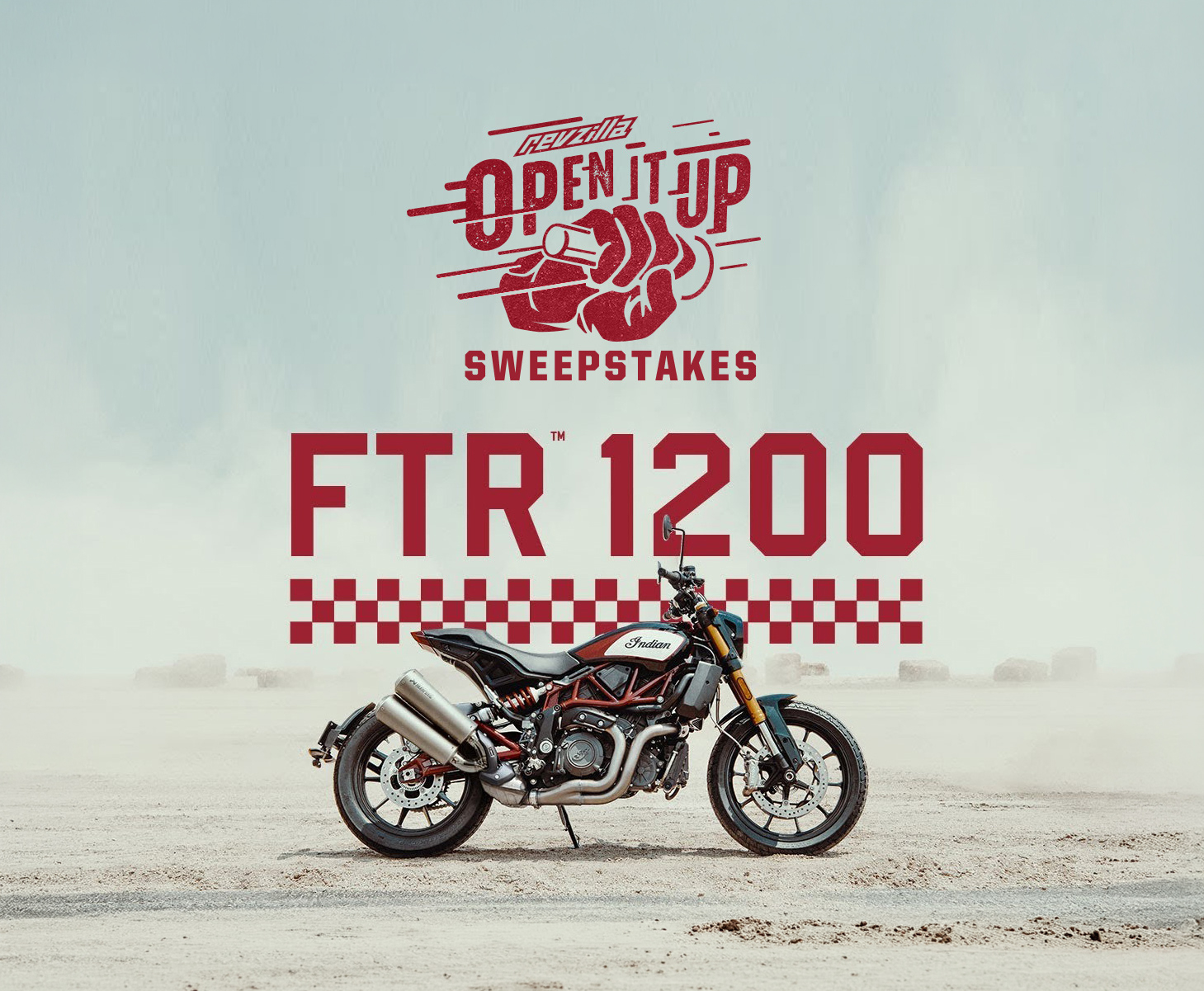
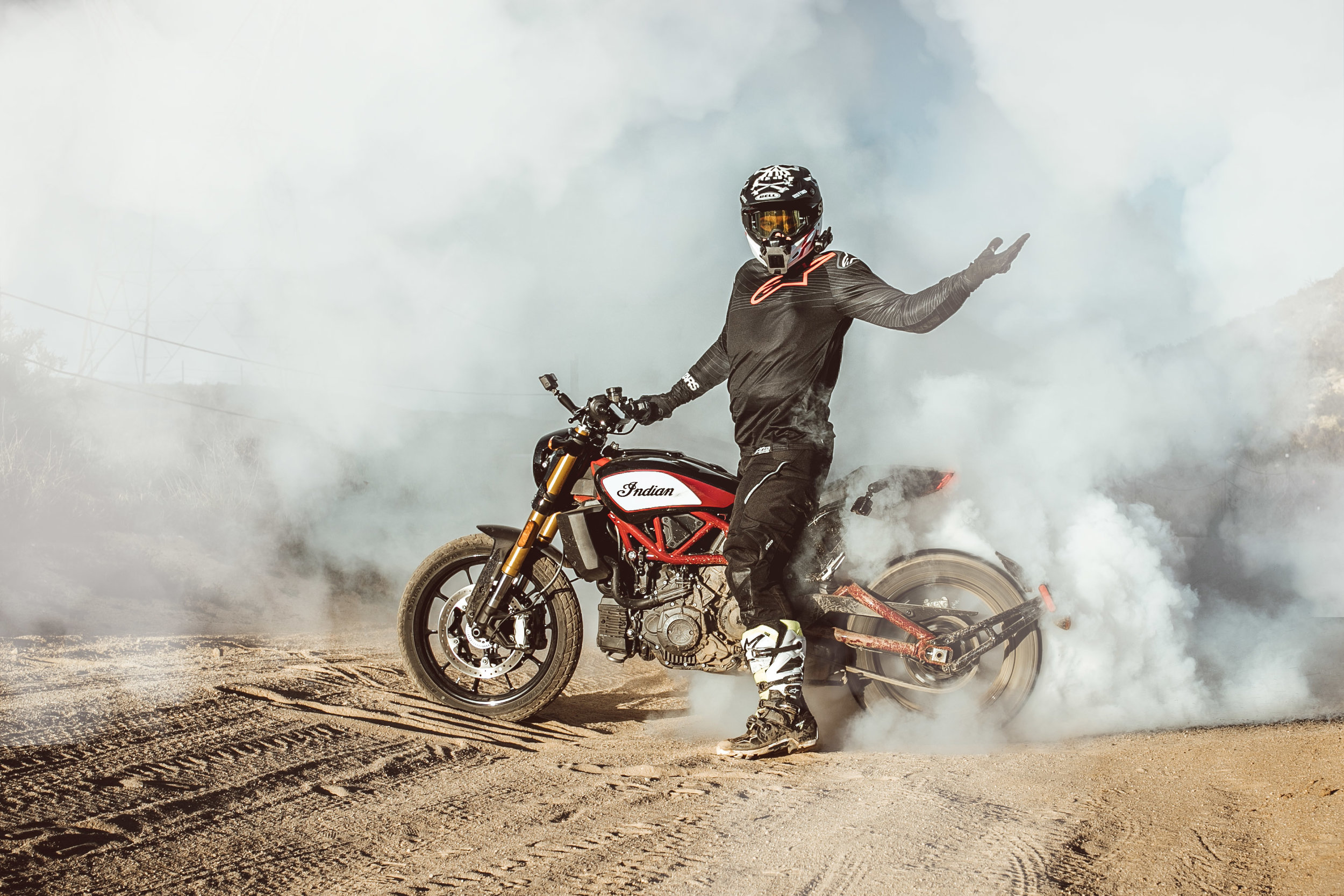
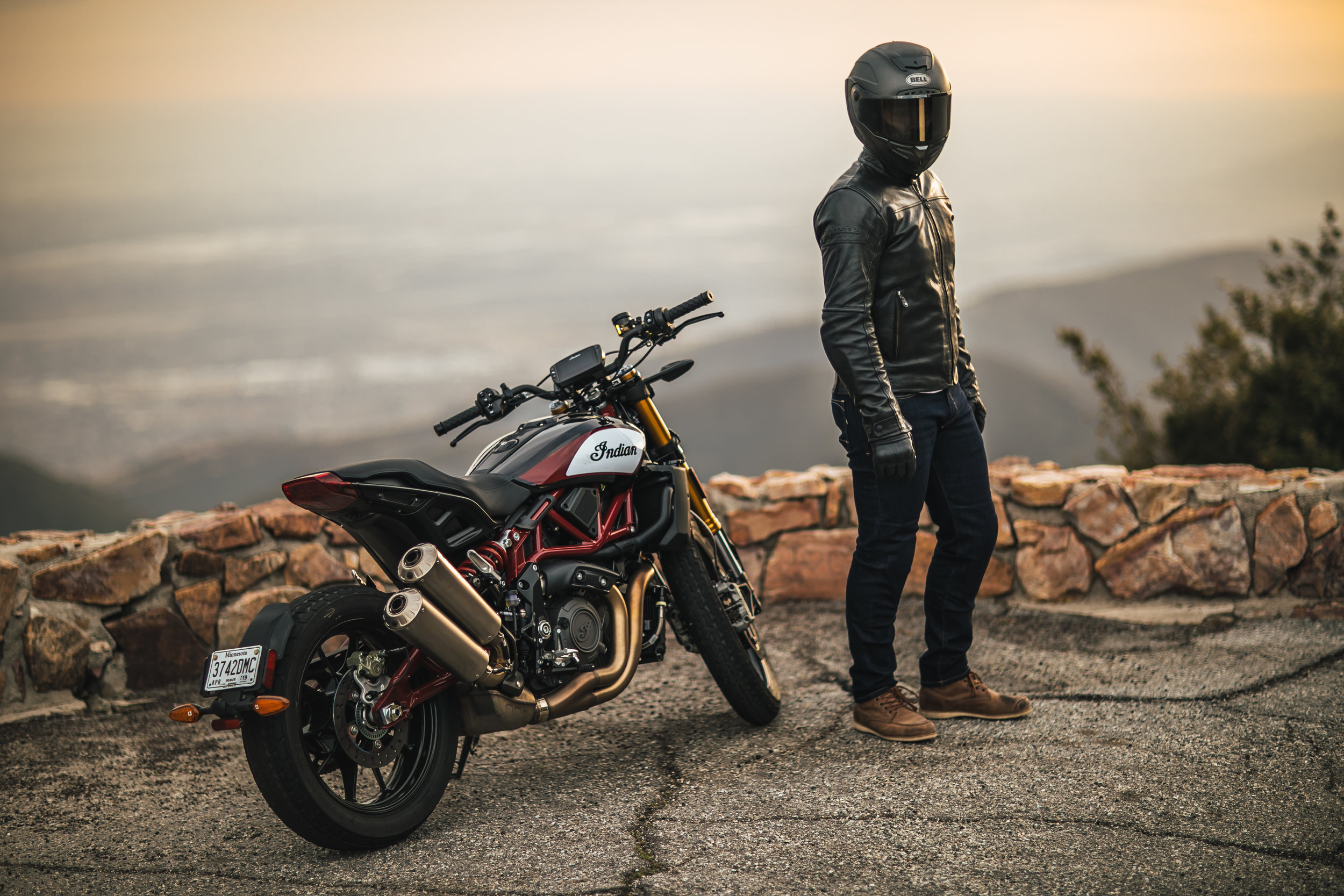
To reach a wider and younger demographic, Indian Motorcycle partnered with RevZilla, along with Alpinestars and Bell Helmets, to energize the launch of the new FTR1200. The result: the 'Open It Up' sweepstakes, a full motorcycle and gear giveaway unlike anything RevZilla had ever produced.
The 3-month campaign ran across digital, social, print, and video, and became the most successful marketing campaign in RevZilla's history by every measurable metric.
ClientRevZilla / Indian Motorcycle
PartnersAlpinestars · Bell Helmets
CompanyComoto Holdings
Year2019
My RoleCreative Direction, Art Direction, Photography, Web, Social
120K
Campaign Entries
40K
Net New Leads
$4M+
Revenue Generated
500K+
Organic Video Views
Campaign Film
900K+ video comments across social.
The Challenge
Make a sweepstakes feel like a cultural moment.
Sweepstakes are a dime a dozen in e-commerce. The task was to make this feel worthy of the FTR1200, an iconic bike with its own fervent fanbase. It needed a brand identity, a custom digital experience, and content that could live across every channel without feeling like a promotion.
The Approach
Lead with the bike. Let the community carry it.
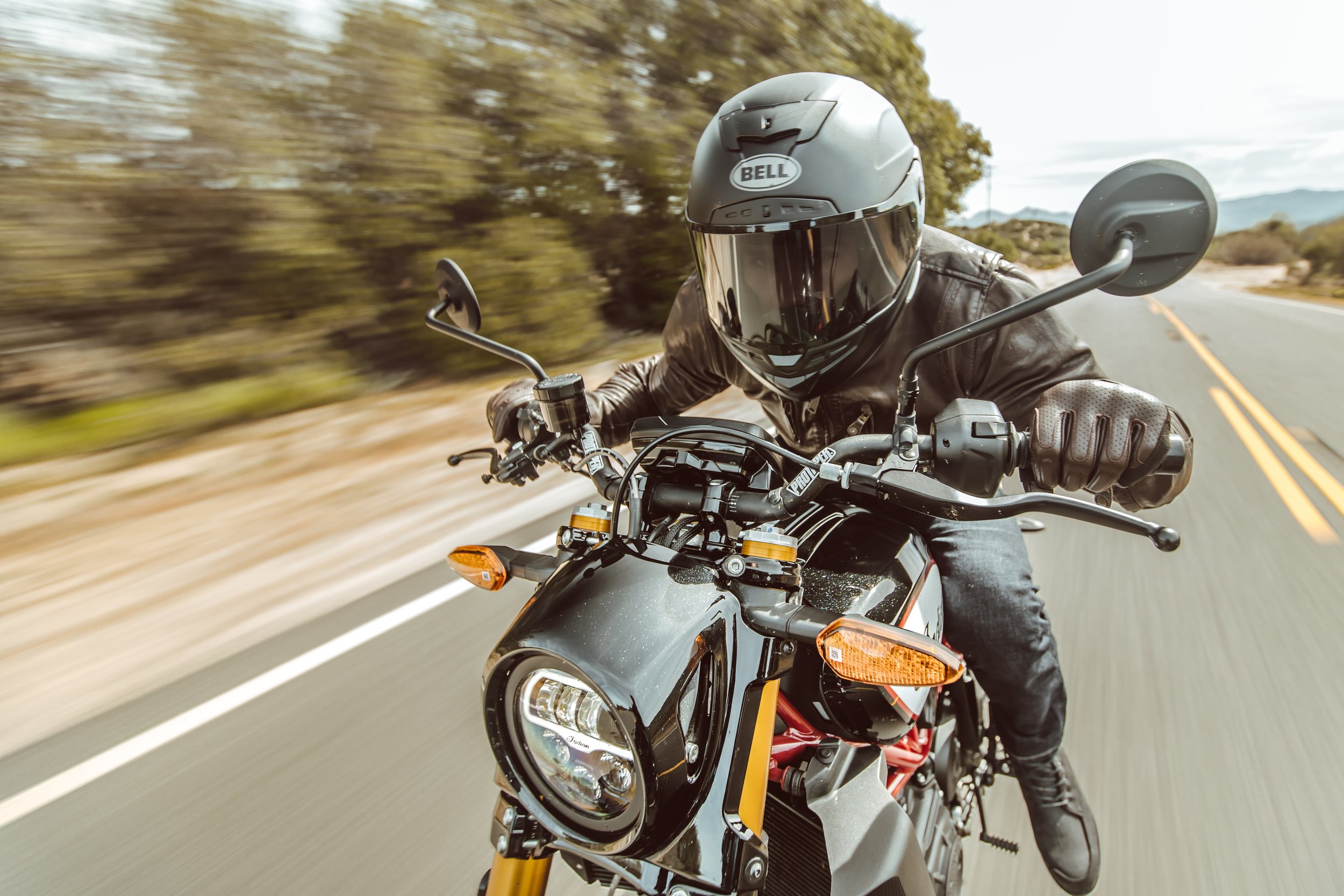
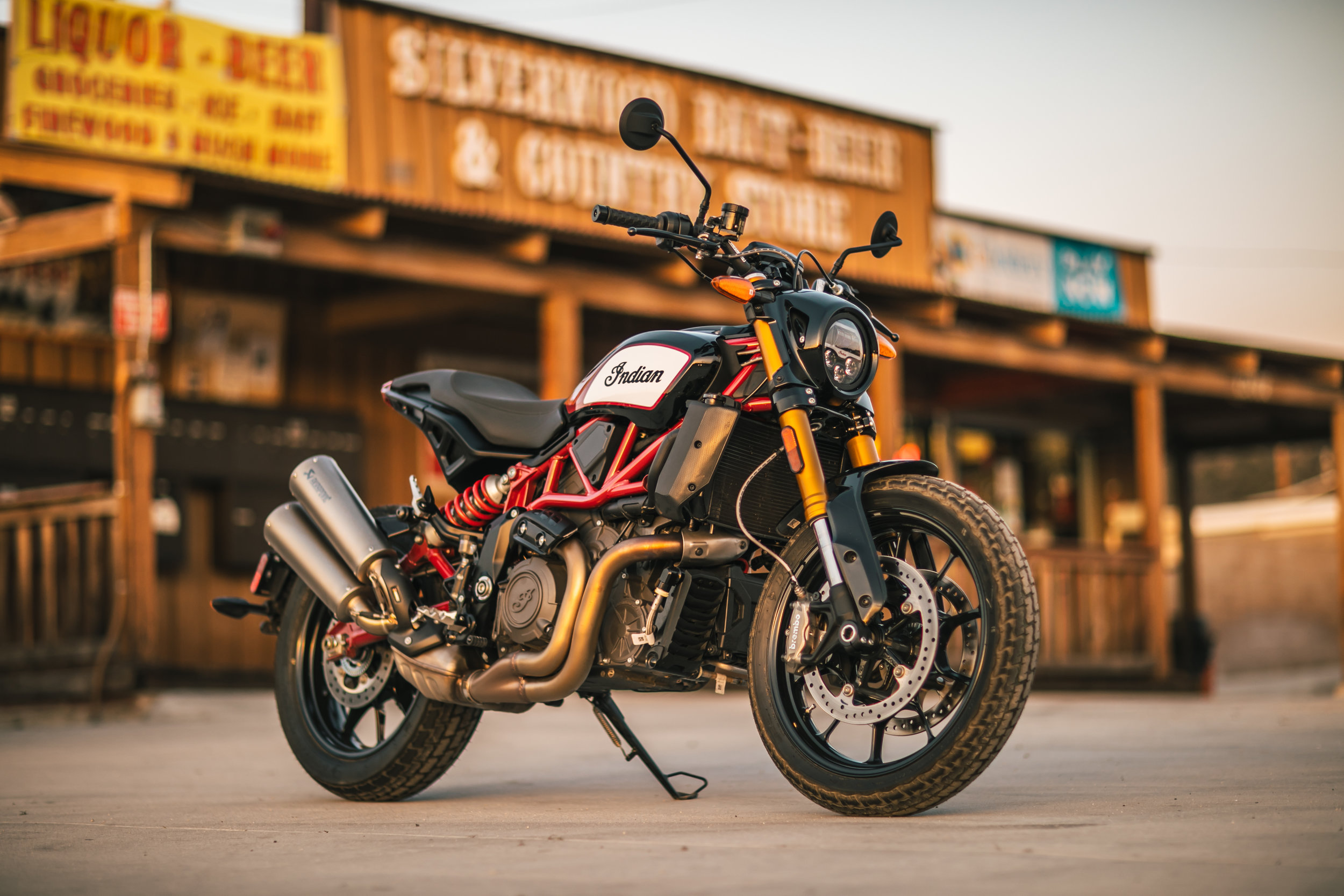
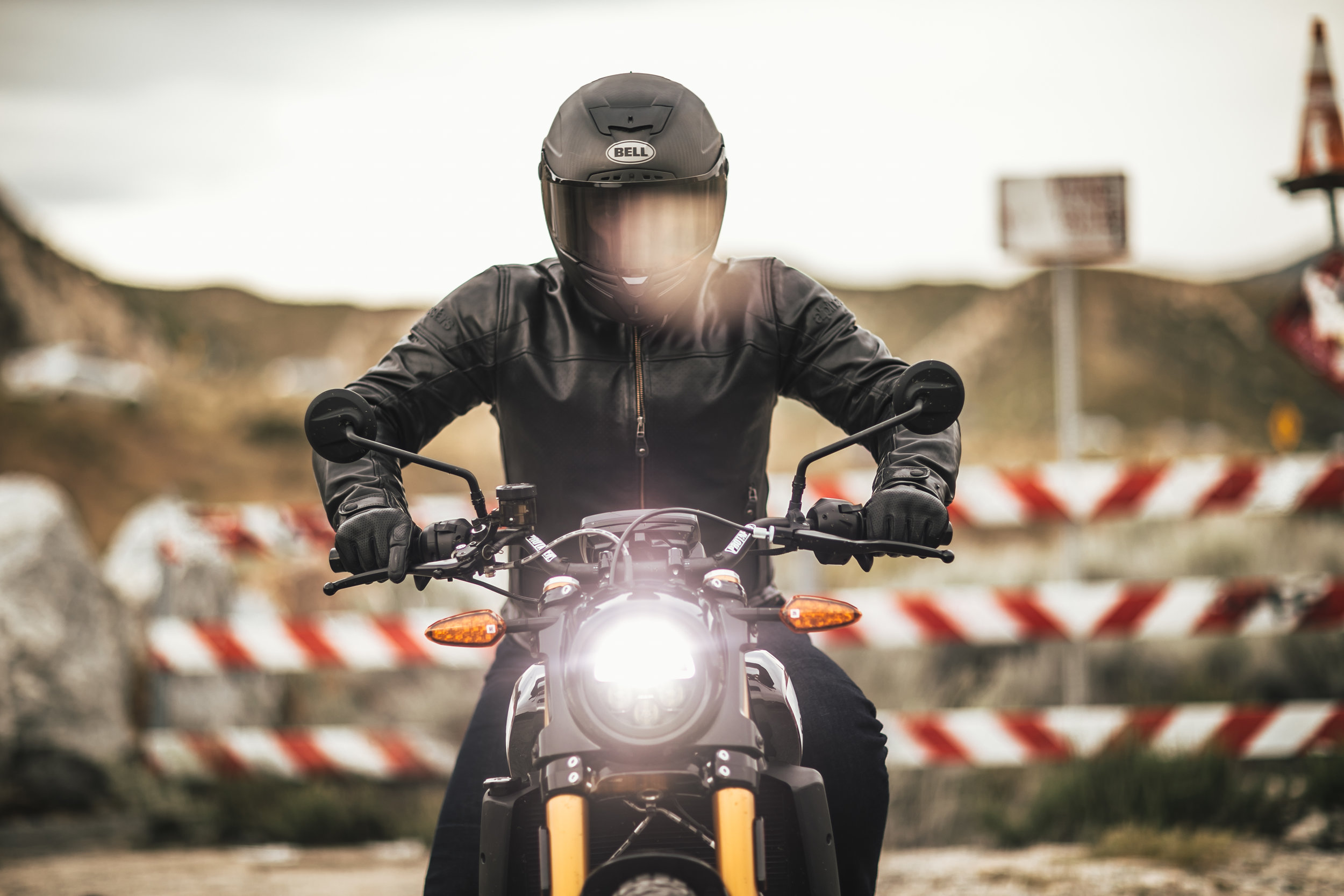
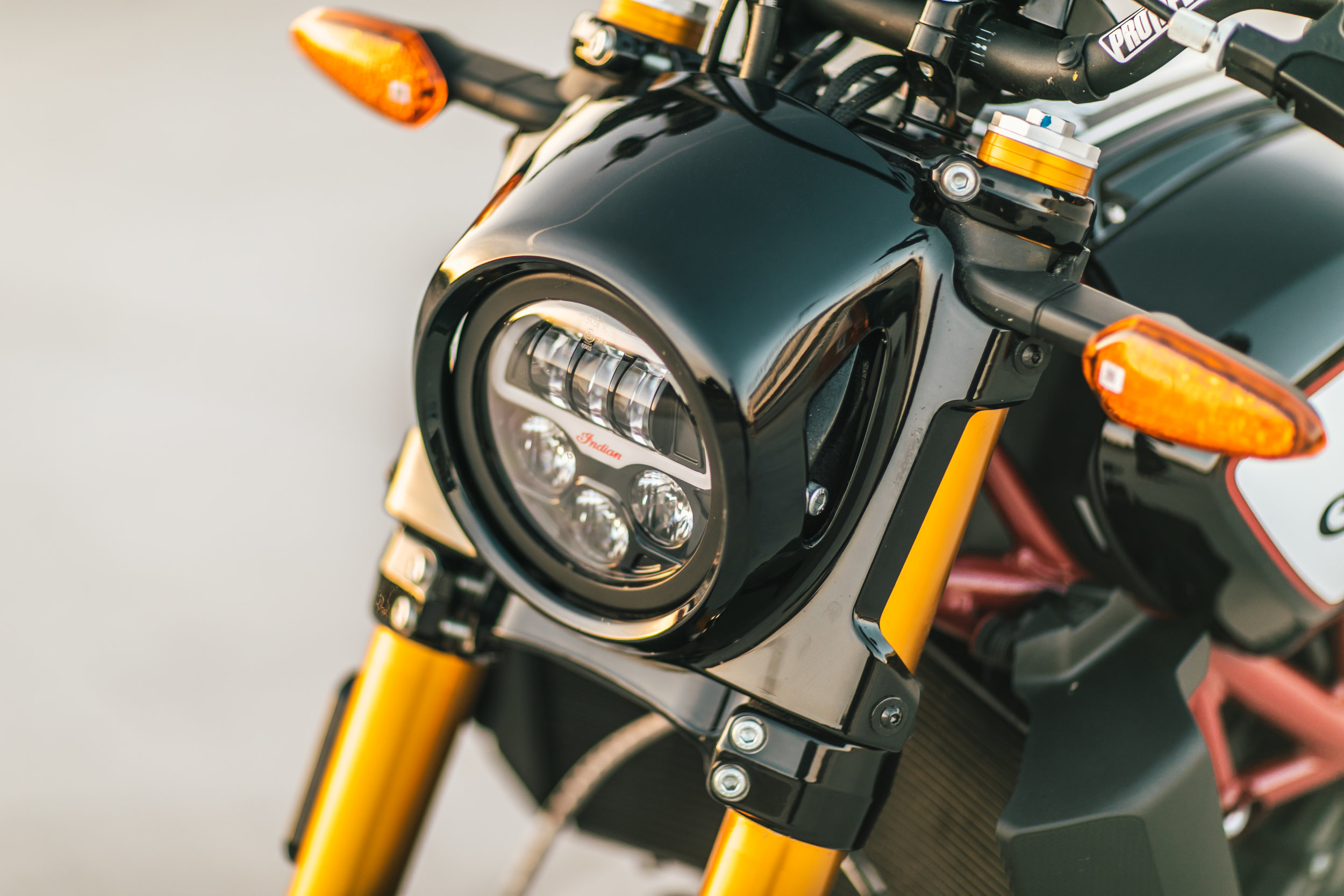
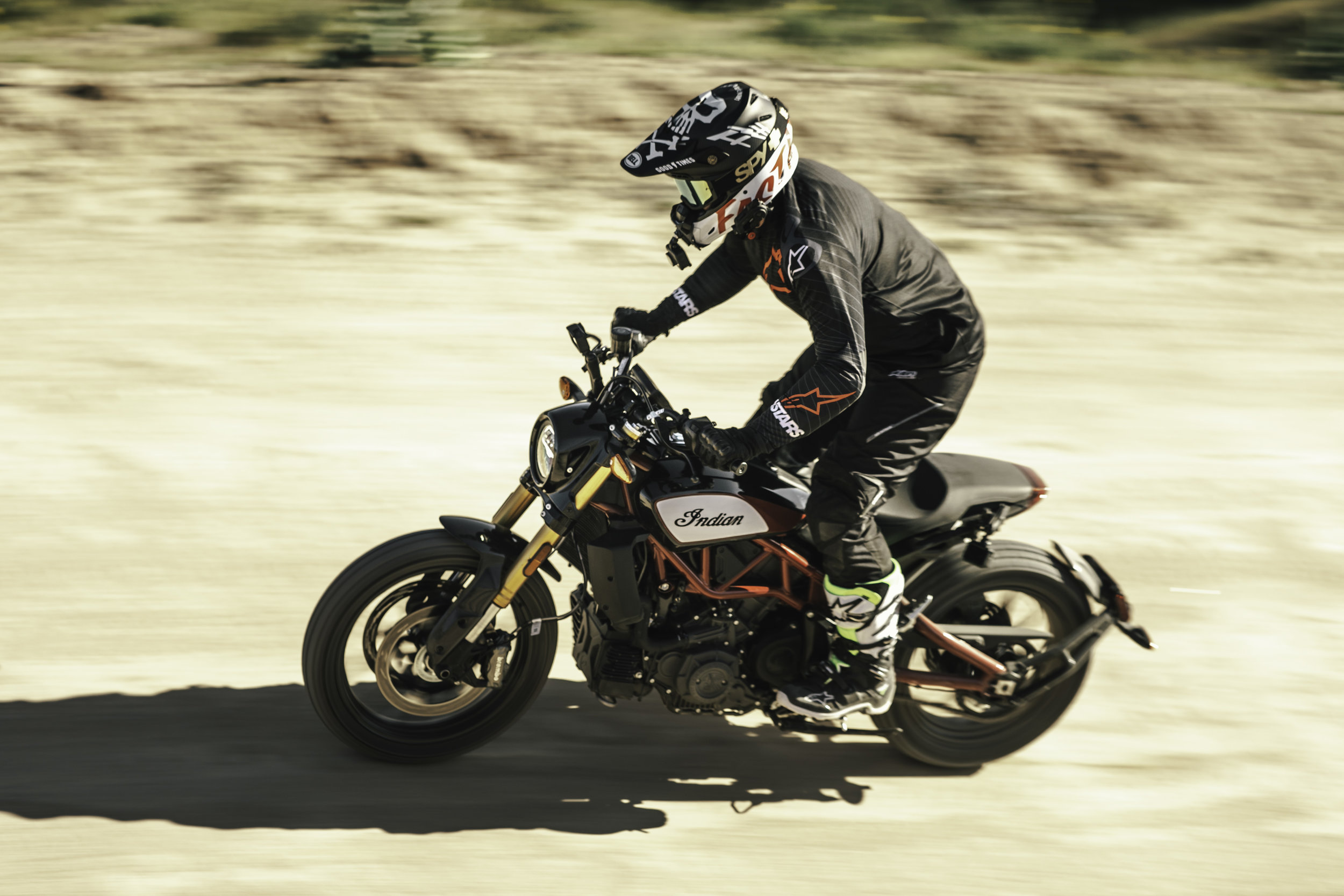
We built the campaign around the FTR's raw character: bold, irreverent, unapologetically moto. The custom landing page was a first for RevZilla promos: fully immersive, responsive, cinematic. Photography and video were produced in-house, giving the campaign an authenticity that paid media rarely delivers.
Campaign Landing Page
"A first for RevZilla — a fully custom, immersive campaign experience."
The landing page was built from scratch: no templates, no existing RevZilla infrastructure. It gave audiences an exclusive look at the FTR1200 while pulling new visitors into the excitement of the RevZilla brand. It drew 76K unique editorial page views and set a new internal standard for tentpole marketing.
Custom BuildFully ResponsiveCinematic UXFirst of its Kind
revzilla.com/openitup
Campaign Photography
Marketing
"Off the screen and into the world."
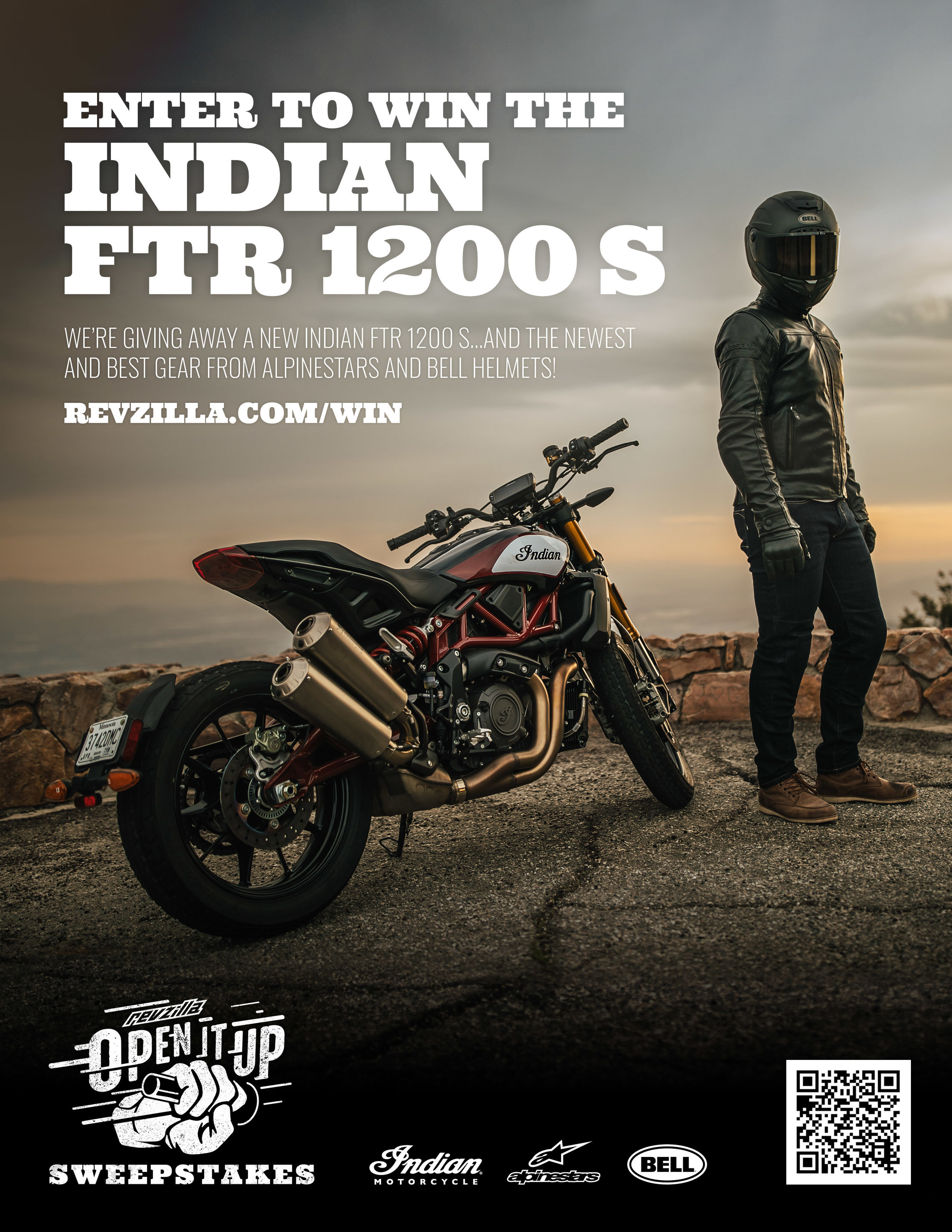
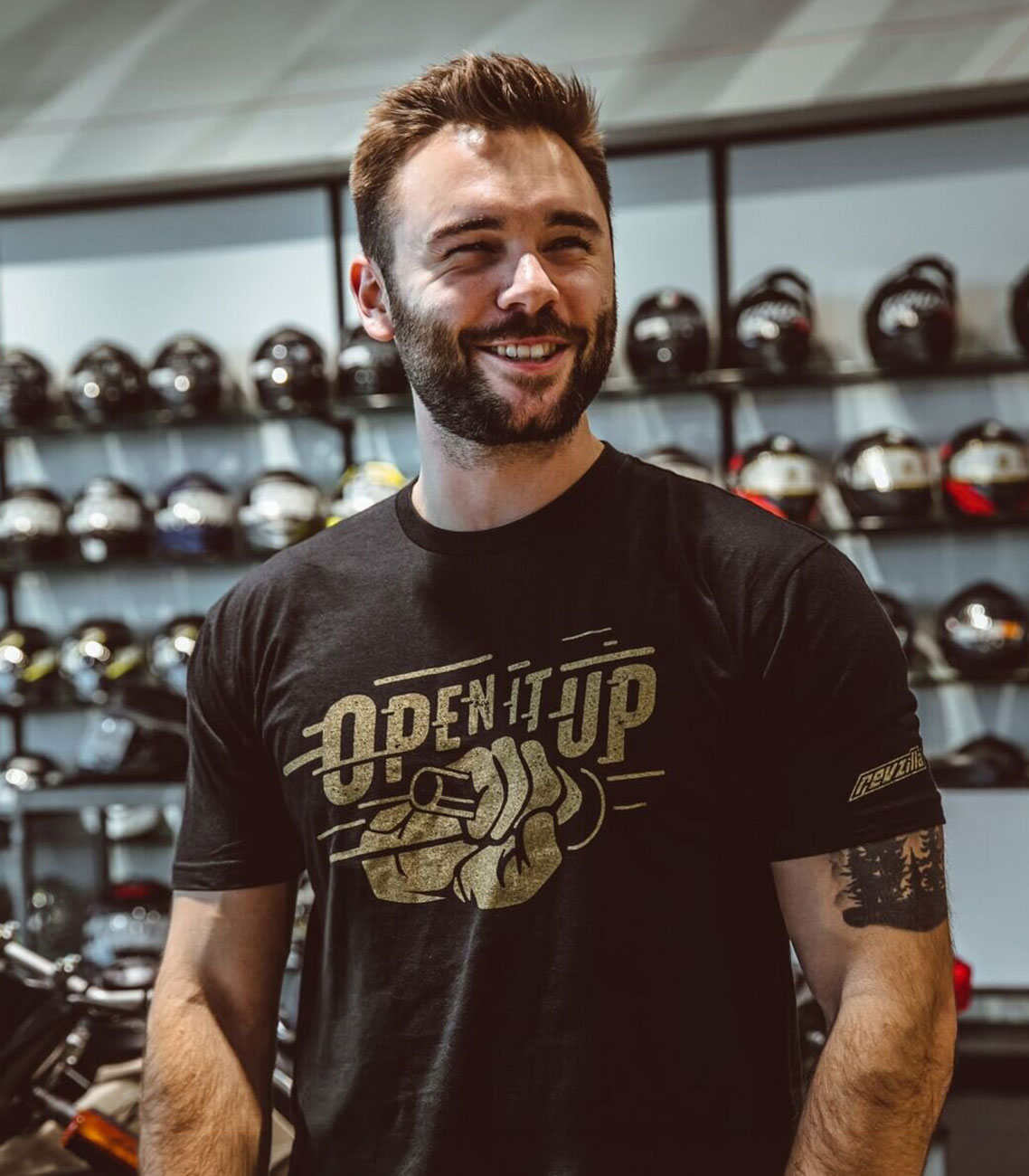
Open It Up carried into the physical world, in-store print ads with QR codes drove retail sign-ups, while branded merch put the campaign on riders.
Print Advertising
Merchandise
Reflection
"Whether tallied through consumers, leads, innovation, or industry hype — Open It Up proved to be a substantial tentpole event with an ROI that tracked higher by the day."
This was the project that raised the bar for what RevZilla's in-house creative could produce. The success came from treating it like an agency brief: full creative strategy, original production, and a custom digital build, rather than a typical e-commerce promotion. It established the model for every tentpole campaign that followed.
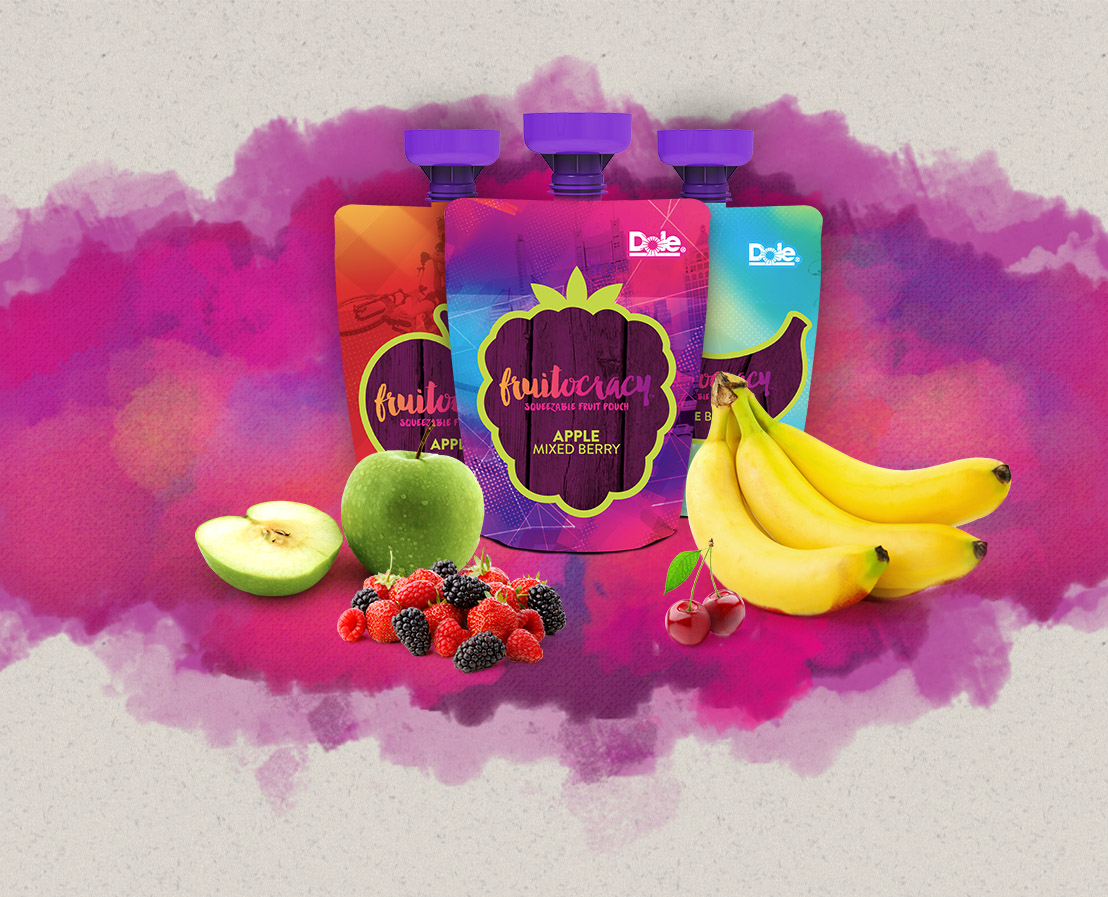
Fruitocracy was introduced as a new addition to Dole's lineup of healthy snacks: convenient, nutritious, and on-the-go for kids. Made with real fruit, no artificial flavors, no high fructose corn syrup. The challenge: launching a brand-new product in a crowded category with a digital-first strategy.
The launch ran across landing page, web banners, site skins, and Snapchat. With the support of these digital efforts, Fruitocracy well exceeded its opening sales projections.
My RoleCreative Direction, Art Direction, UI/UX, Web Design
ResultExceeded opening sales projections at national launch
The Challenge
Launch a new brand to parents and kids simultaneously.
Fruitocracy needed to appeal to two distinct audiences: health-conscious parents making the purchase decision, and kids who needed to actually want the product. The campaign had to feel fun and energetic without sacrificing the credibility health-focused parents demand.
The Approach
Lead with personality. Back it up with the real fruit.
We leaned into the playful brand name (Fruitocracy, For The Free) to build a world that felt liberating. Snapchat gave us a direct line to younger audiences. The web experience and banners communicated real-fruit credentials in a visual language parents could trust and kids could love.
Website & Digital
Campaign Website: A dedicated landing page built around the "For The Free" positioning, optimized for brand education and conversion.
Web Banners & Site Skins
Web Banners & Site Skins: Display campaign across publisher networks, with branded site takeovers targeting health and parenting content.
Reflection
"Fruitocracy was a lesson in how a strong brand name and a clear point of view can do the heavy lifting — even with a modest media budget."
The Fruitocracy campaign demonstrated the power of a digital-first launch strategy for a new consumer product. By leading with personality and distributing across the platforms where parents and kids actually live, we generated the awareness and trial needed to exceed opening projections, without the support of a traditional TV buy.
Next Project
USCIS 'Who I Am'
→
U.S. Citizenship and Immigration ServicesSensis Agency
How do you motivate permanent residents to become citizens?
The U.S. Citizenship and Immigration Services needed to raise awareness of the rights, responsibilities, and importance of U.S. citizenship among legal permanent residents. The strategic insight that unlocked everything: citizenship doesn't negate your original cultural identity.
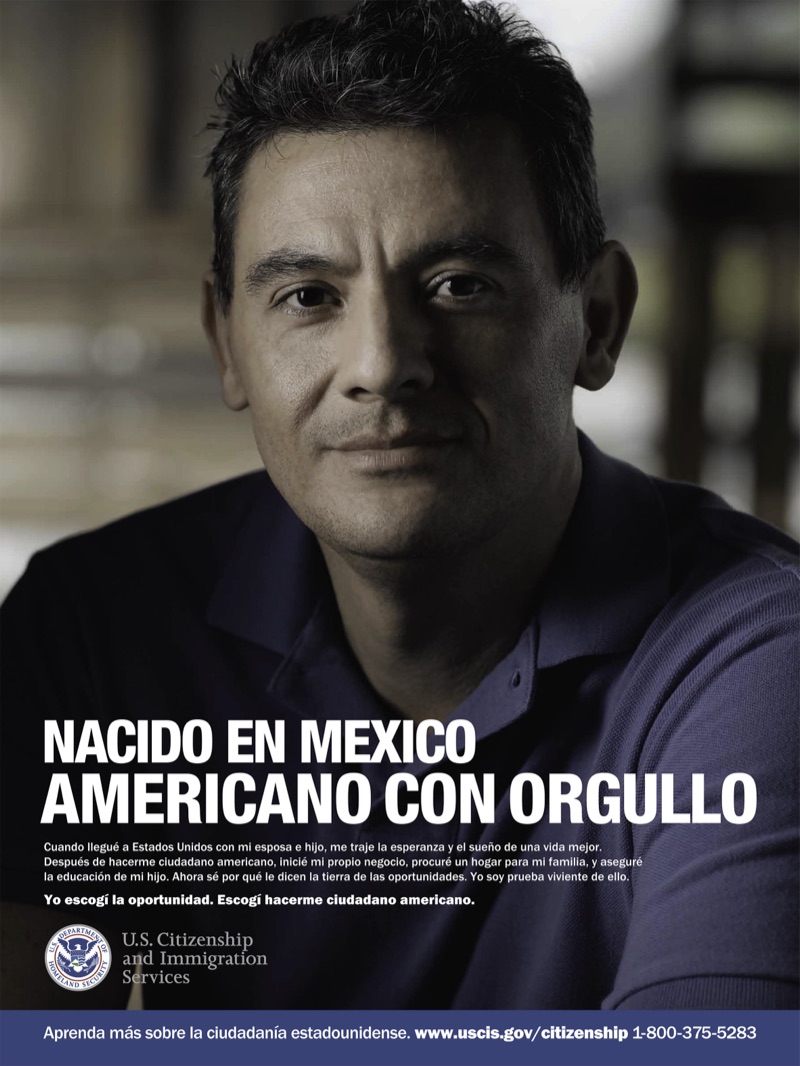
The 'Who I Am' campaign celebrated the dual identity of naturalized Americans across TV, radio, outdoor, print, and digital, in four languages.
ClientU.S. Citizenship & Immigration Services
AgencySensis · Los Angeles
Scope360° Multicultural Campaign
LanguagesEnglish · Spanish · Chinese · Vietnamese
My RoleCreative Direction, Art Direction
+33.9%
Unique visits to USCIS.gov/citizenship
+60.1%
Downloads of Naturalization Guide
0.86%
Avg CTR vs. 0.03–0.07% projected
TV Spot
The Challenge
Change behavior across five distinct communities.
Multicultural government campaigns often fail by treating diverse audiences as a monolith. This campaign needed to speak authentically to Filipino, Chinese, Dominican, Vietnamese, and Mexican communities, each with different cultural values, media habits, and relationships to American identity.
The Approach
Show identity as addition, not subtraction.
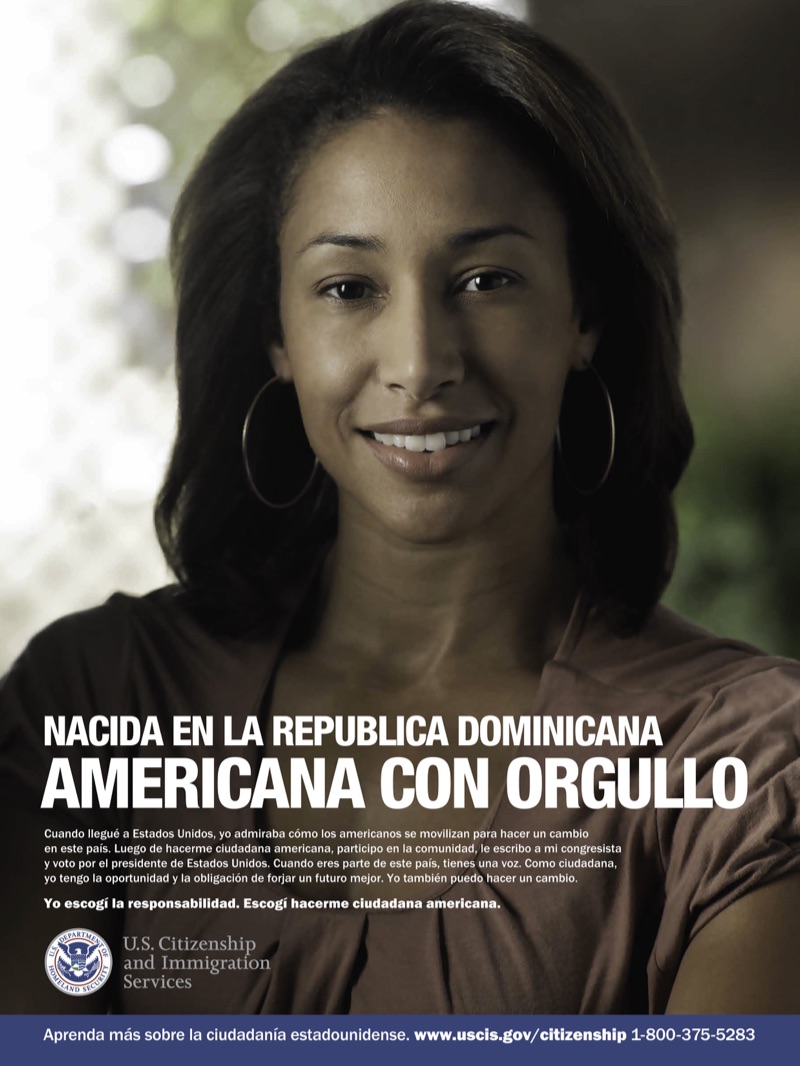
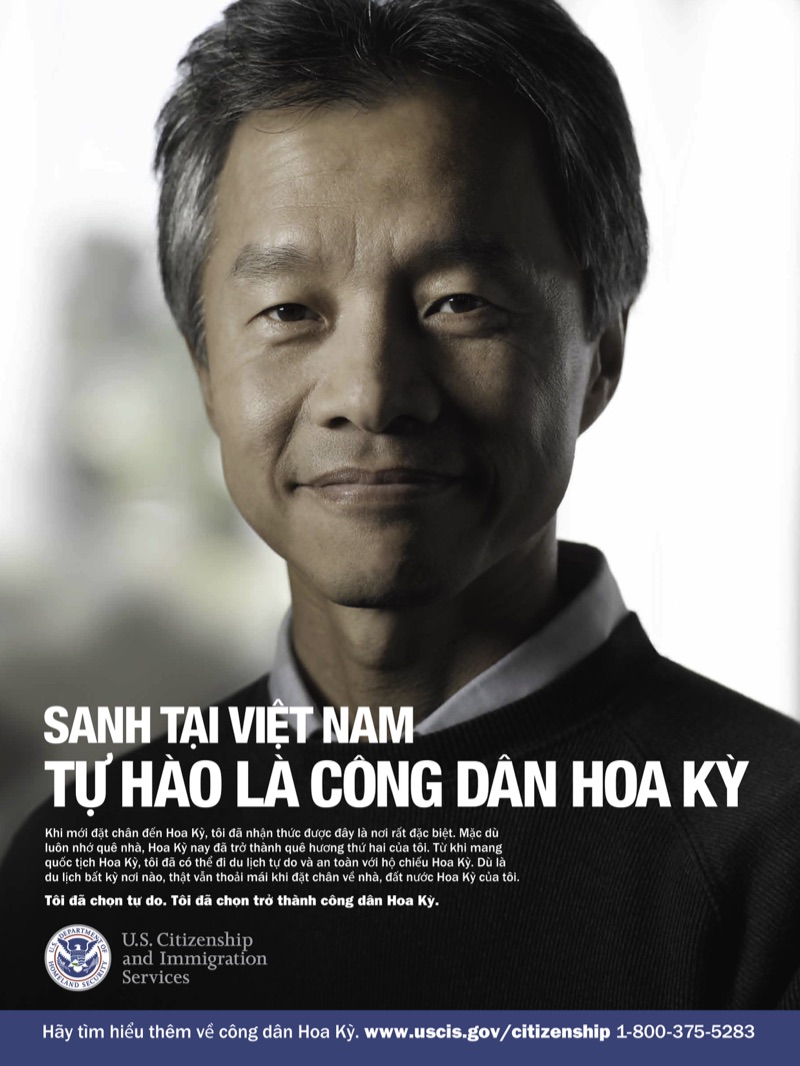
The core insight, that becoming American doesn't mean giving up who you are, was universally resonant but expressed differently per community. Community-specific casting, imagery, and copy ran across press, outdoor, and radio in native languages, while a unifying TV spot carried the message at scale.
Outdoor Billboards
Outdoor: Community-specific OOH in markets with the highest concentrations of eligible permanent residents.
Radio
"Culture isn't a filter. It's the brief."
Rather than translate a single script, each thirty-second spot was built from its own cultural insight, written and cast for the community it spoke to.
English
Spanish
Chinese
Vietnamese
Print Campaign
Print Advertising: Community press placements in five languages. Each execution localized in imagery, copy, and cultural reference.
Web Banners
Reflection
"The insight that unlocked this campaign was deceptively simple: people don't become American by giving up who they are. They add to who they are."
Who I Am remains one of the most personally meaningful campaigns I've directed. The work required genuine cultural fluency, not just translation, but true localization across five distinct communities. A CTR of 0.86% against a projected 0.07% validated what the creative team believed from the start: authenticity converts.
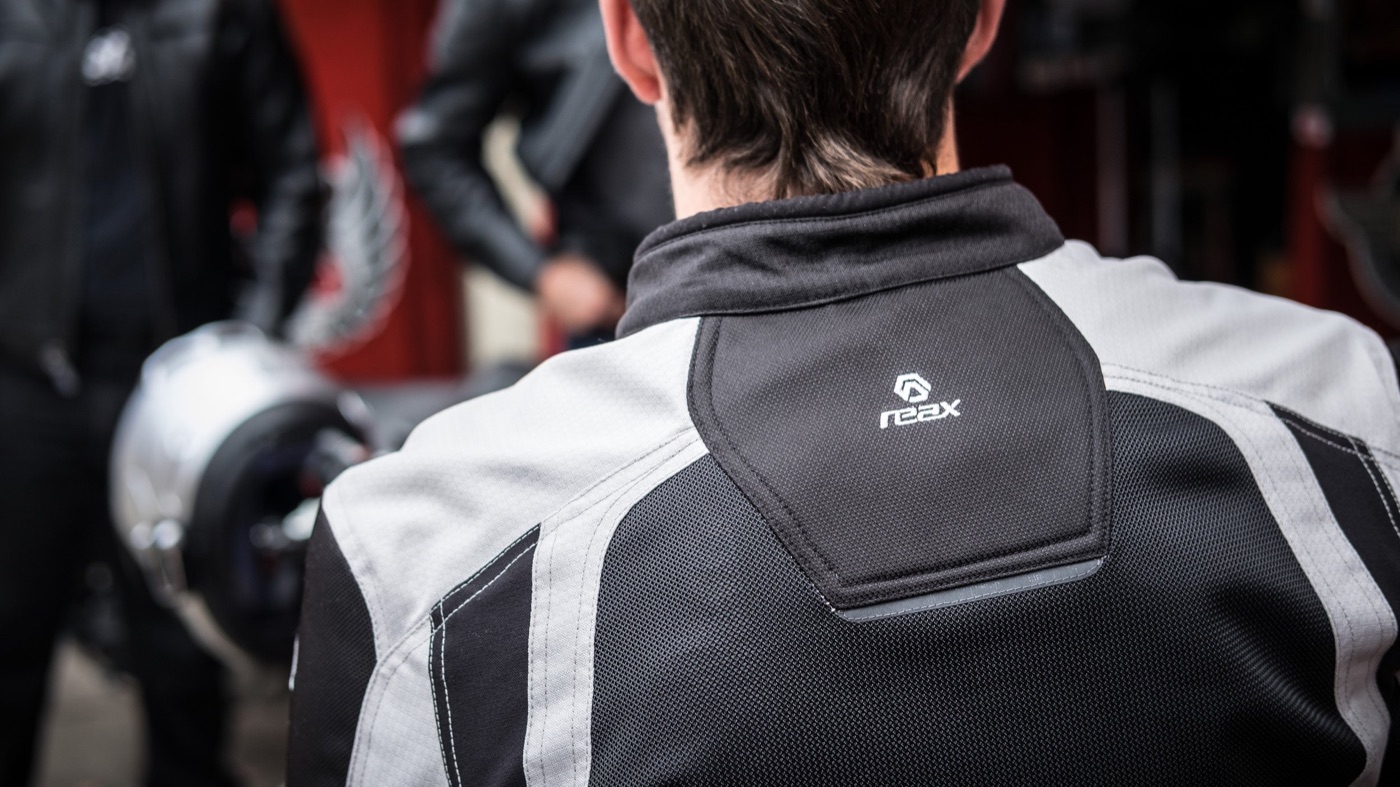
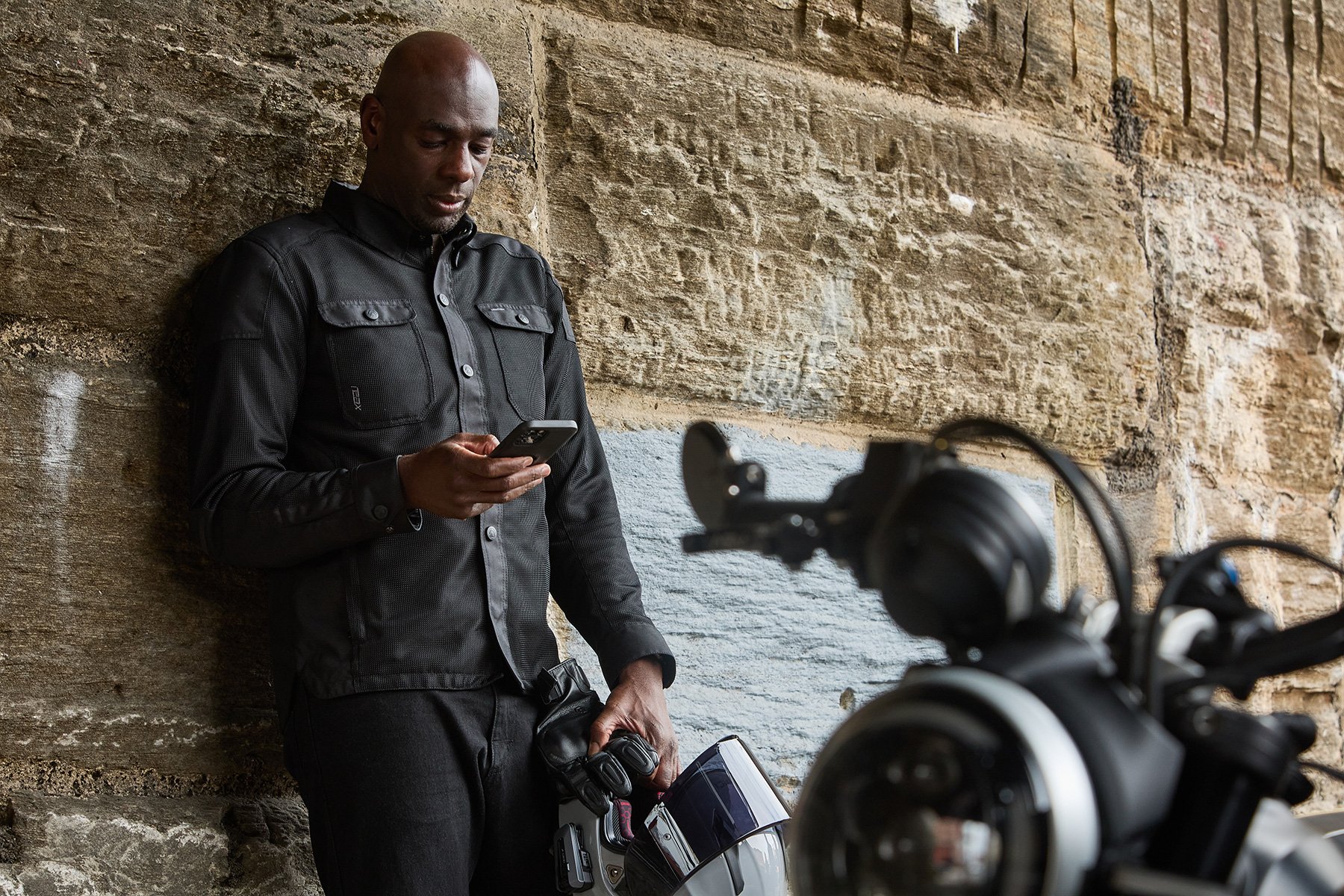
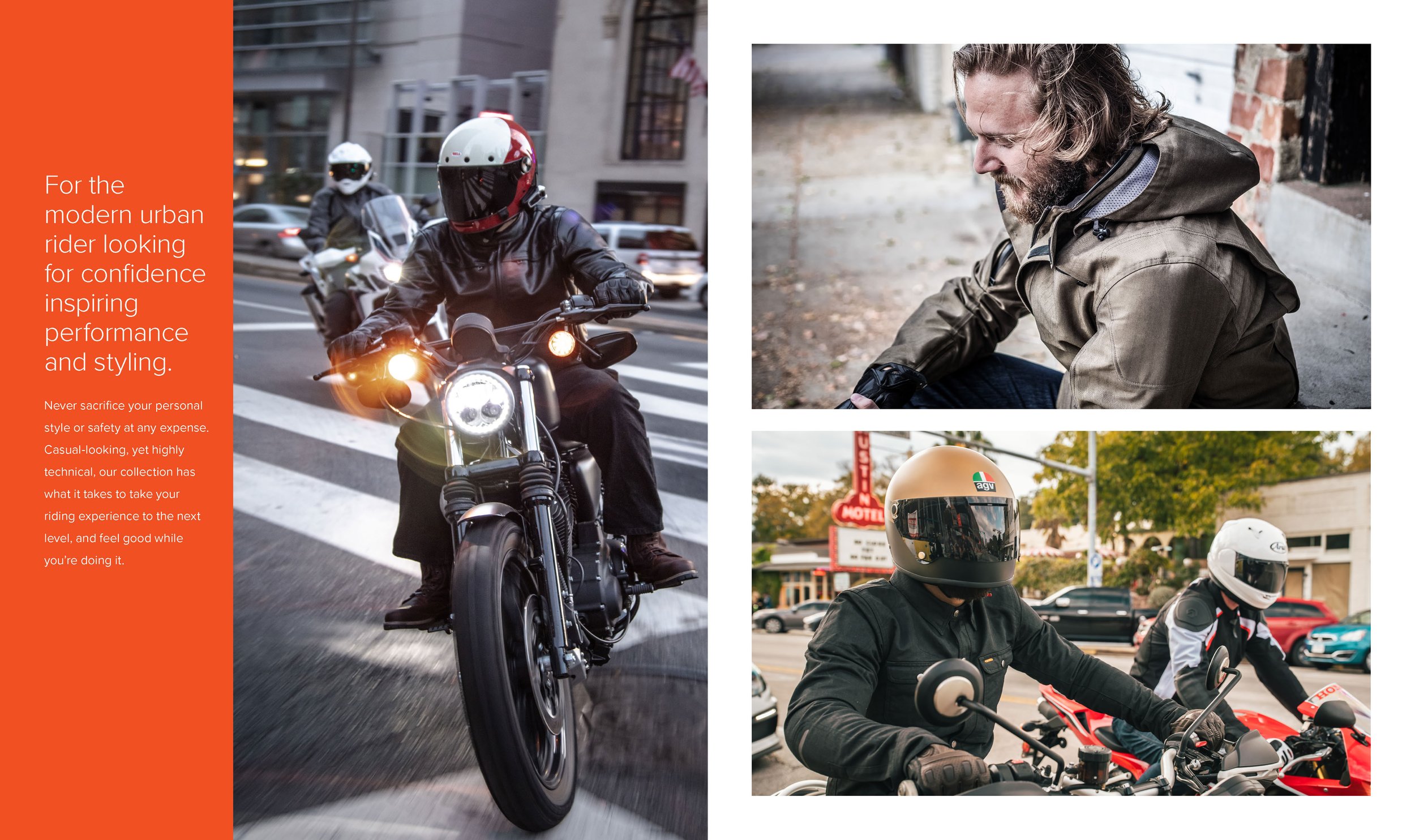
After a decade of interacting with thousands of riders and reviewing countless products, RevZilla partnered with Comoto to bring REAX to life, a new motorcycle apparel brand focused on thoughtful design features within a casual, refined aesthetic.
Working directly with the product design team, I defined the tone of the brand, ensuring consistency across every touchpoint from identity to retail fixture. Since its 2018 launch, REAX has driven $12M in annual sales and earned overwhelmingly positive reviews.
Earn credibility in a category that punishes pretense.
Motorcycle riders are among the most discerning consumers of apparel. They know the difference between gear designed by riders and gear designed for marketing. REAX had to feel authentic from day one, built with genuine insight, not just appealing aesthetics.
The Approach
Let the product knowledge lead. Let the brand follow.
RevZilla's decade of rider interaction was the brand's greatest asset. We built the REAX identity around that knowledge, positioning the brand as thoughtfully engineered rather than fashion-forward. Refined visual language, quality photography, and clean rider-first copy did the rest.
Brand Teaser Film
Website
"Product-forward by design. Rider-first by instinct."
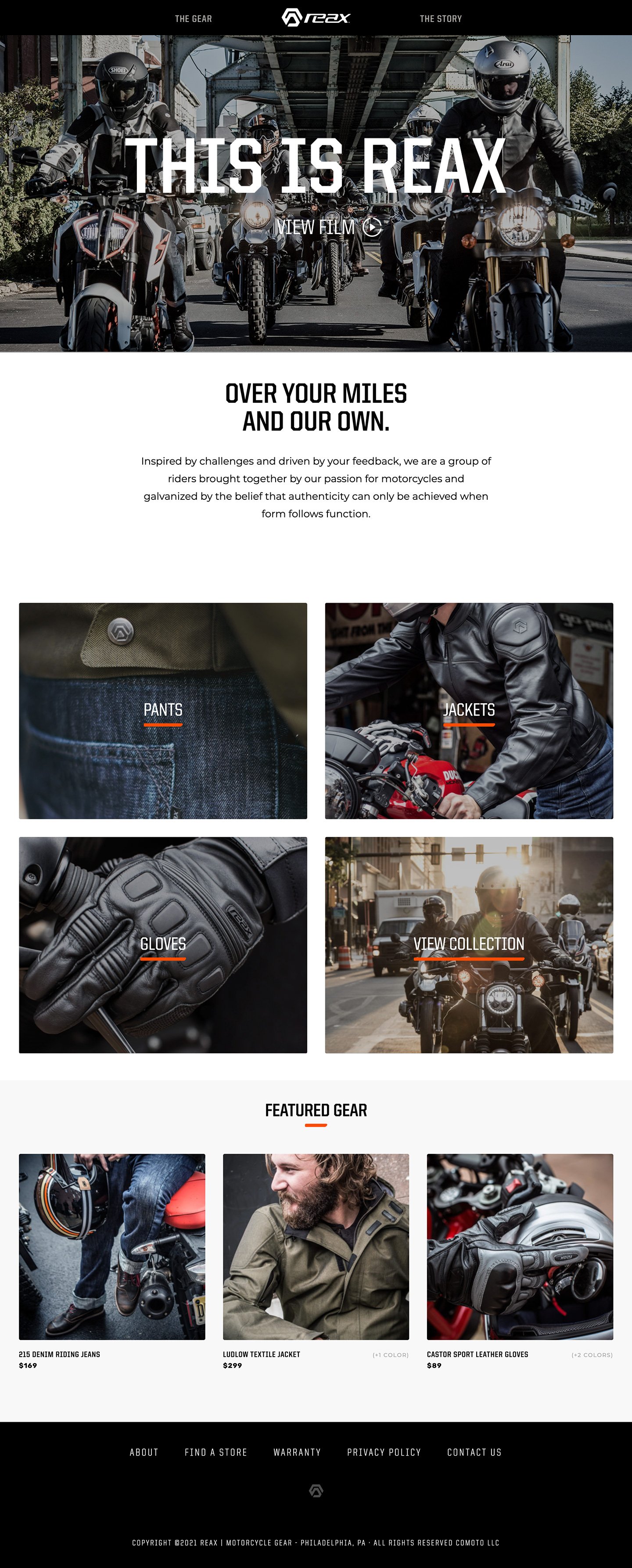
From the homepage to every product page, the site leads with clean photography and honest, rider-first copy, responsive across every breakpoint. Browse the pages to see the system in action.
ResponsiveProduct PagesE-Commerce UX
reaxmoto.com
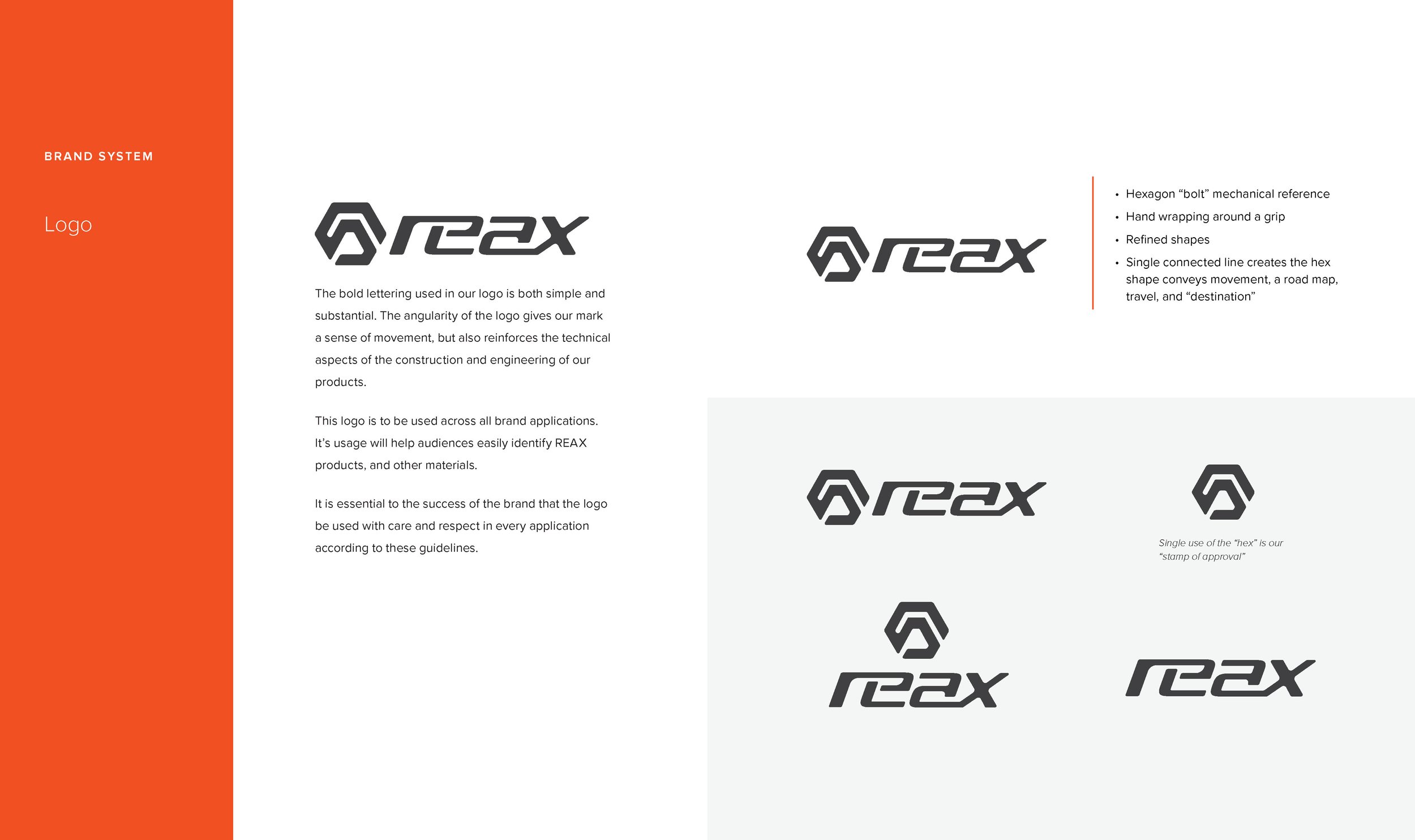
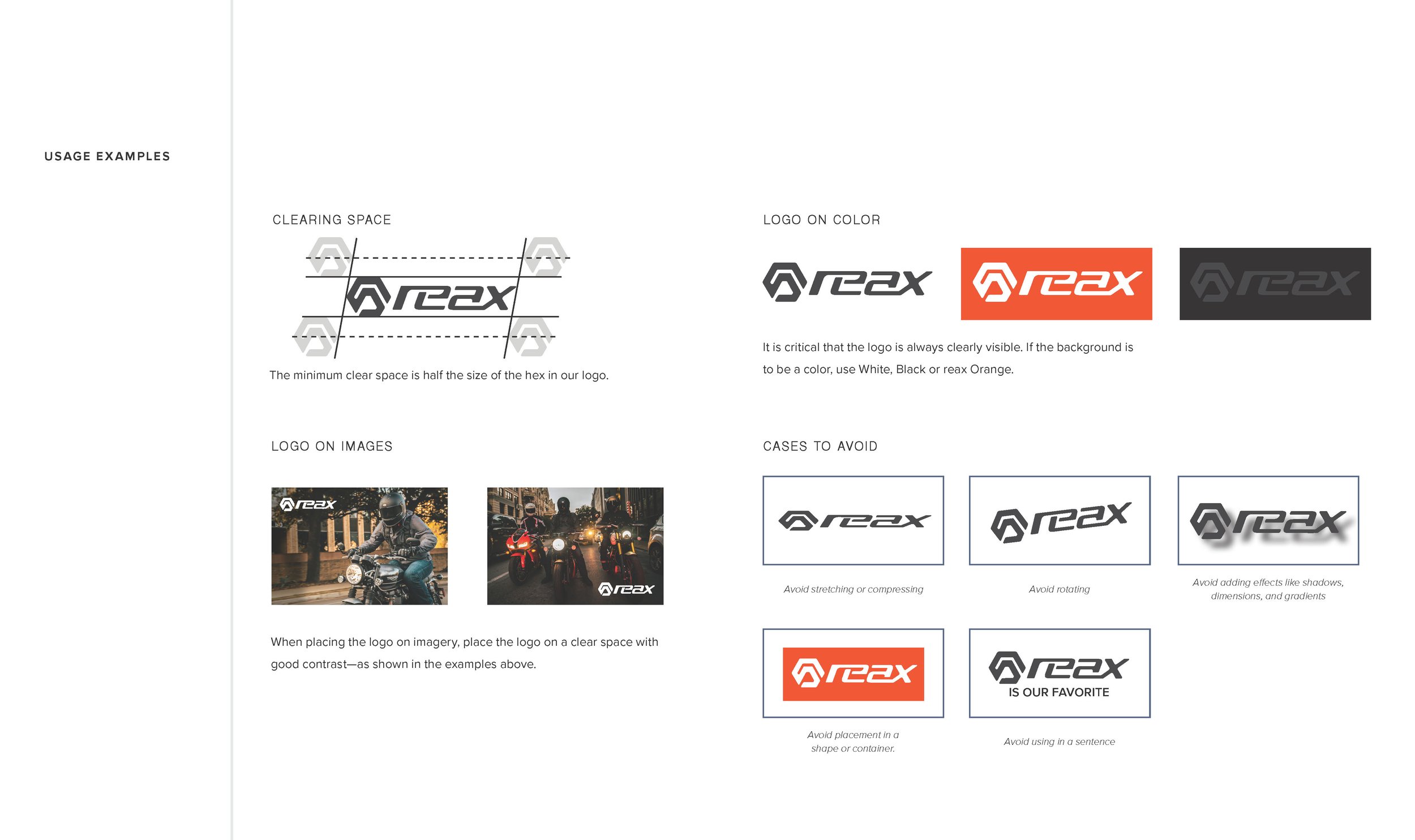
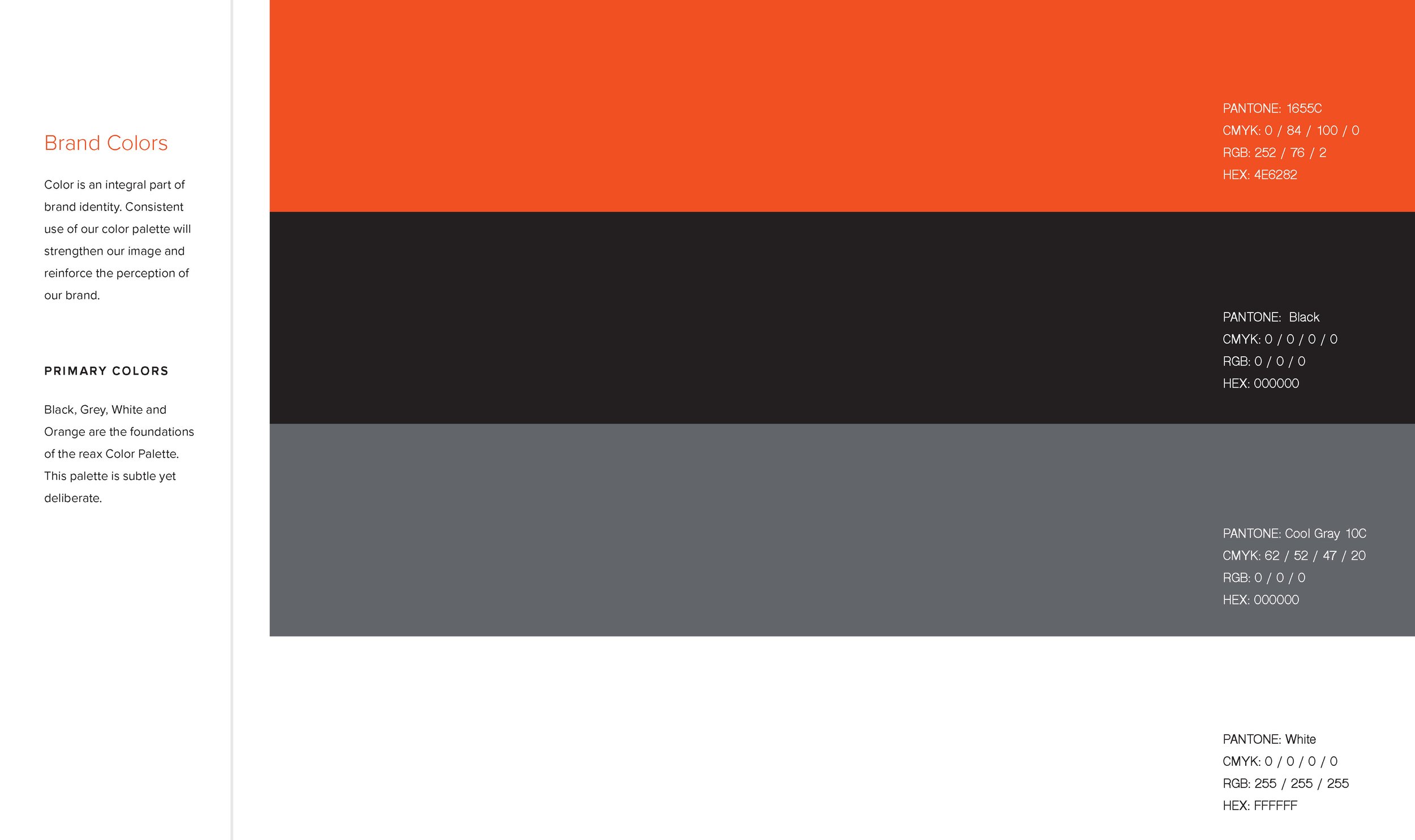
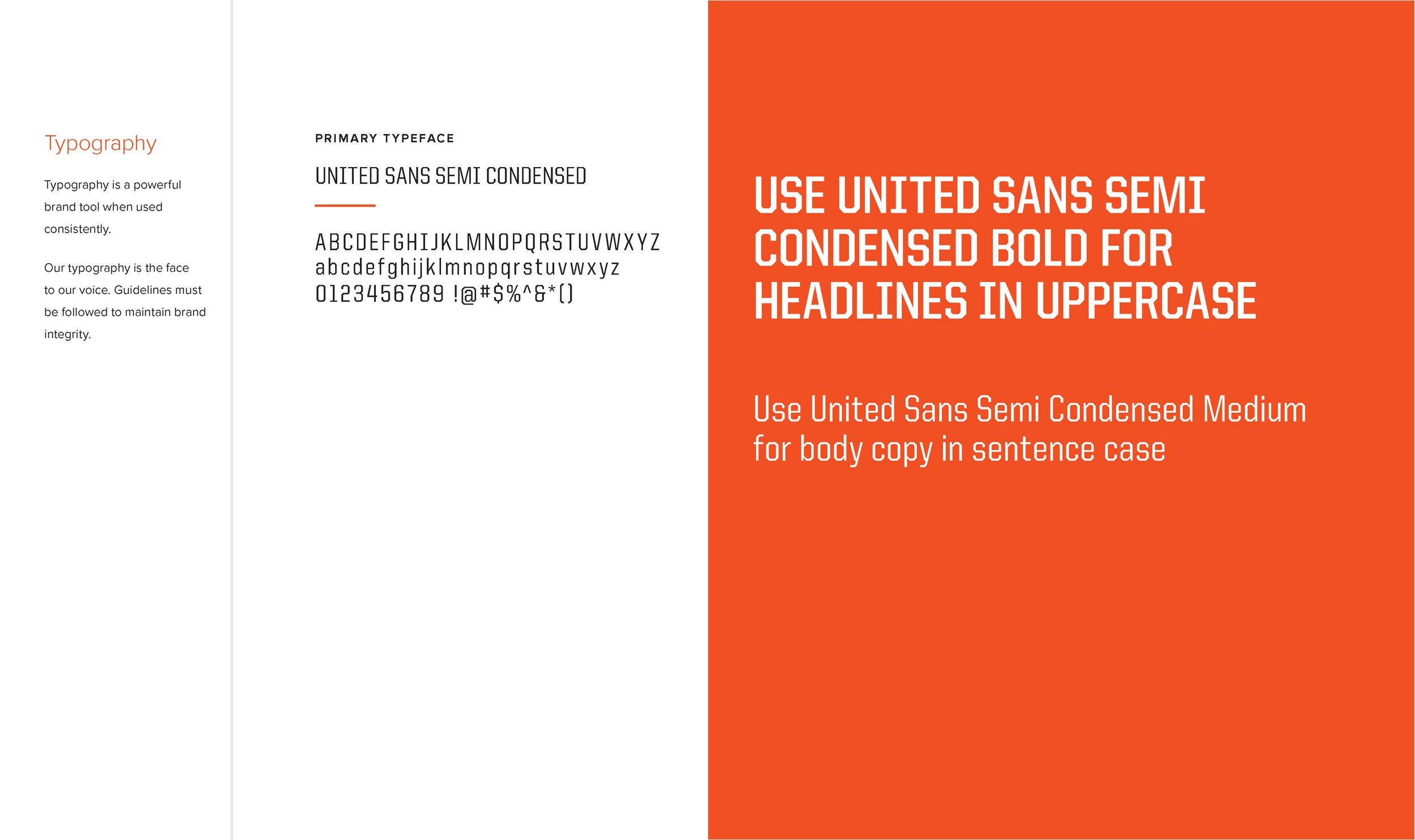
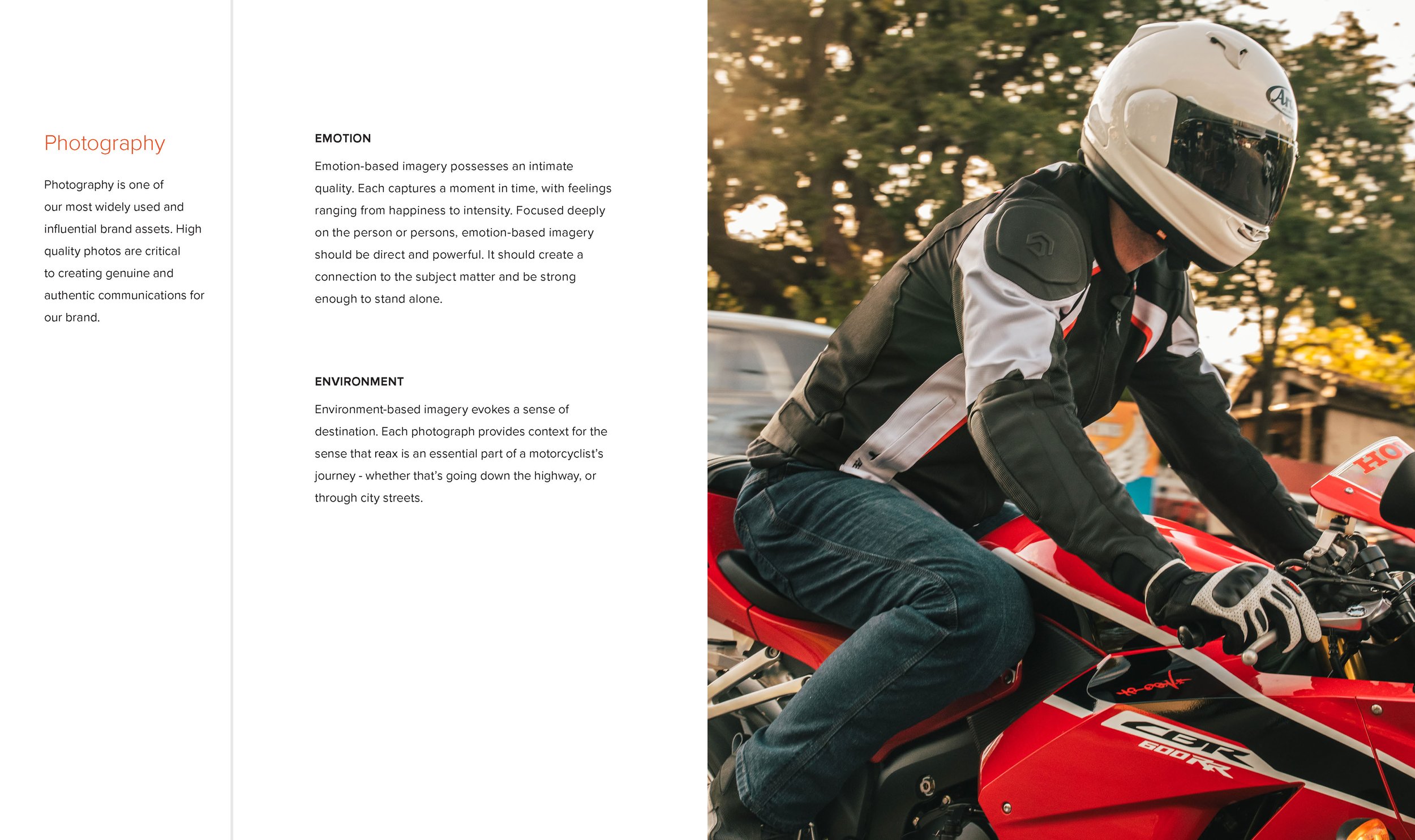
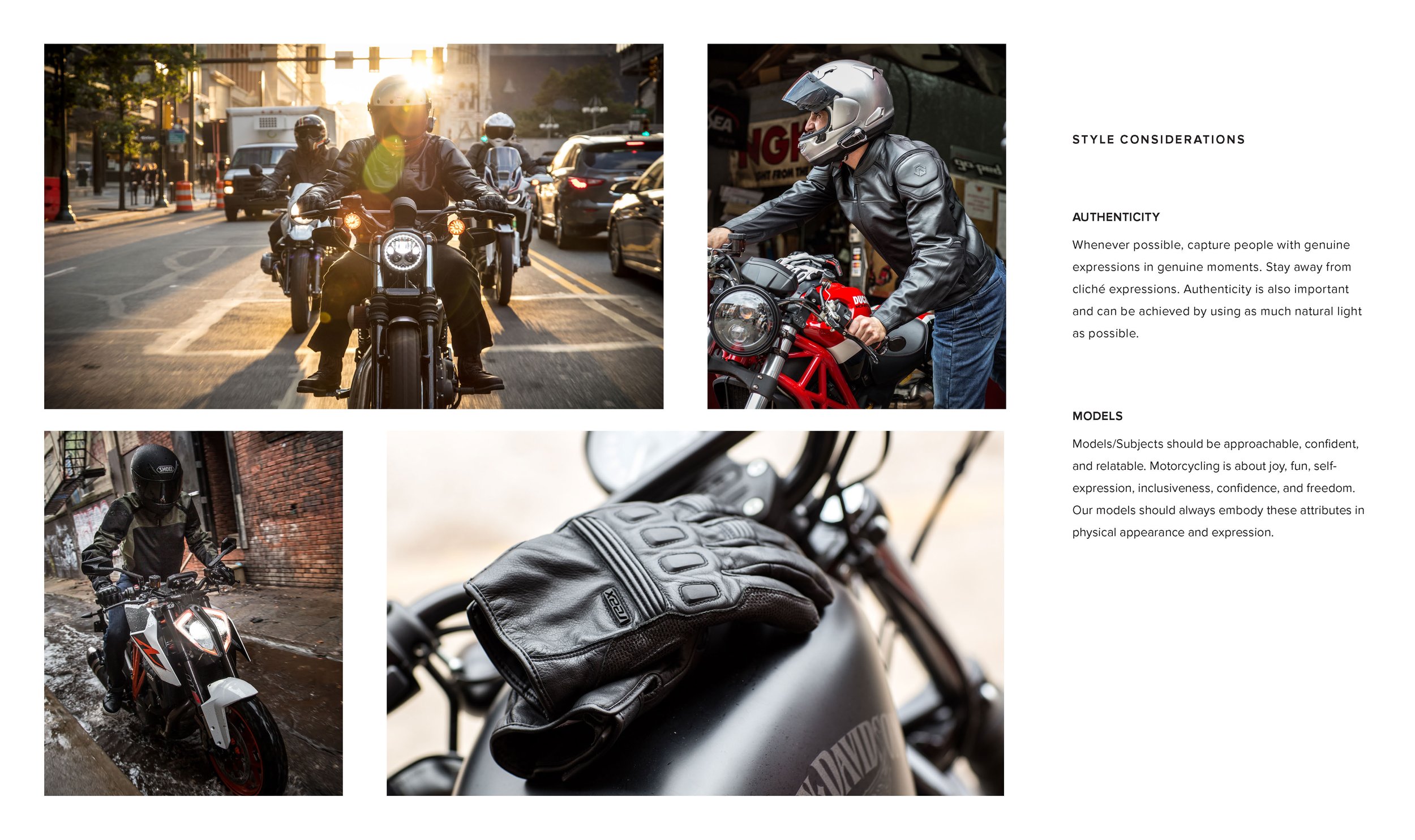
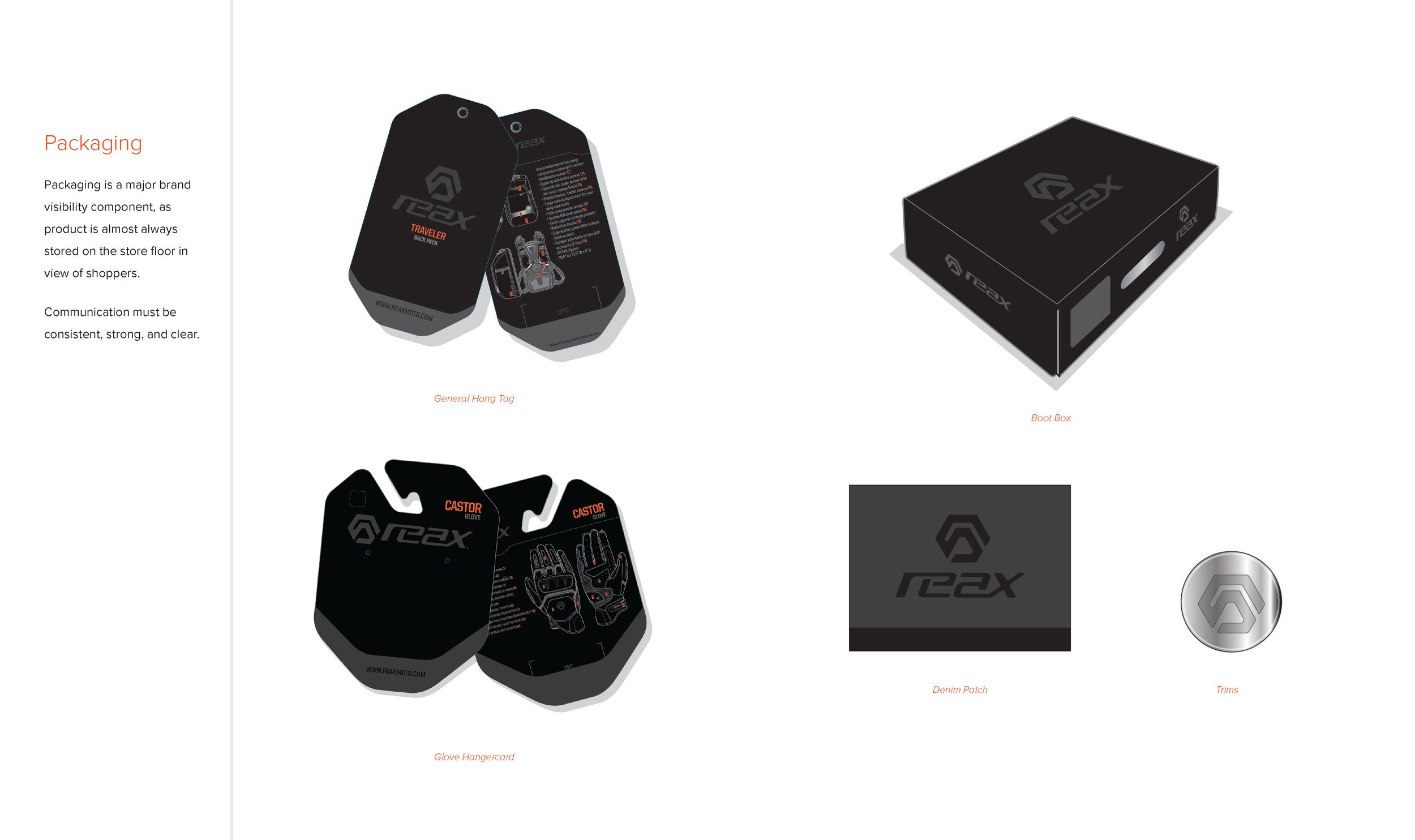
Brand Guidelines
"A complete system, built to keep REAX unmistakably REAX."
A comprehensive identity system covering logo, typography, color, photography direction, and tone of voice, so every team could express the brand consistently at any scale.
Retail
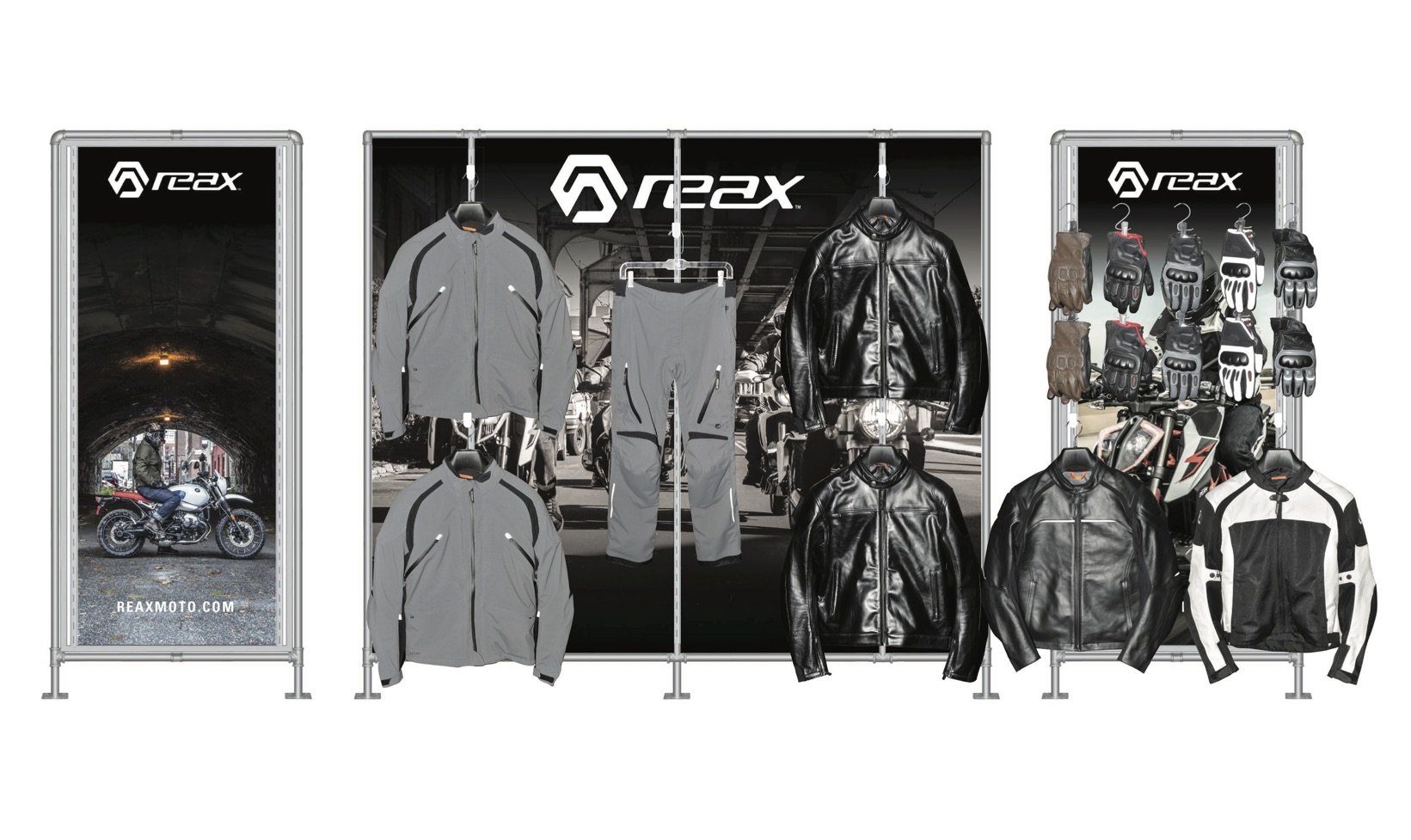
In-store brand fixturing carrying the REAX identity onto the sales floor across retail partners.
Marketing
"One brand voice, from the page to the inbox."
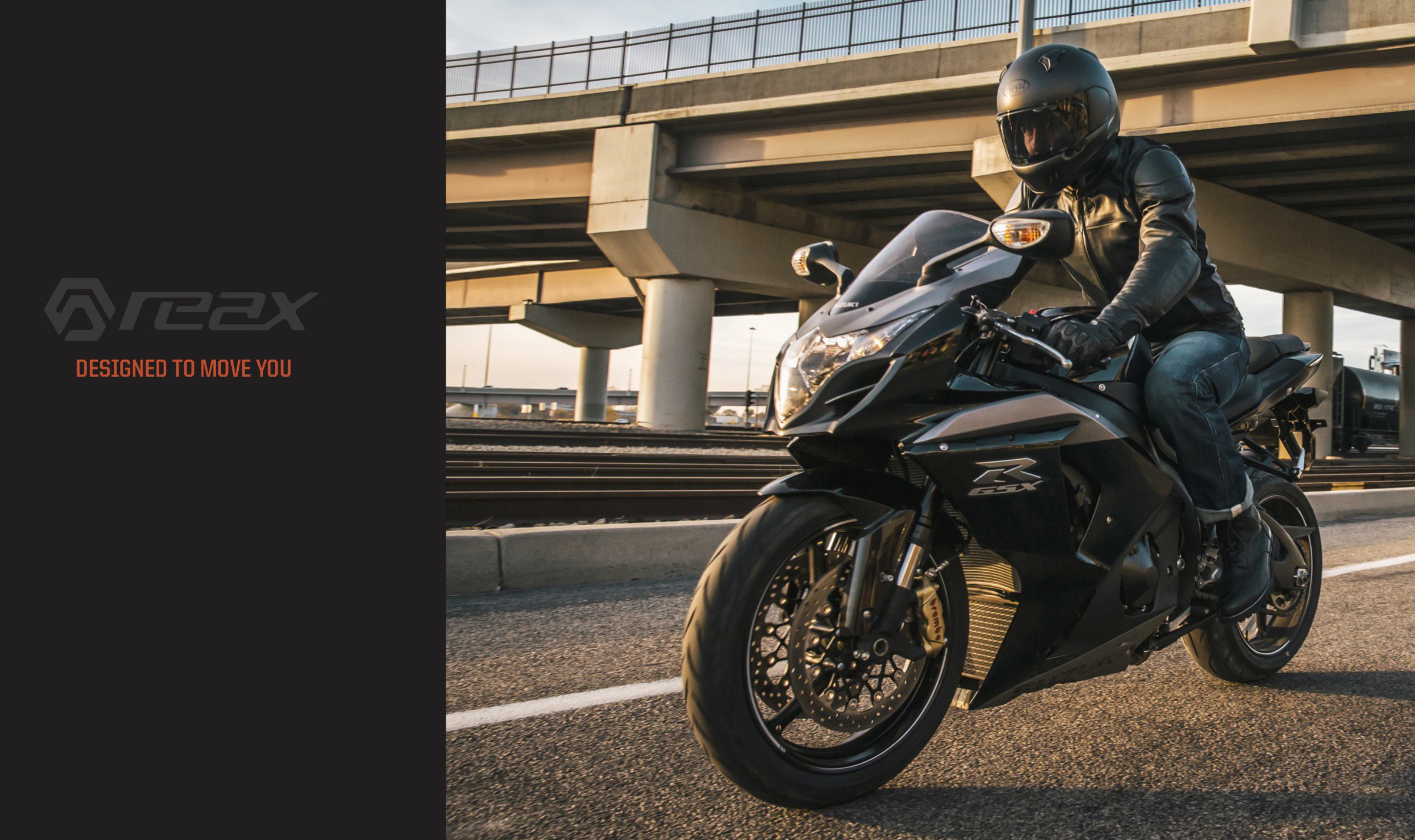
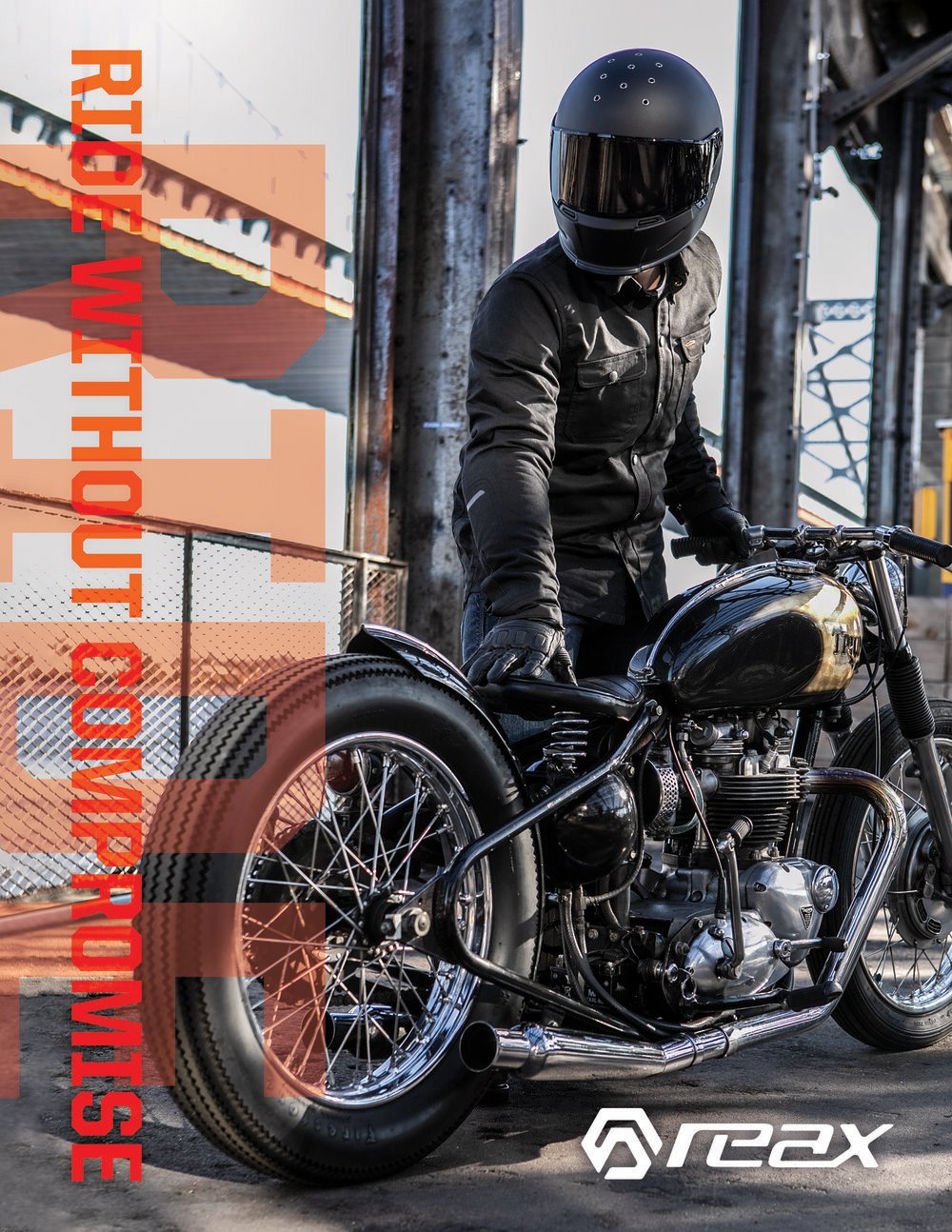
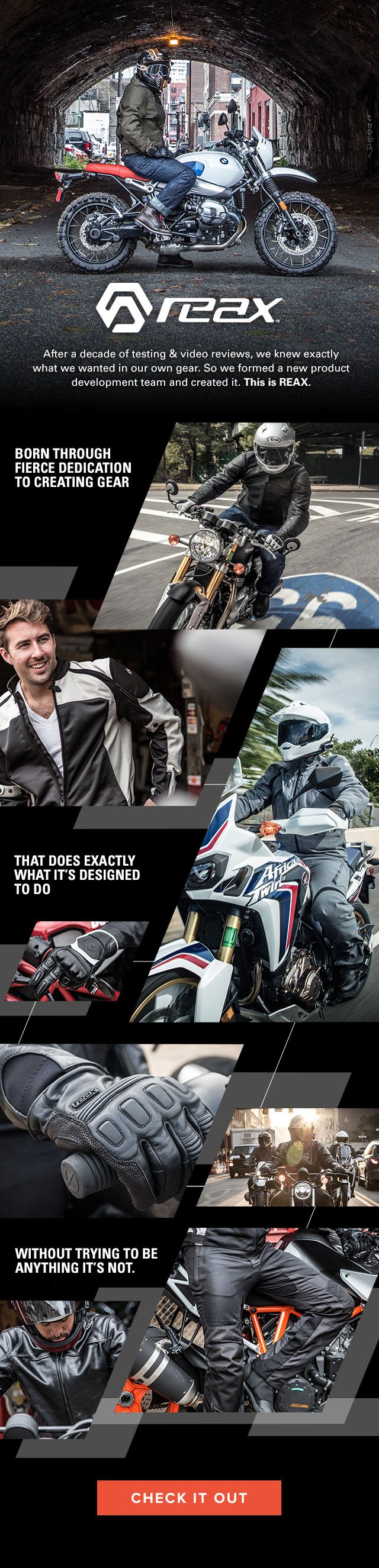
Brand-led marketing carried the REAX identity across every channel, from full-page print in enthusiast titles to lifecycle and launch emails.
Print Advertising
Email
Reflection
"Building REAX from nothing was the most complete brand exercise of my career — identity, product, photography, retail, digital, all under one creative vision."
REAX is the project I'm most proud of in terms of brand-building discipline. Starting from zero and delivering a brand that could sit credibly alongside established players in motorcycle apparel, and then grow to $12M in annual sales, required alignment between creative, product design, and retail operations.
←
Previous Project
USCIS 'Who I Am'
Next Project
RevZilla Brooklyn
→
RevZillaComoto Holdings
Brand System
The foundation everything is built on.
Creative DirectionBrand StrategyIdentity DesignArt Direction
Overview
A brand at $800M scale needs a single voice.
RevZilla had grown from a scrappy Philadelphia startup into one of the most recognized names in powersports e-commerce. With that growth came complexity: multiple creative teams, dozens of touchpoints, and brand expression that had drifted across years of rapid scaling.
The RevZilla Brand Guidelines project was about codifying everything that had made the brand great, and giving every team the tools to express it consistently at any scale.
BrandRevZilla
CompanyComoto Holdings
ScopeComplete Brand Identity System
My RoleCreative Direction, Brand Strategy, Identity Design
Output29-page brand guidelines + digital standards
The Challenge
Preserve the soul of the brand while scaling it for enterprise.
RevZilla's brand equity was built on authenticity: genuine love of riding, honest reviews, community-first attitude. The risk in formalizing guidelines was losing that scrappiness in favor of corporate polish. The guidelines had to encode the energy, not just the rules.
The Approach
Define the principles. Trust the people to execute them.
Rather than prescribe every executional detail, we built a system that gave teams a clear north star, the brand's voice, values, and visual DNA, and the flexibility to express it across their specific contexts. Photography direction and tone of voice became the guardrails that unified without constraining.
Brand Guidelines — Selected Pages
29-Page Brand System: Logo, color, typography, photography direction, tone of voice, and digital + print standards.
Reflection
"Brand guidelines are only as good as the culture that adopts them. The best ones don't feel like rules — they feel like permission."
This project was an exercise in listening before prescribing. The RevZilla brand had been built by people who cared deeply about motorcycling, and any guidelines that didn't respect that authenticity would simply be ignored. By grounding every standard in the brand's genuine values, the resulting document became something teams actually wanted to use.
Next Project
Honda Pioneer
→
RevZillaComoto Holdings
RevZilla Brooklyn
A motorcycle megastore, mapped like the city it lives in.
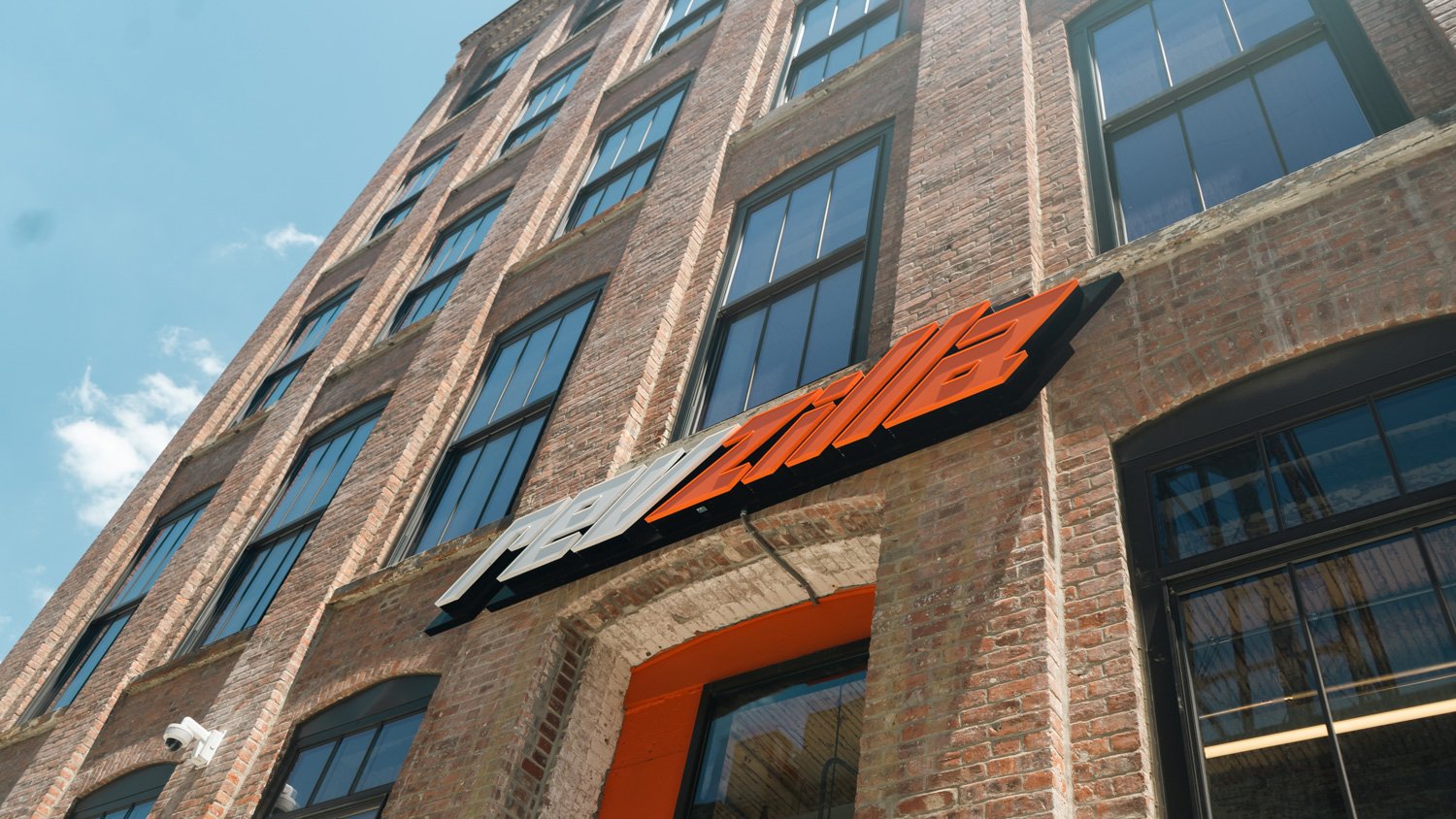
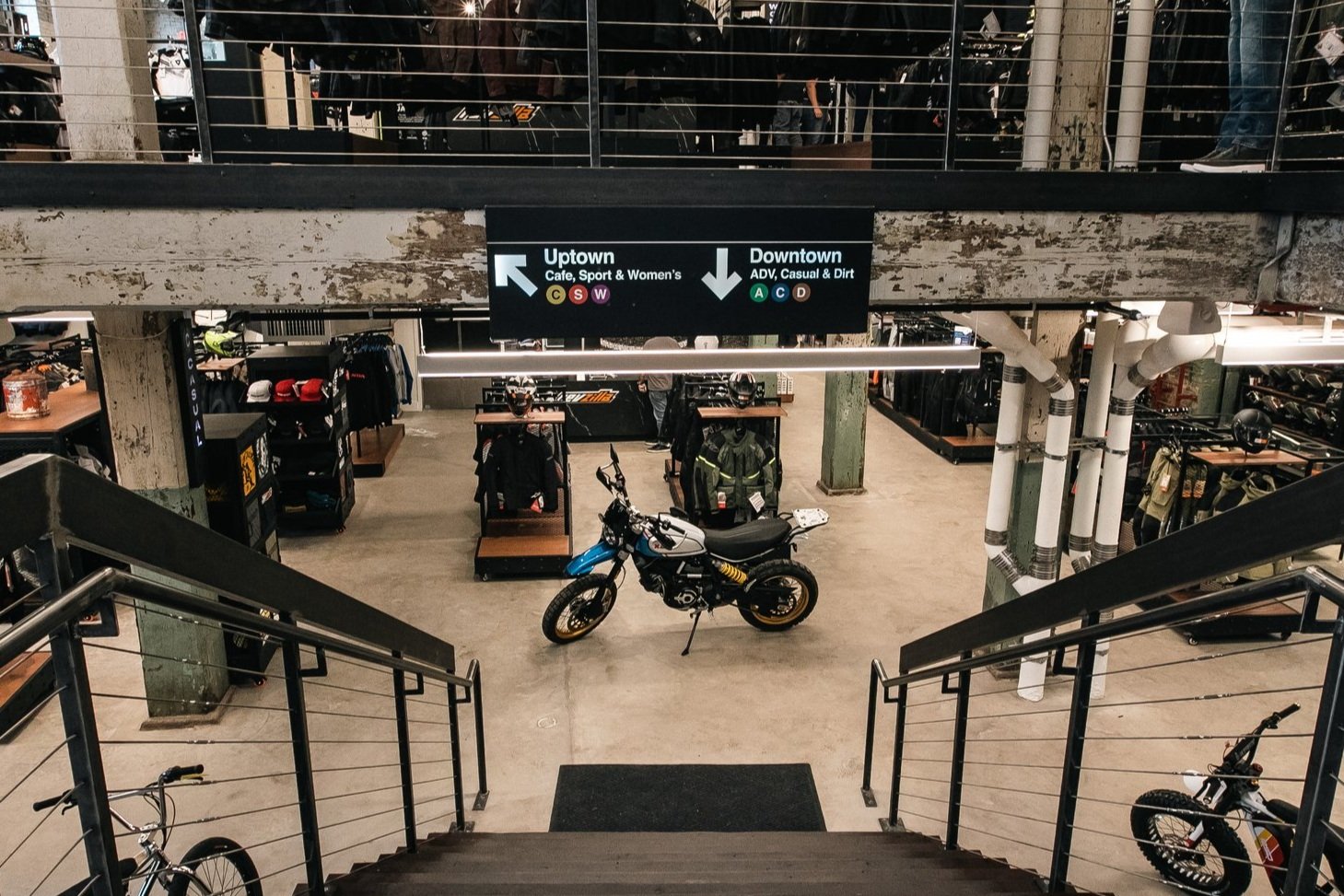
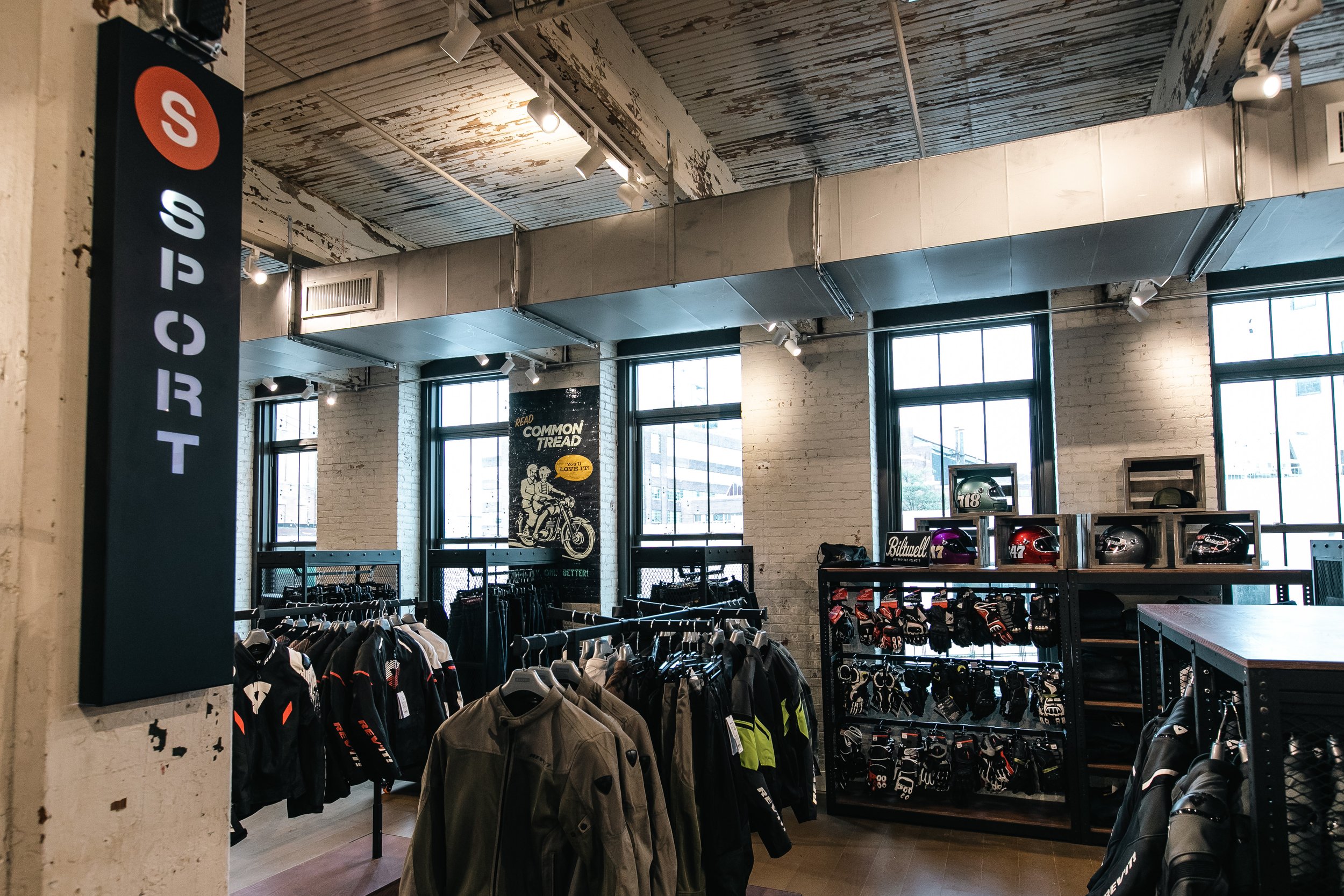
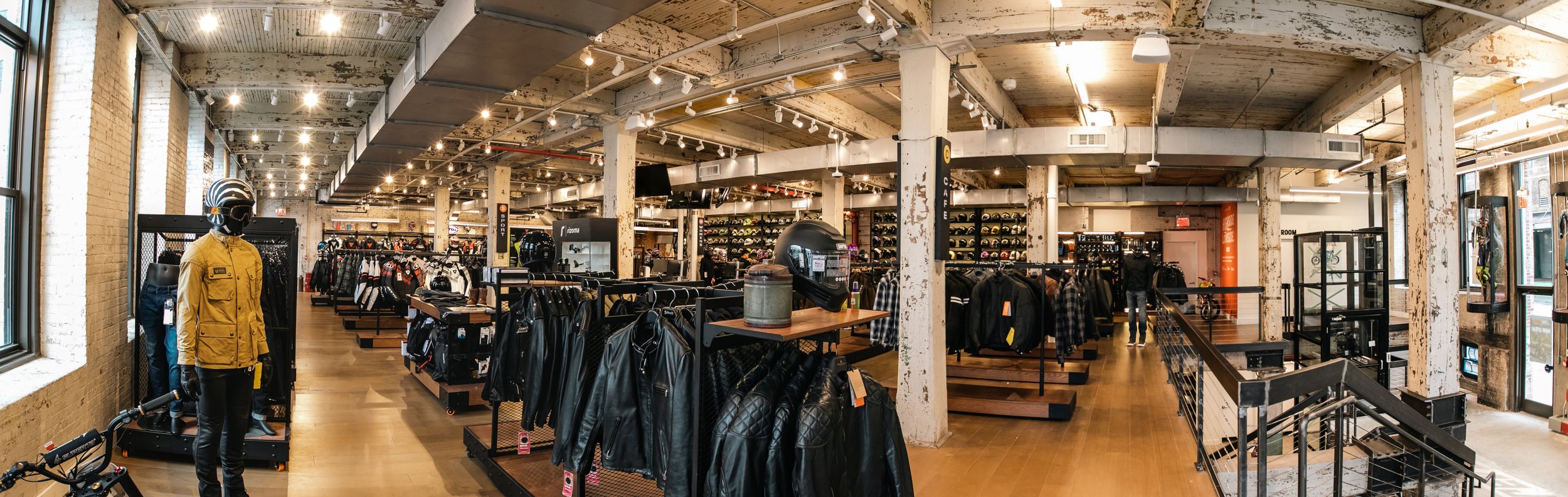
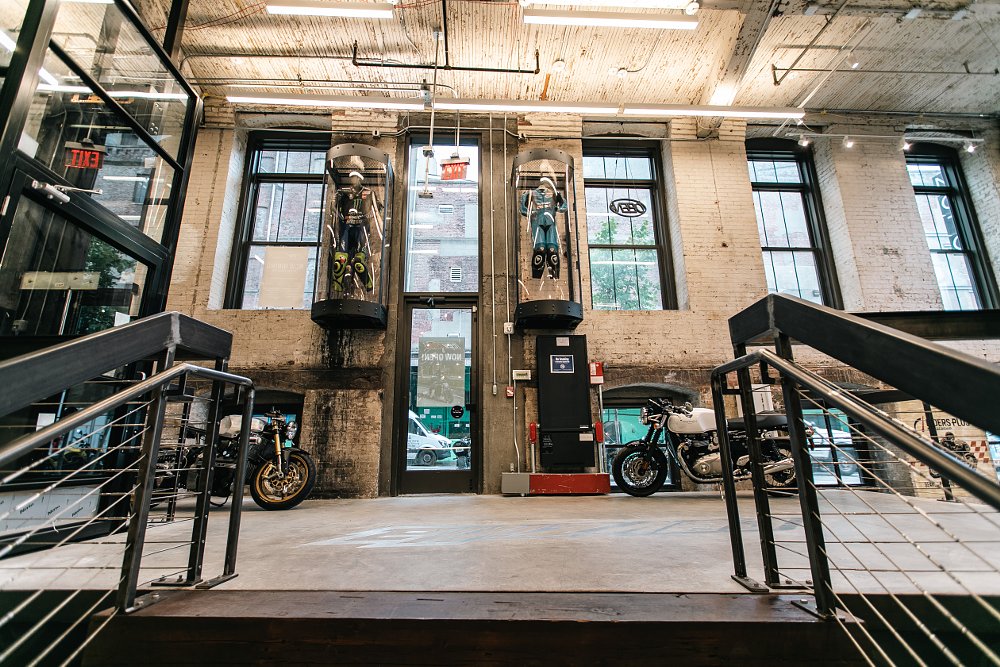
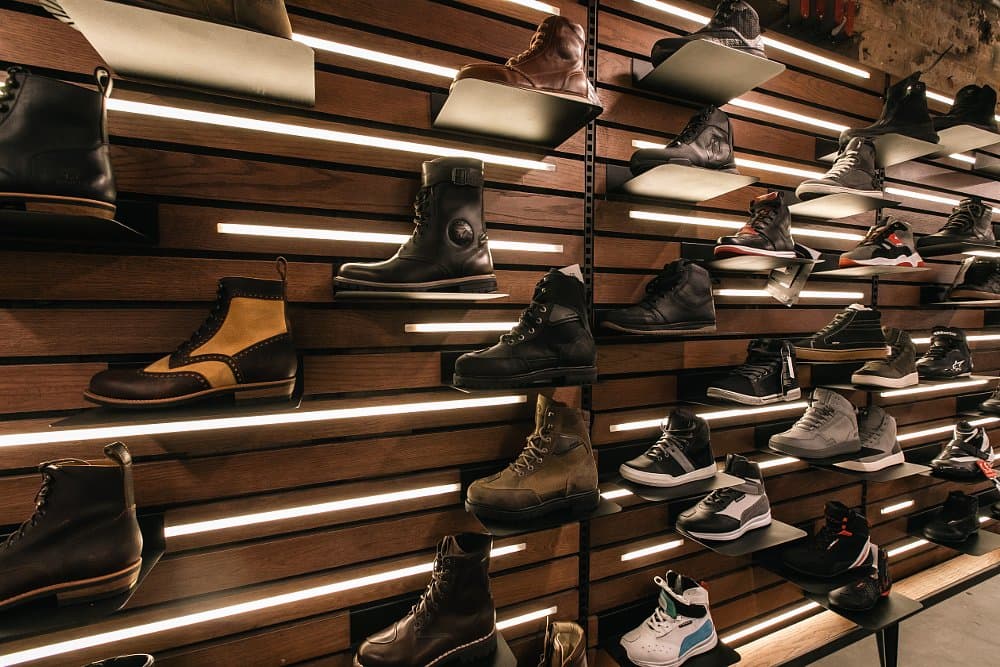
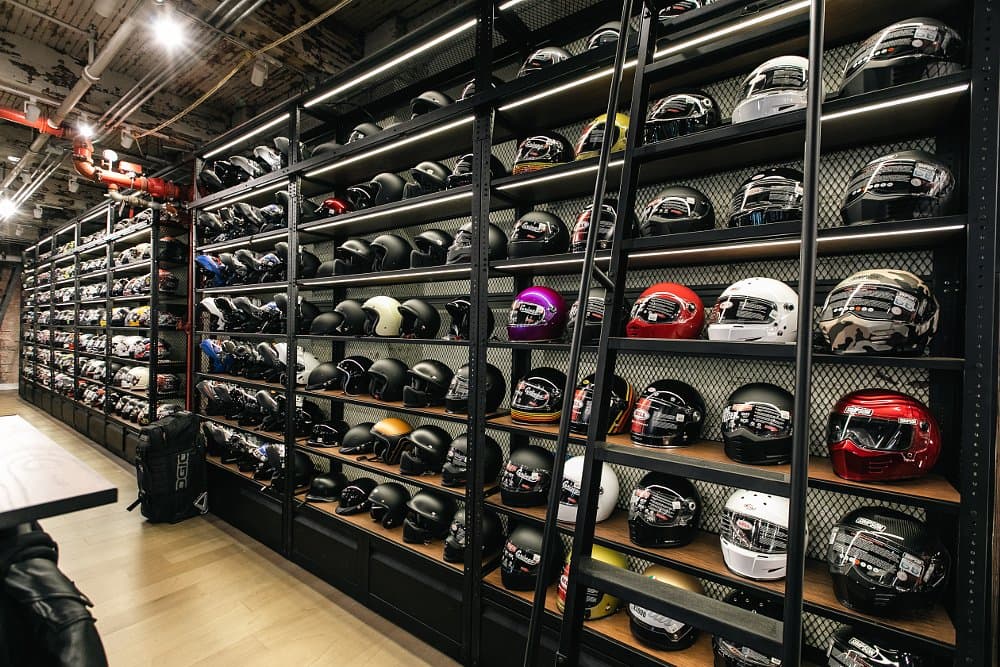
For what would be its most ambitious location yet, RevZilla took over a historic multi-level warehouse on Hall Street, between the Brooklyn Navy Yard, DUMBO and Williamsburg: exposed brick, timber columns, freight-era bones. The space had character. What it didn't have was a way to make a sprawling, two-level space feel navigable to a first-time walk-in.
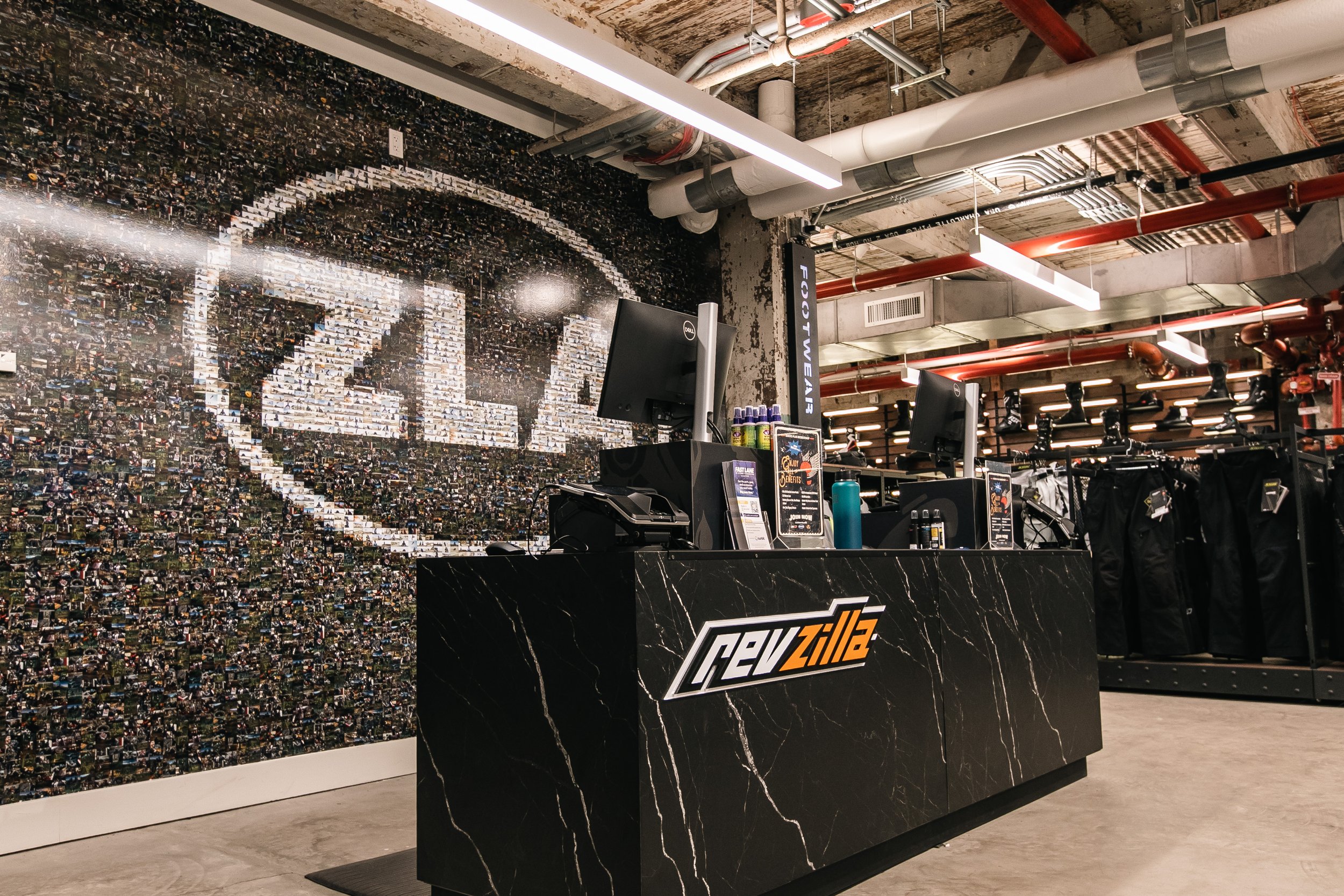
So we gave ZLA a New York accent and ran with it: a stop on the most trusted wayfinding system in the city, the subway. Every department became a line, every sign spoke fluent MTA, and the whole floor told you exactly where you were and where to go, in a visual language the city already knew by heart.
Make a sprawling warehouse feel impossible to get lost in — and impossible to leave.
A flagship has to do more than stock product. It has to orient a newcomer in seconds and reward a regular every visit. The building's raw footprint was both the draw and the problem: beautiful, cavernous, and easy to get lost in.
The Approach
Borrow the one map every New Yorker already reads.
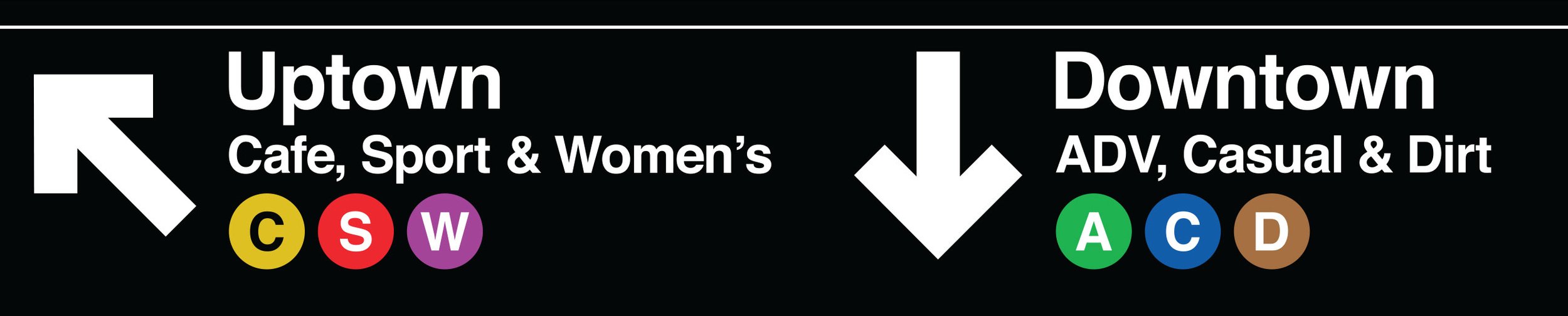
The subway is the city's shared language for getting somewhere. We assigned each department its own line, and let the system do the directing. Familiar bullets, station typography, and Uptown / Downtown logic turned wayfinding into part of the fun.
The System
"ZLA. Now arriving in Brooklyn."
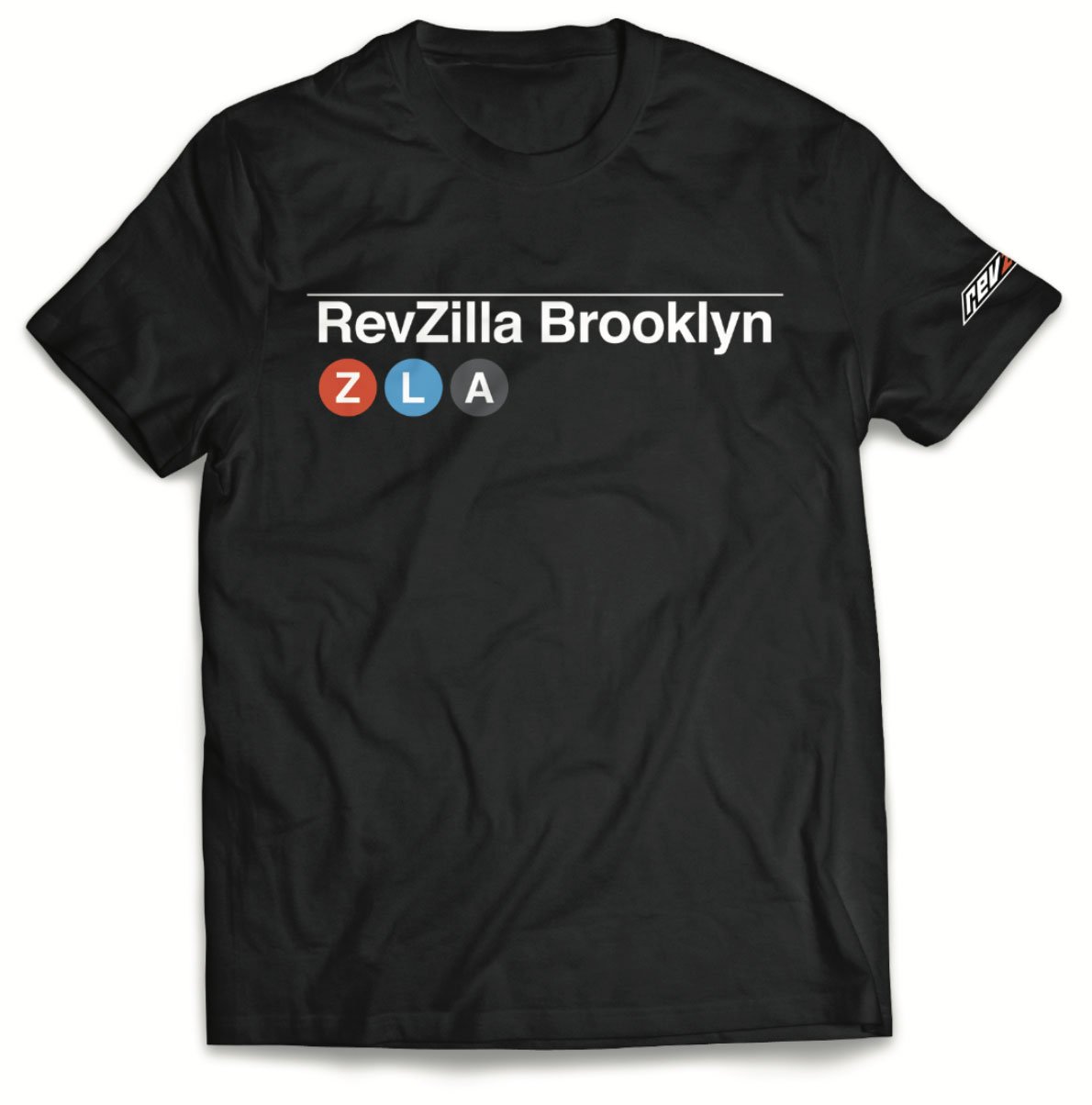
It started with a single move: take ZLA, the everyday shorthand for RevZilla, and set it in the unmistakable type and colored bullets of the New York subway. The nickname stopped being slang and became a station, a place on the map.
Station IdentitySubway BulletsNYC
Every department became a line. Uptown ran to Cafe, Sport & Women's (the C, S and W bullets). Downtown ran to ADV, Casual & Dirt (A, C and D). One glance told you which platform to head for.
Wayfinding In The Wild
"Station signage you could read across the room."
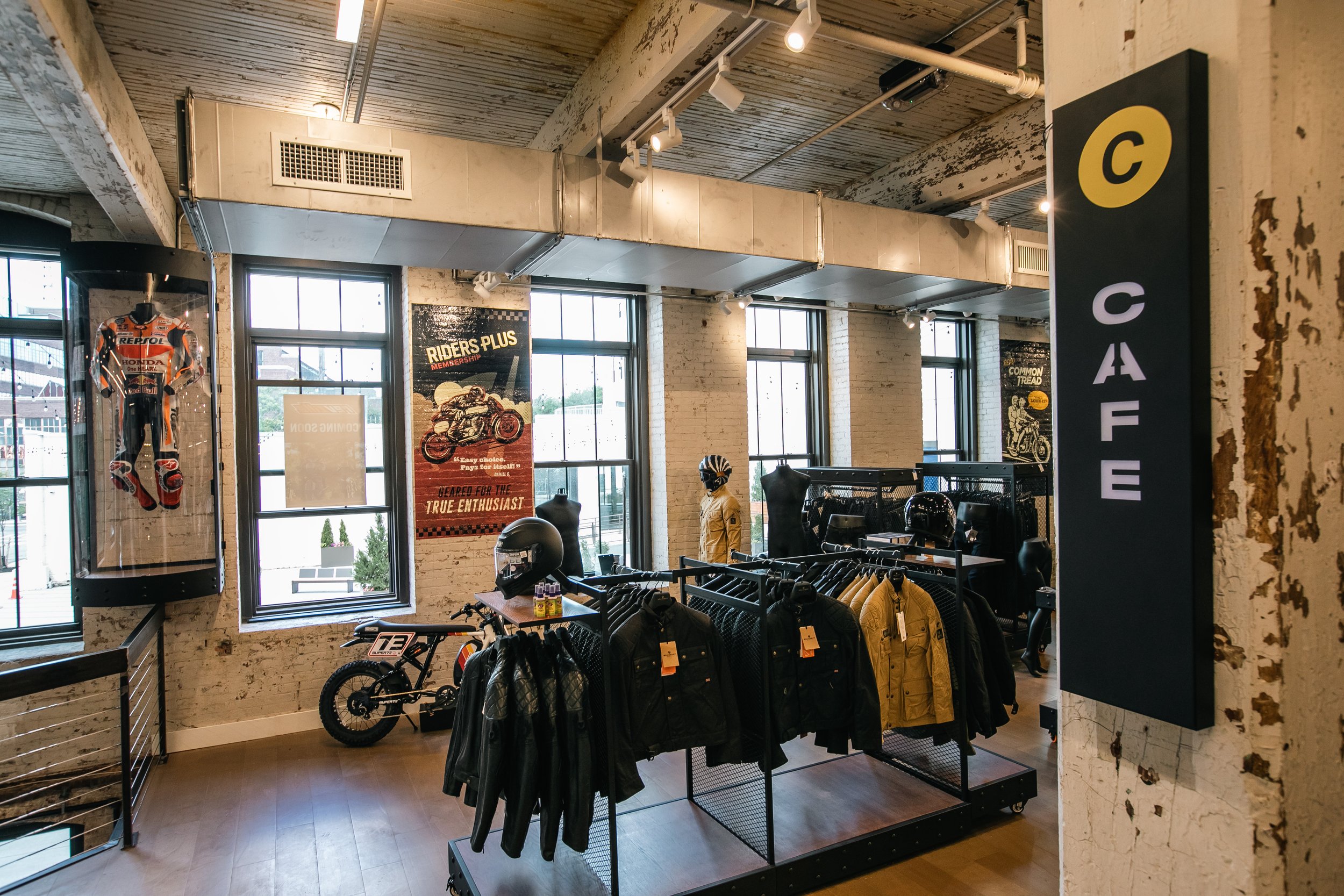
Department markers were built as oversized platform signs, single bold letters in colored bullets, mounted high on the columns so you could navigate by sight line alone.
The Floor
"Industrial bones, New York attitude."
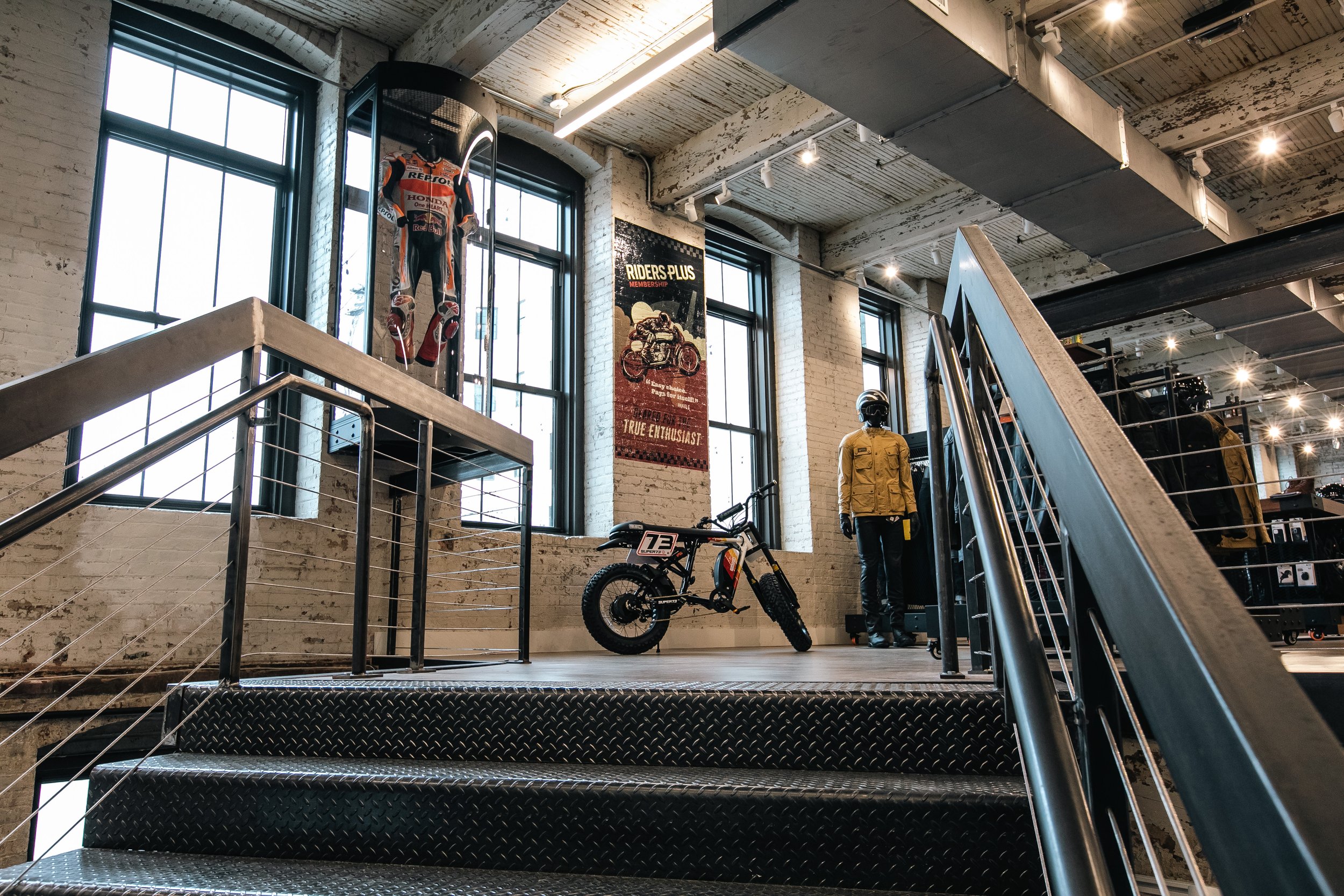
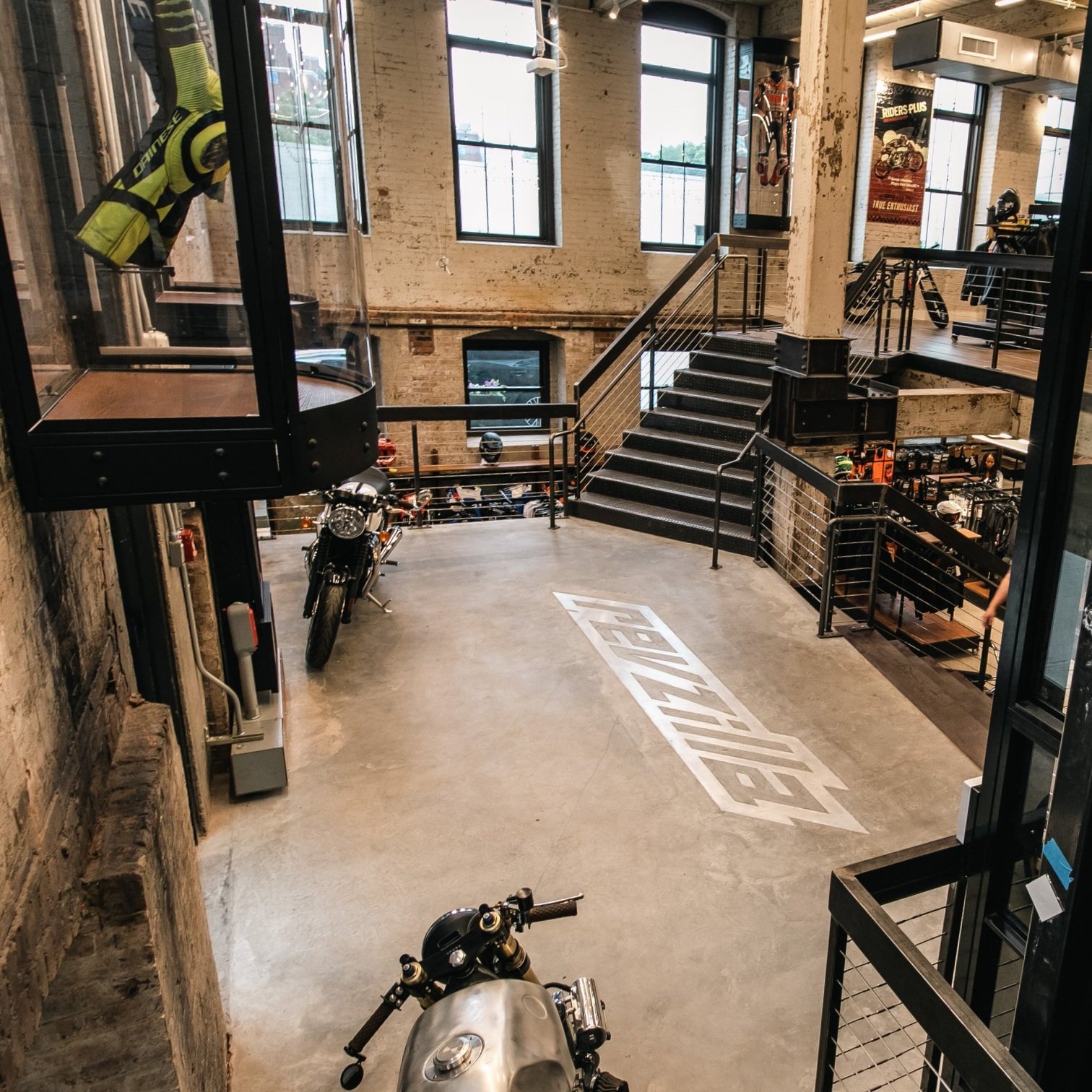
The graphics were tuned to the building, not pasted over it. Raw brick, steel mezzanines and timber columns set the stage; floor decals, hanging blades and a giant painted logo did the directing across two levels of motorcycles and gear.
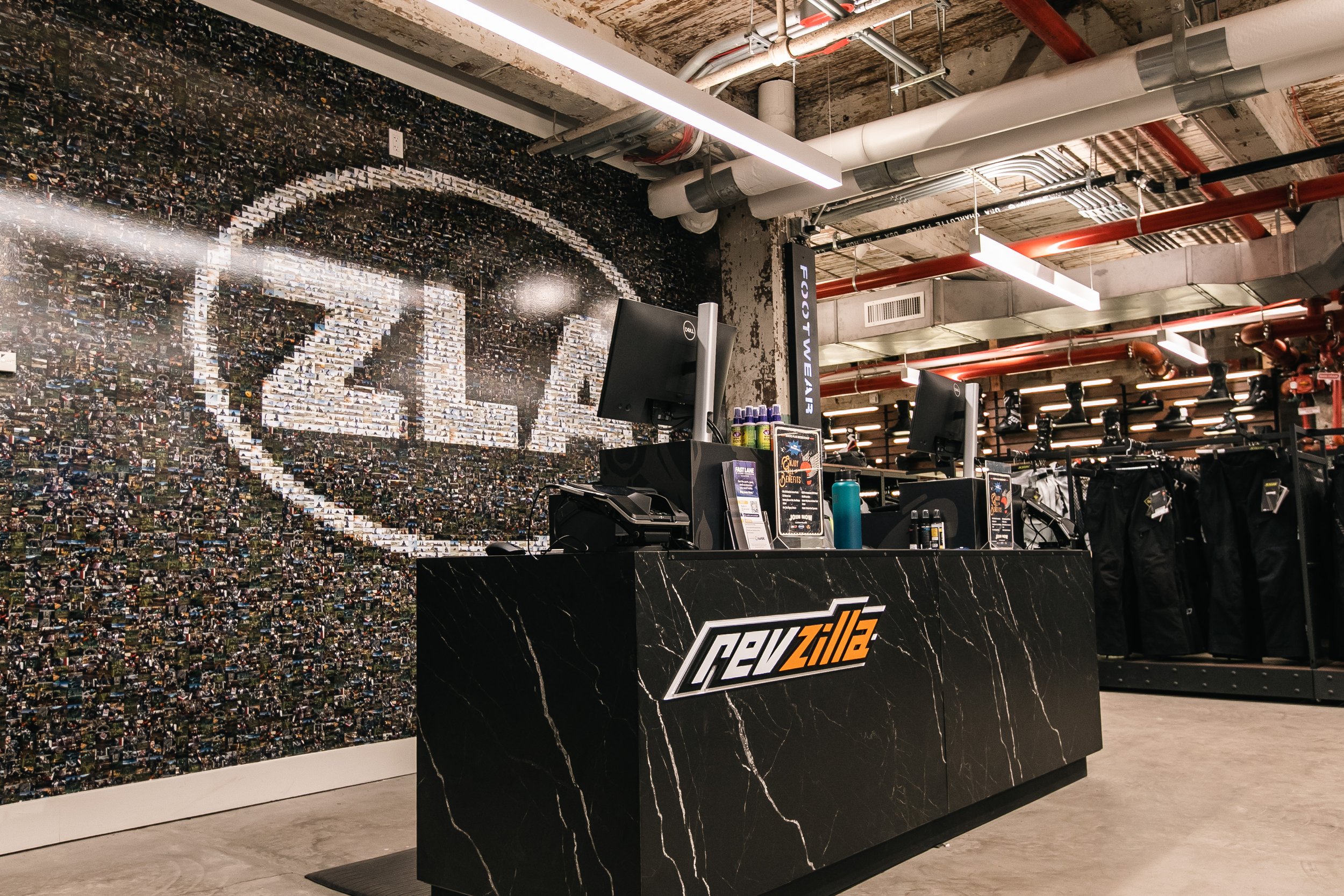
The ZLA Wall
"A mosaic of the people who ride."
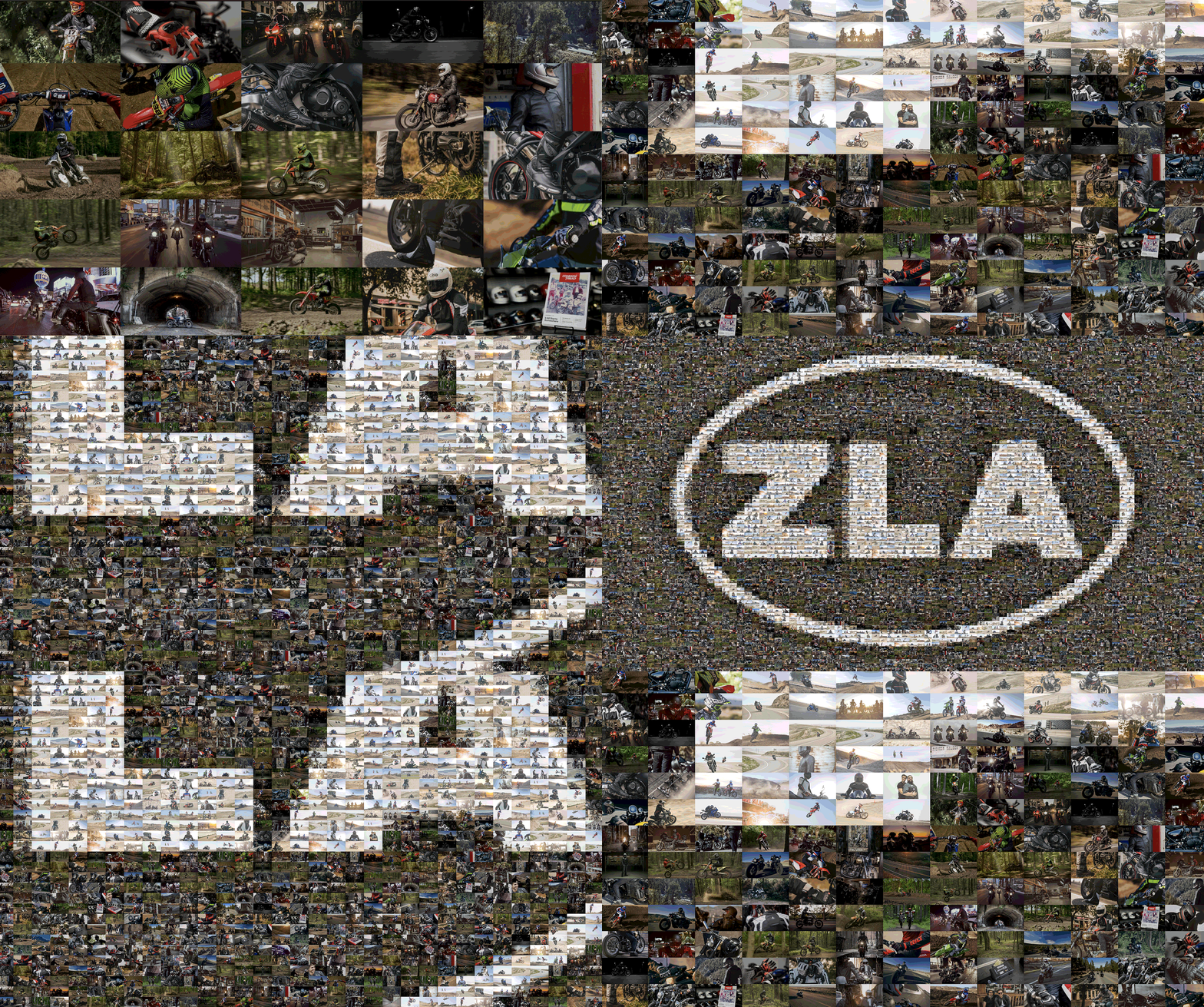
The inspiration was the tile mosaics found in subway tunnels across the city. Behind the checkout, that idea was rebuilt at store scale: thousands of rider and product images resolving into the ZLA mark from across the room. It turned the most transactional corner of the store into its most photographed, and tied the whole brand back to the community it serves.
Photo MosaicFeature WallCommunity
Environmental Graphics
"Walls that kept the brand talking."
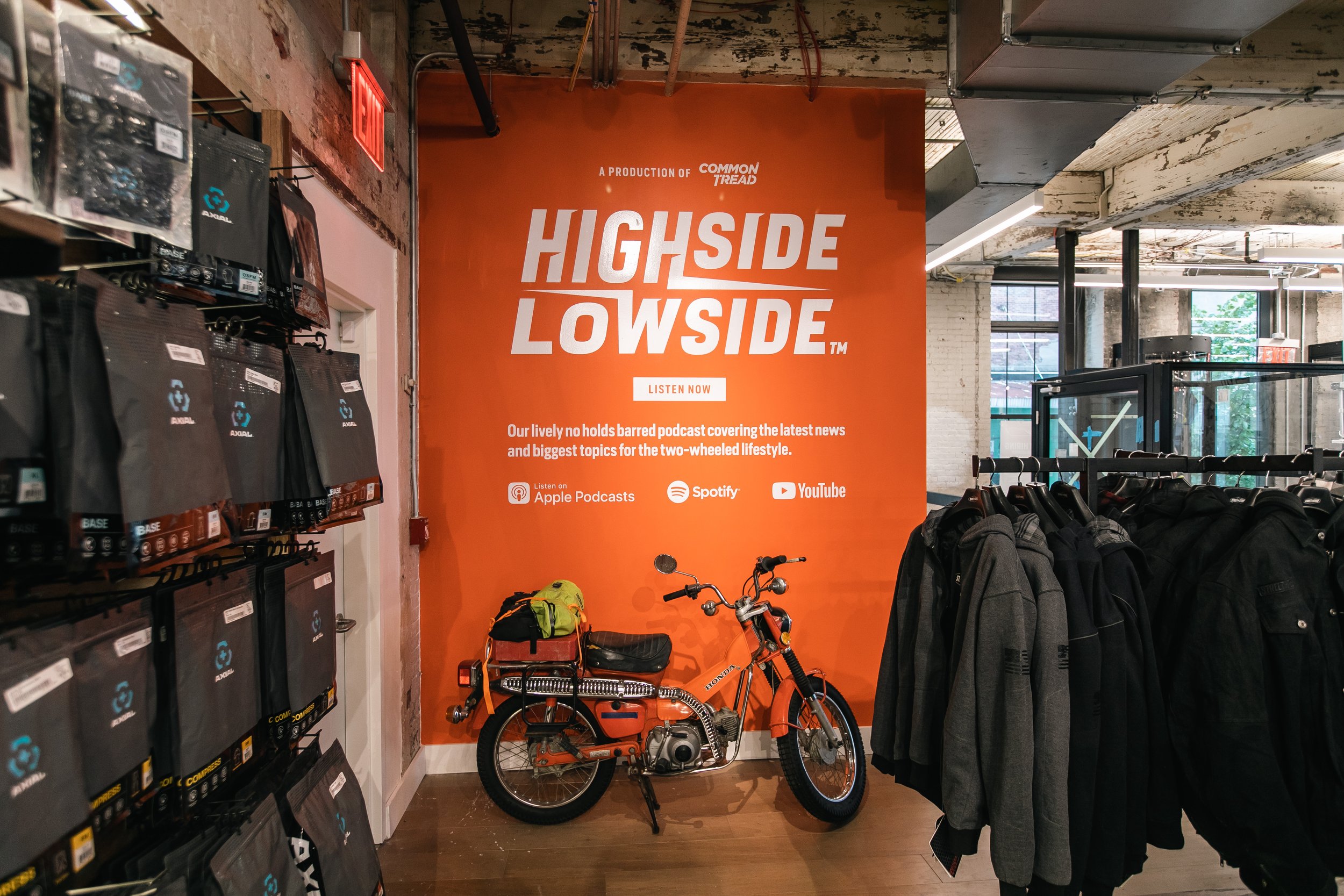
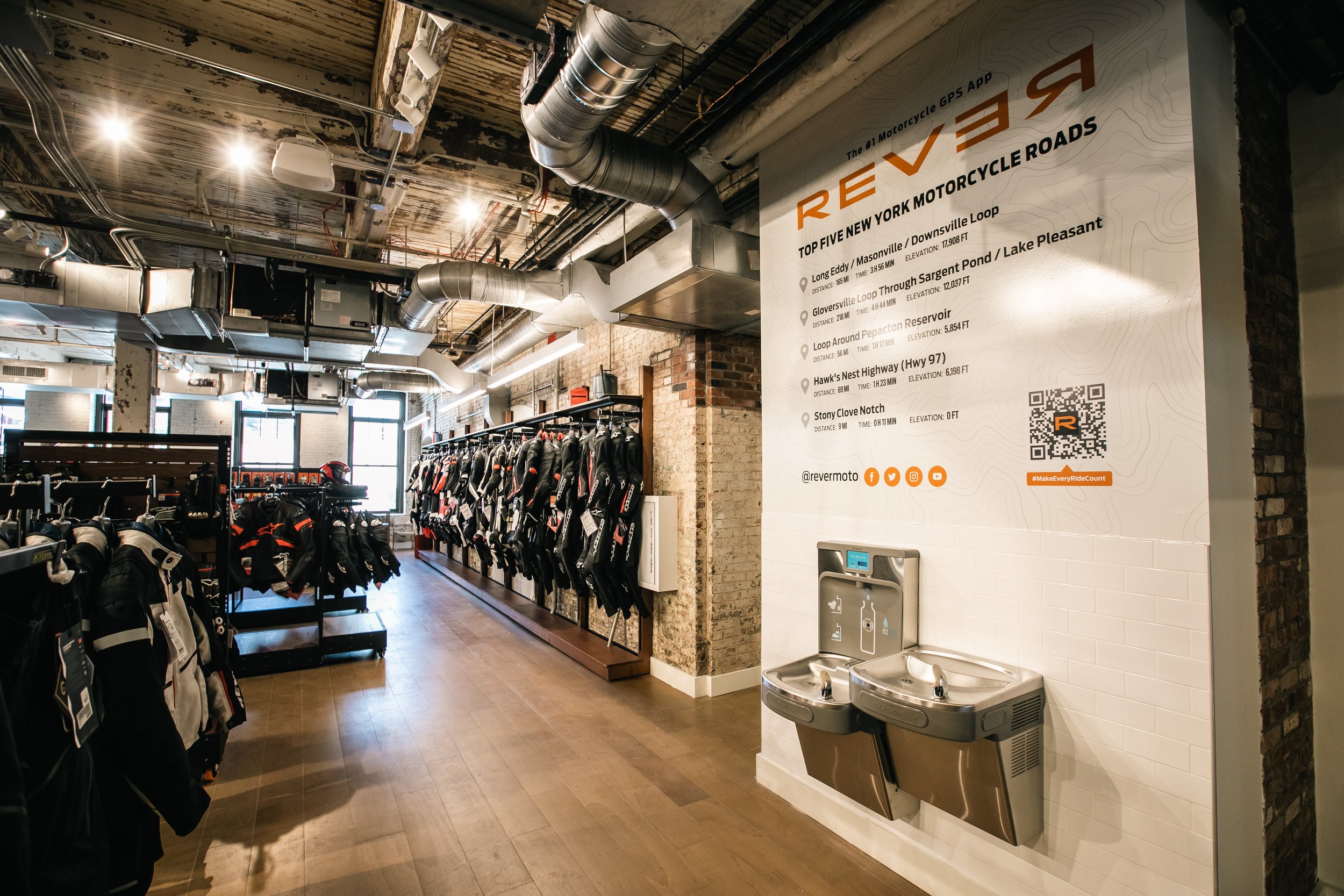
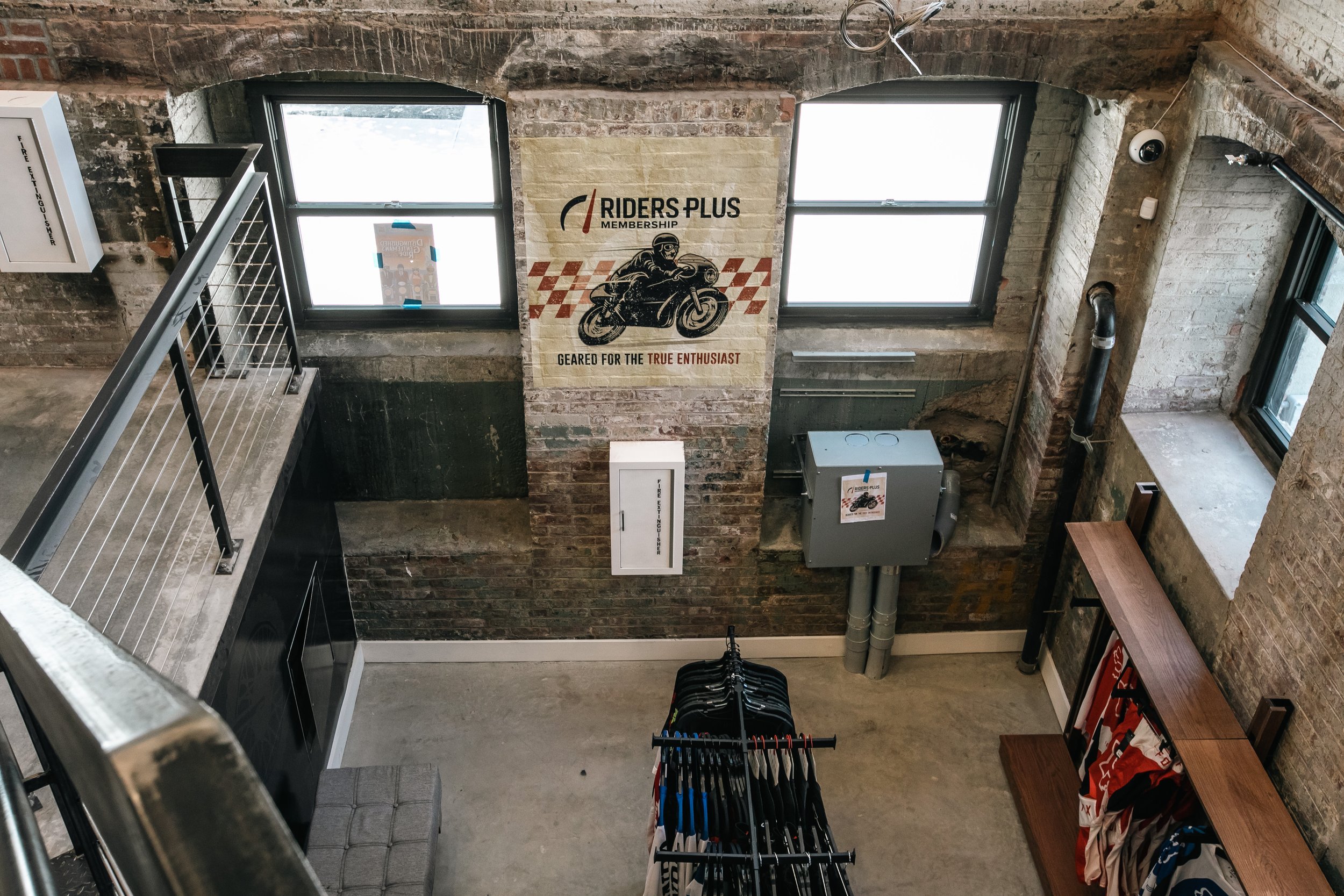
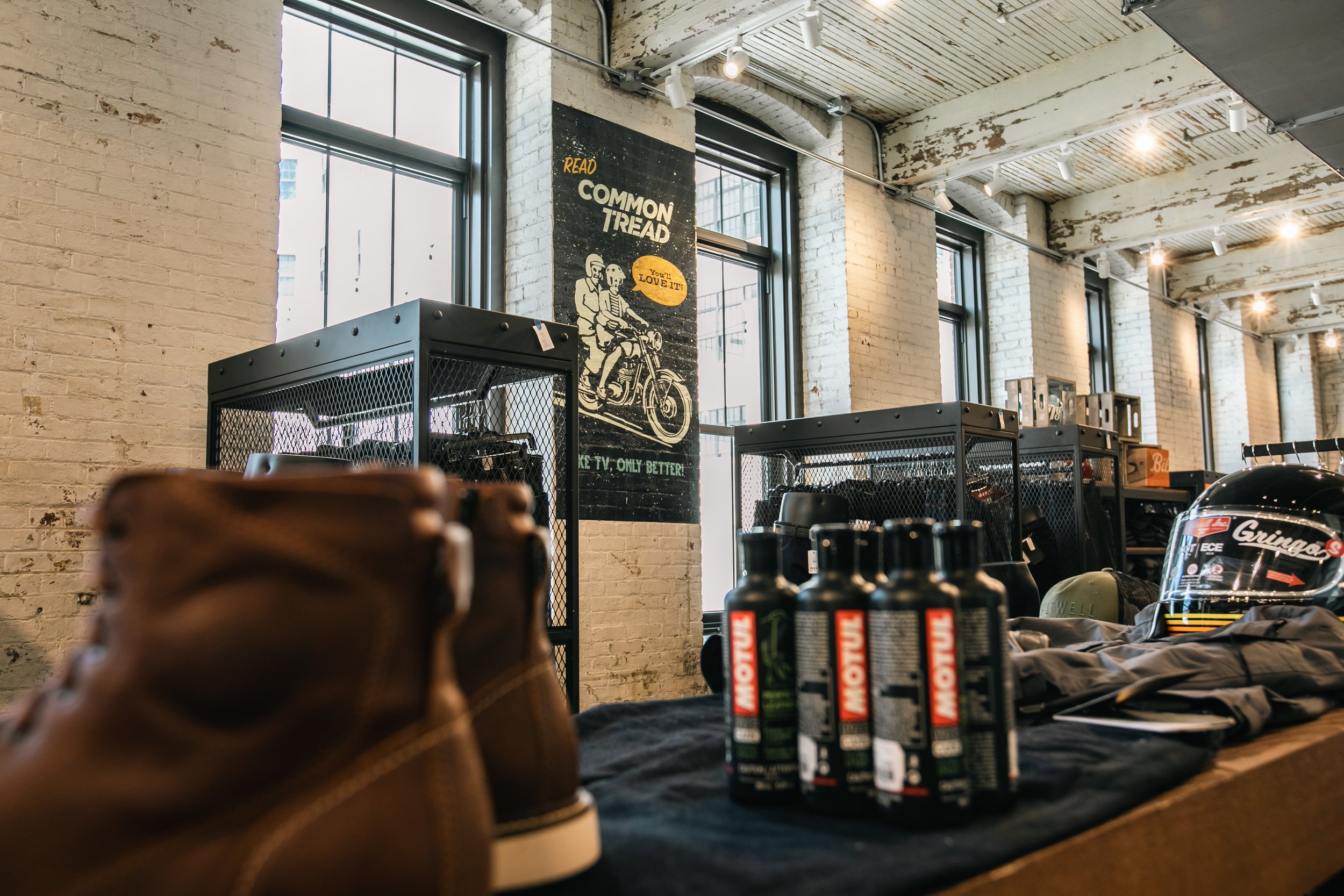
Beyond wayfinding, large-scale murals and vintage-style posters carried RevZilla's other properties onto the walls: Common Tread, the Highside / Lowside podcast, REVER ride routes, and the Riders Plus membership, each with its own dedicated wall treatment.
Merchandise
"Ride the line. Wear the line."
Our Philadelphia showroom had already proven riders would travel for a RevZilla experience, so we created an exclusive shirt, turning it into proof you'd been there.
ApparelSouvenirBrand Extension
Reflection
"It's important to recognize where we are just as much as who we are — to go into these neighborhoods with a sense of humility and respect."
RevZilla Brooklyn worked because the idea and the architecture pulled in the same direction. We didn't drop a national brand on top of the building, we let the building and the city set the tone. A borrowed, beloved system made a huge raw space instantly legible, gave every department a personality, and turned a checkout wall and a t-shirt into things people wanted to photograph and wear. When the doors opened with a Motobash — RevZilla's signature community gathering — in June 2022, the payoff was clear: more than a shop, the flagship had become a gathering point, a physical home for the brand in the city and a place for the Brooklyn riding community to land.
←
Previous Project
REAX Apparel
Next Project
American Jazz Academy
→
American Honda Motor CompanyDailey & Associates
Honda Pioneer
A first for Honda. A new standard for powersports digital.
Creative DirectionArt DirectionUI / UXWeb Design
Overview
Honda's most powerful side-by-side needed its most powerful web presence.
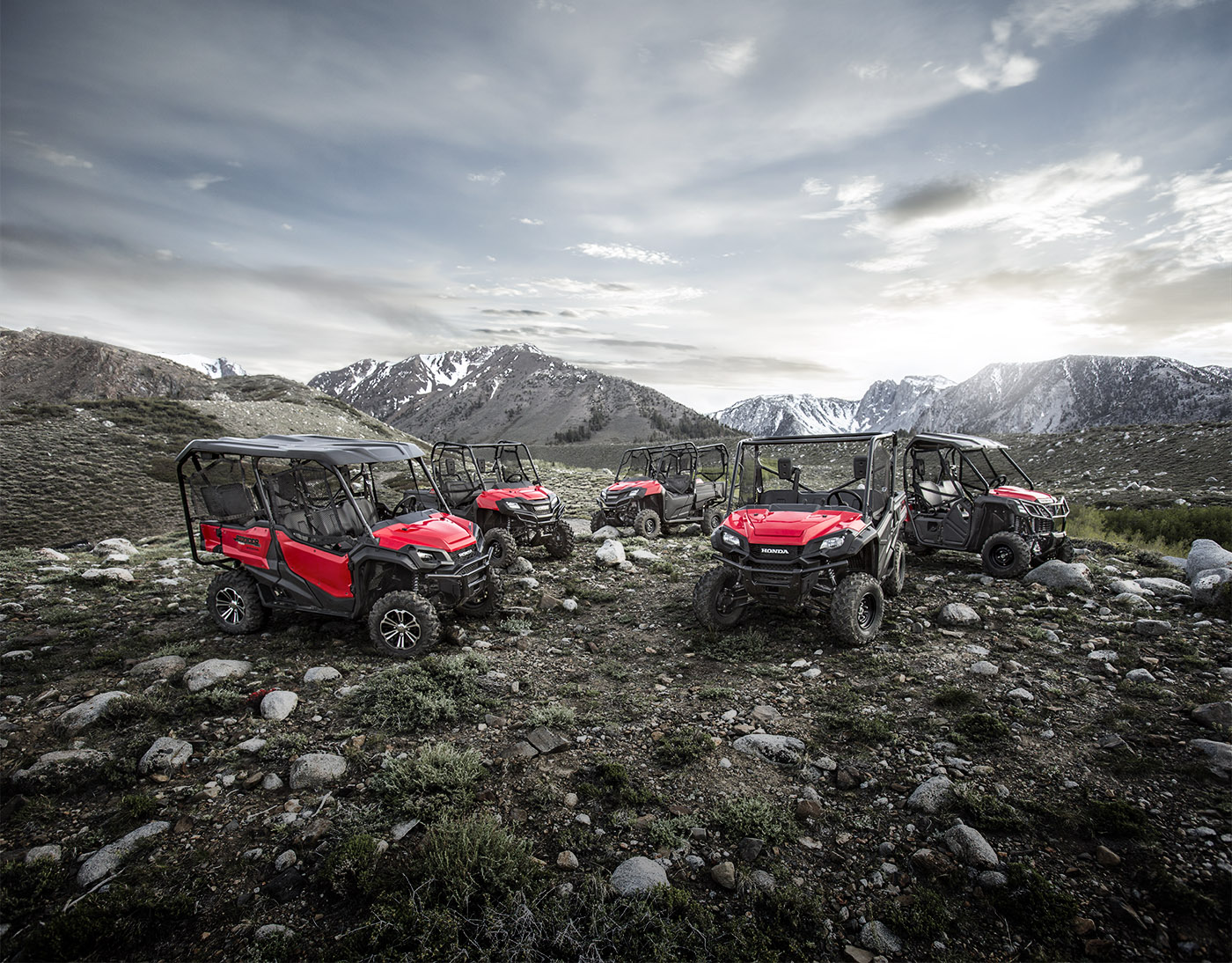
Side-by-side off-road vehicles were the fastest-growing category in powersports, but market share belonged to Polaris and Yamaha. Honda was ready to compete. In 2015 they introduced the Pioneer 500, and in 2016, the Pioneer 1000: the most powerful side-by-side they had ever built.
We were tasked with making an equal marketing impact. The digital experience we built was a first for Honda, a fully responsive property dedicated entirely to the Pioneer family lineup.
ClientAmerican Honda Motor Company
AgencyDailey & Associates
Year2015 – 2016
ScopeDedicated website for the Pioneer family
My RoleCreative Direction, Art Direction, UI/UX, Web Design
Result4.5M pageviews in 10 months · Strong qualified lead generation · Pioneer 1000 reached top 4 in category
The Challenge
Compete with category leaders on a platform that didn't exist.
Honda's existing powersports digital infrastructure was over a decade old, a platform-wide system that prioritized consistency over experience. Making a real marketing impact required breaking from that pattern entirely and building something purpose-built for this product family and its audience.
The Approach
Build a first: a responsive digital home dedicated to one product family.
We made the case internally to move off Honda's existing platform entirely. The new site became the hub for a fully integrated effort, with TV, print, digital, email, and social all driving traffic back to one responsive home.
TV
Pioneer 1000 · "It Exists"
Pioneer 500 · "Recovery Mission"
Website
"A digital home built around the Pioneer family."
A fully responsive, product-dedicated site, a first for Honda powersports. Built to immerse each audience in the Pioneer story rather than slot it into a one-size-fits-all platform.
ResponsiveProduct-DedicatedFirst for Honda
powersports.honda.com/pioneer
Digital
"Drive the right riders to the experience."
Rotating display banners and pre-roll kept the Pioneer in front of the people closest to buying, sending a steady stream of qualified traffic to the new responsive site.
DisplayPre-rollRetargeting
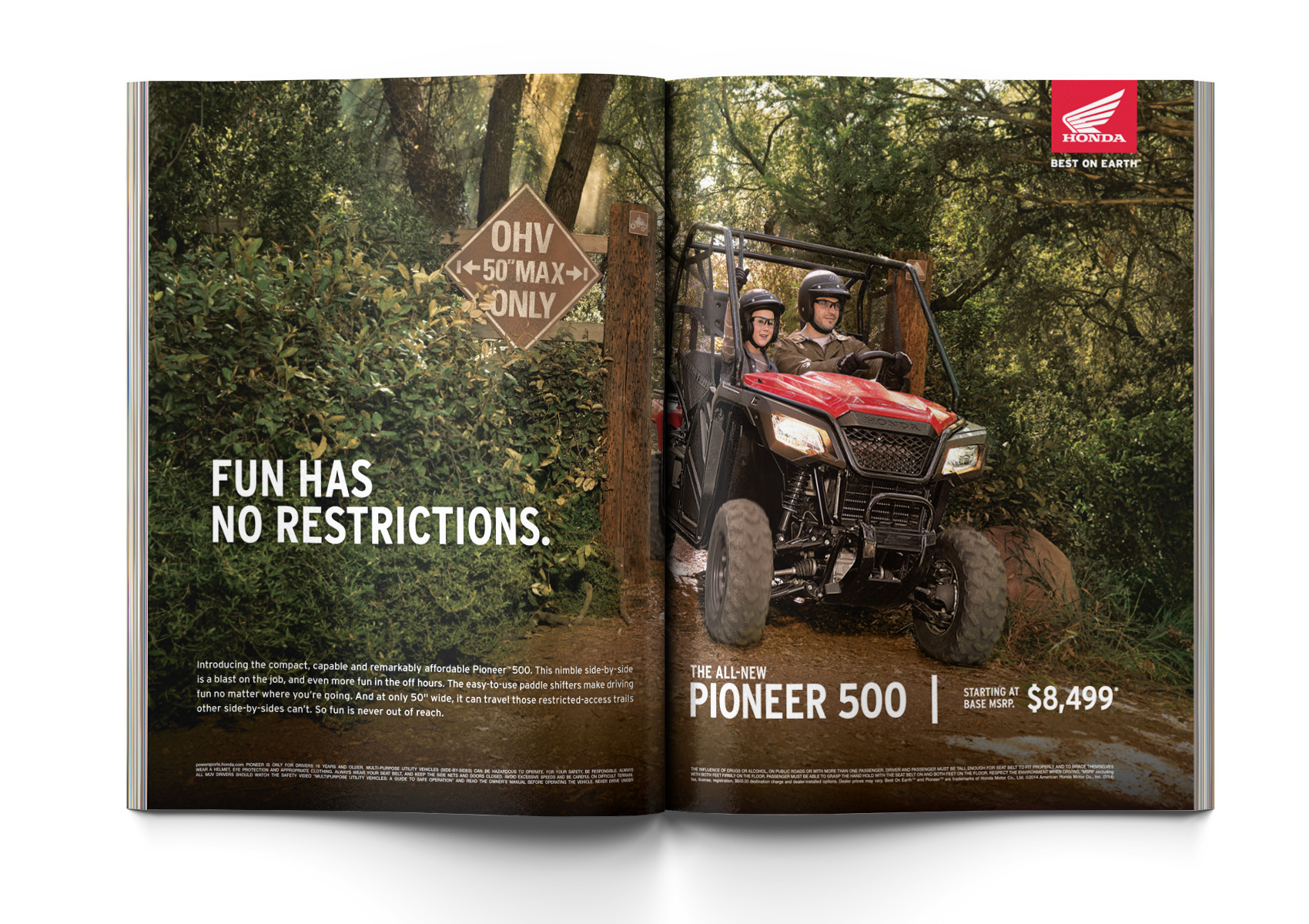
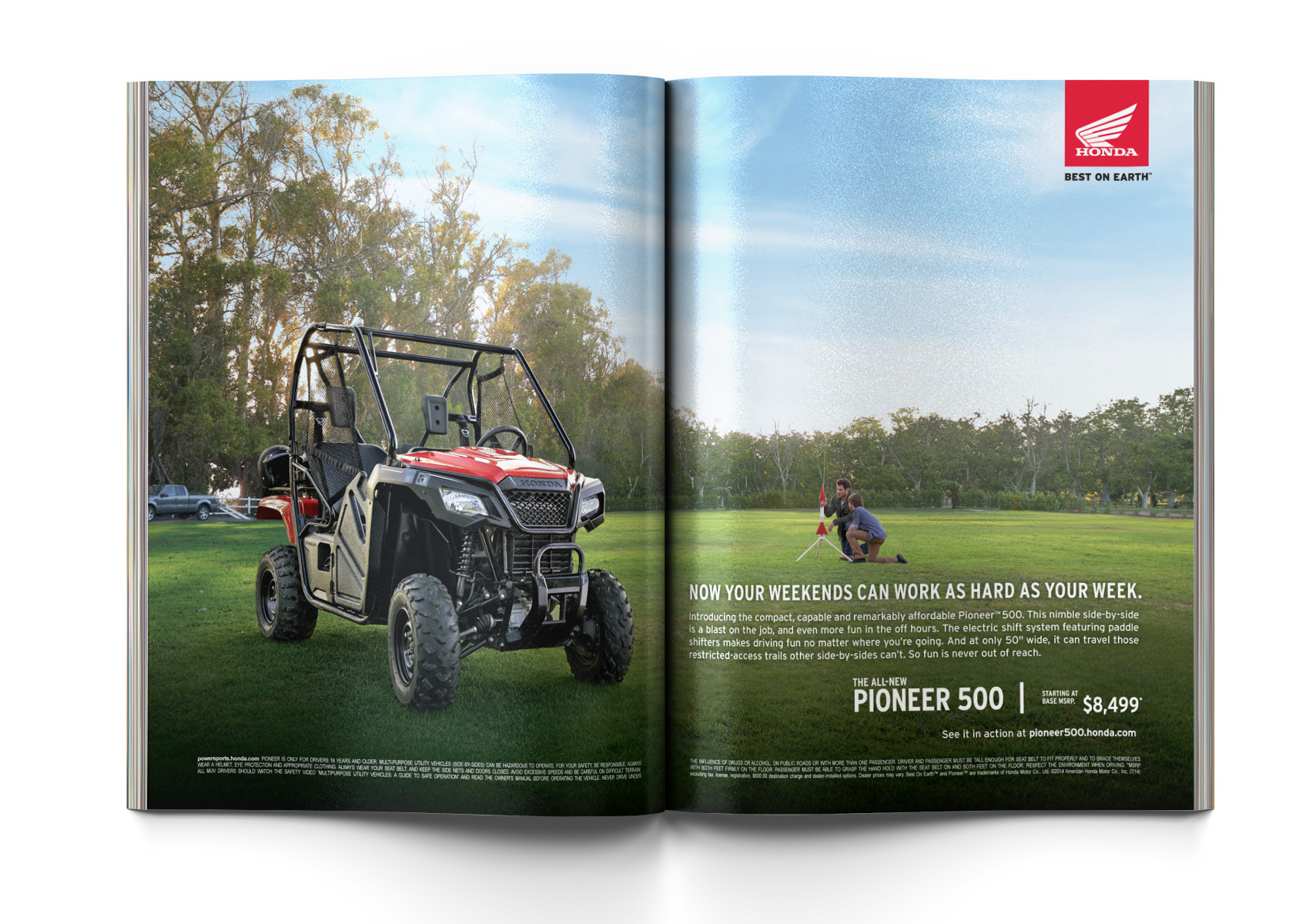
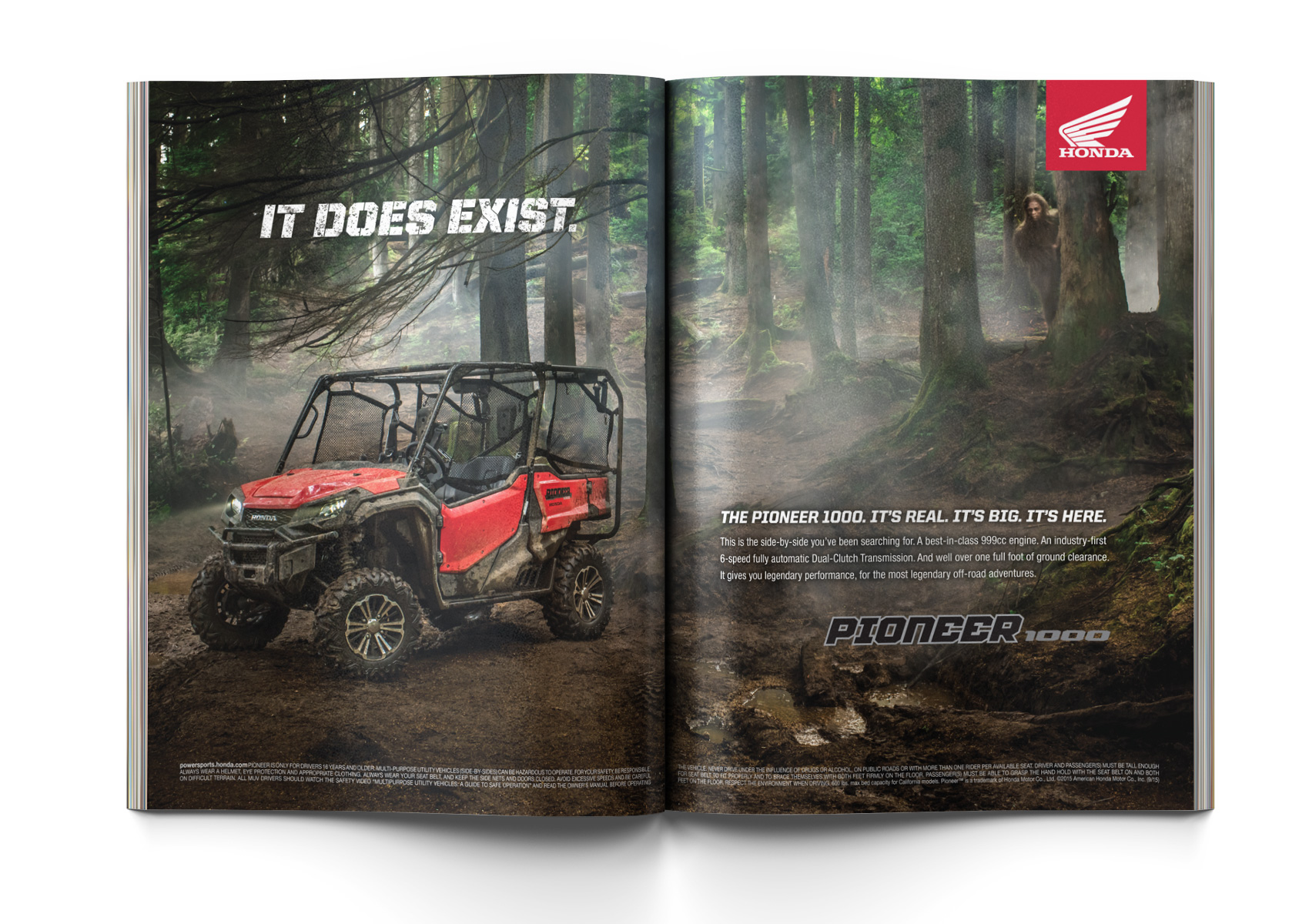
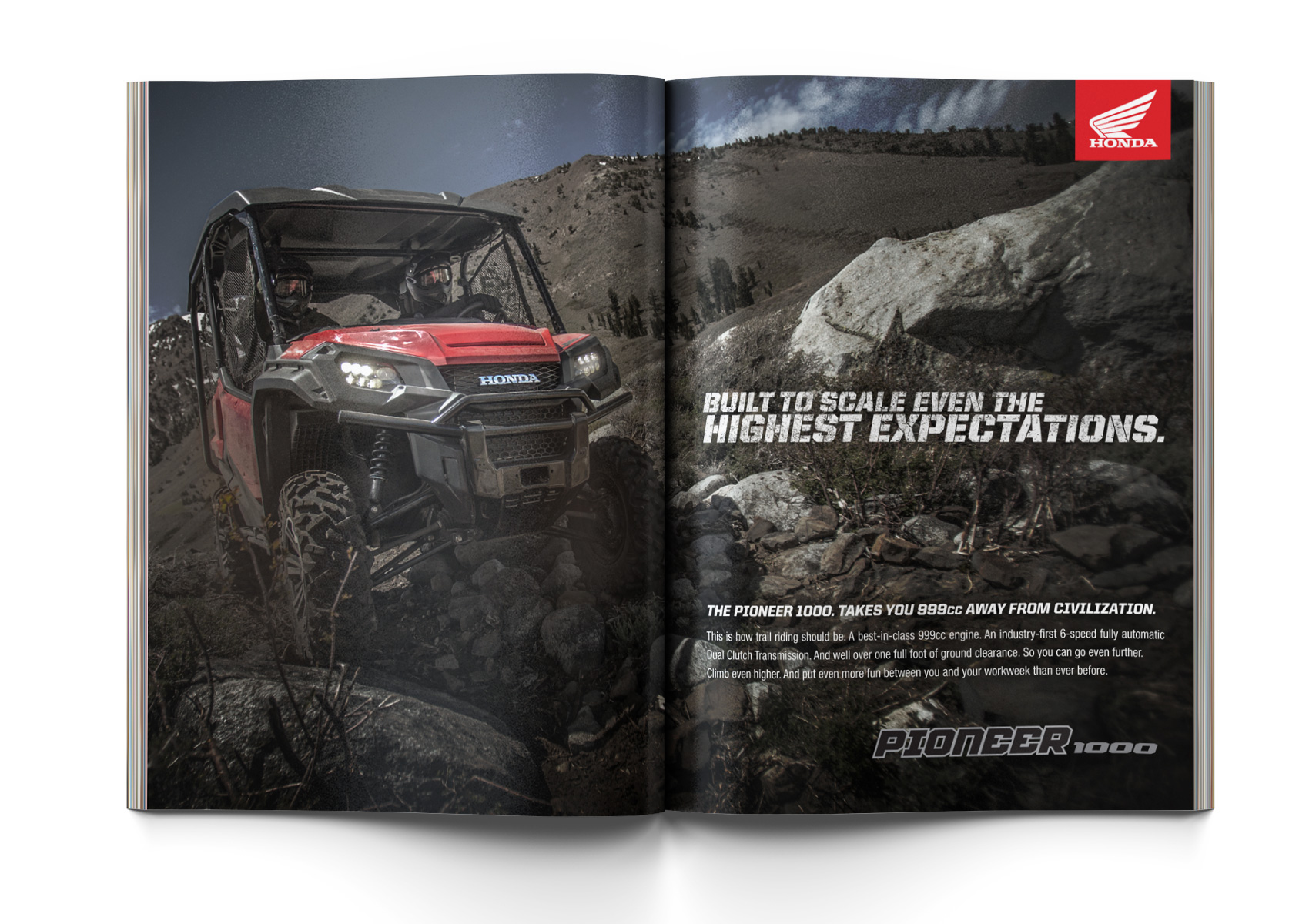
Print Advertising
Pioneer 500
Pioneer 1000
Reflection
"Sometimes the most important creative decision is making the case to do something that's never been done before — and then delivering on the promise."
The Pioneer project required as much internal persuasion as external creative execution. Convincing Honda to break from its established digital infrastructure, for the first time, and build a fully responsive, product-dedicated experience was a significant organizational win that preceded any design decision. The lineup drove 4.5M pageviews in just 10 months, with the Pioneer 1000 climbing into the top 4 of its category, validating the strategy. Pioneer proved the old platform wasn't the only way to do things, and gave Honda the confidence to eventually rebuild powersports.honda.com around that same experience-first approach.
A vision worth believing in needed a brand to match it.
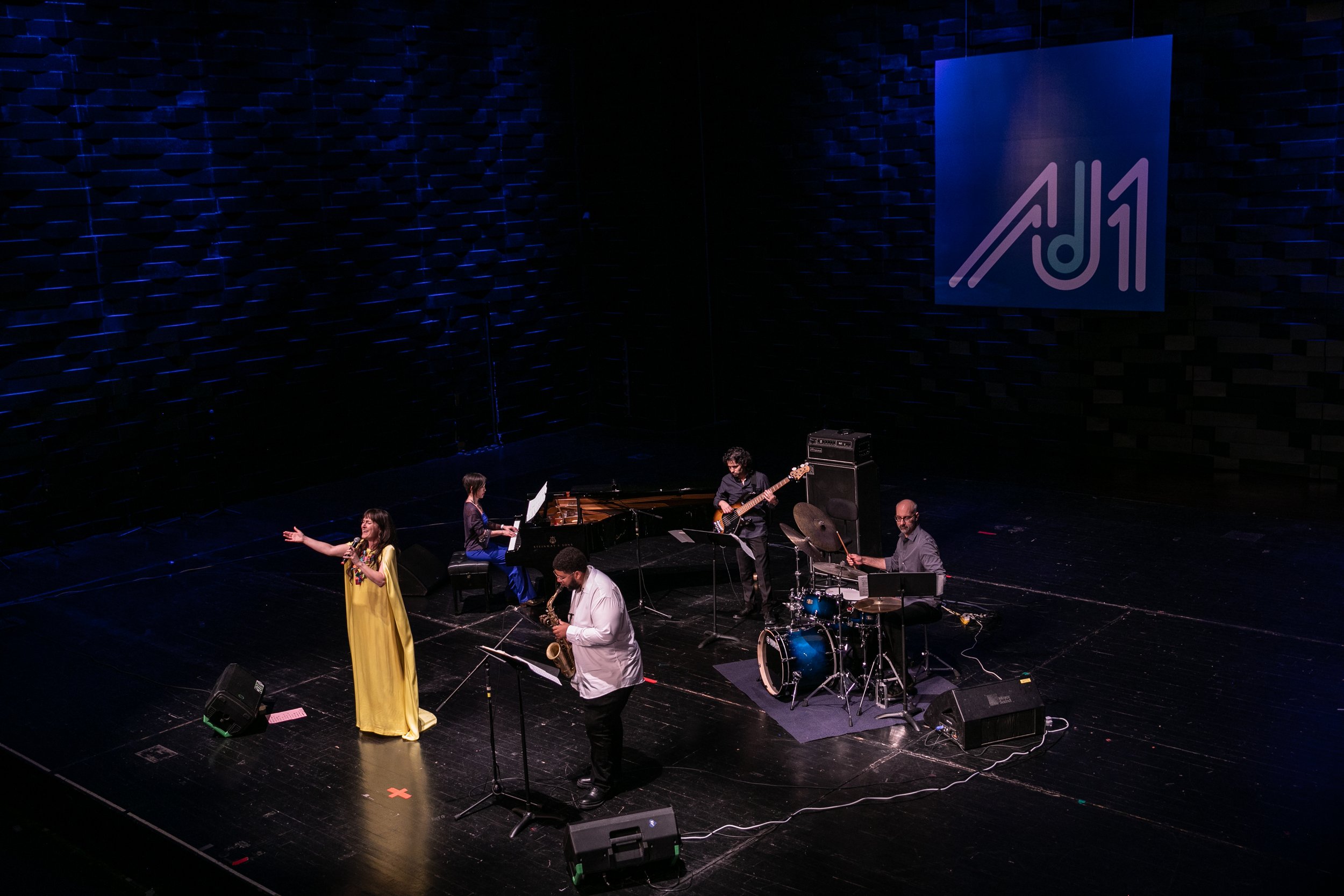
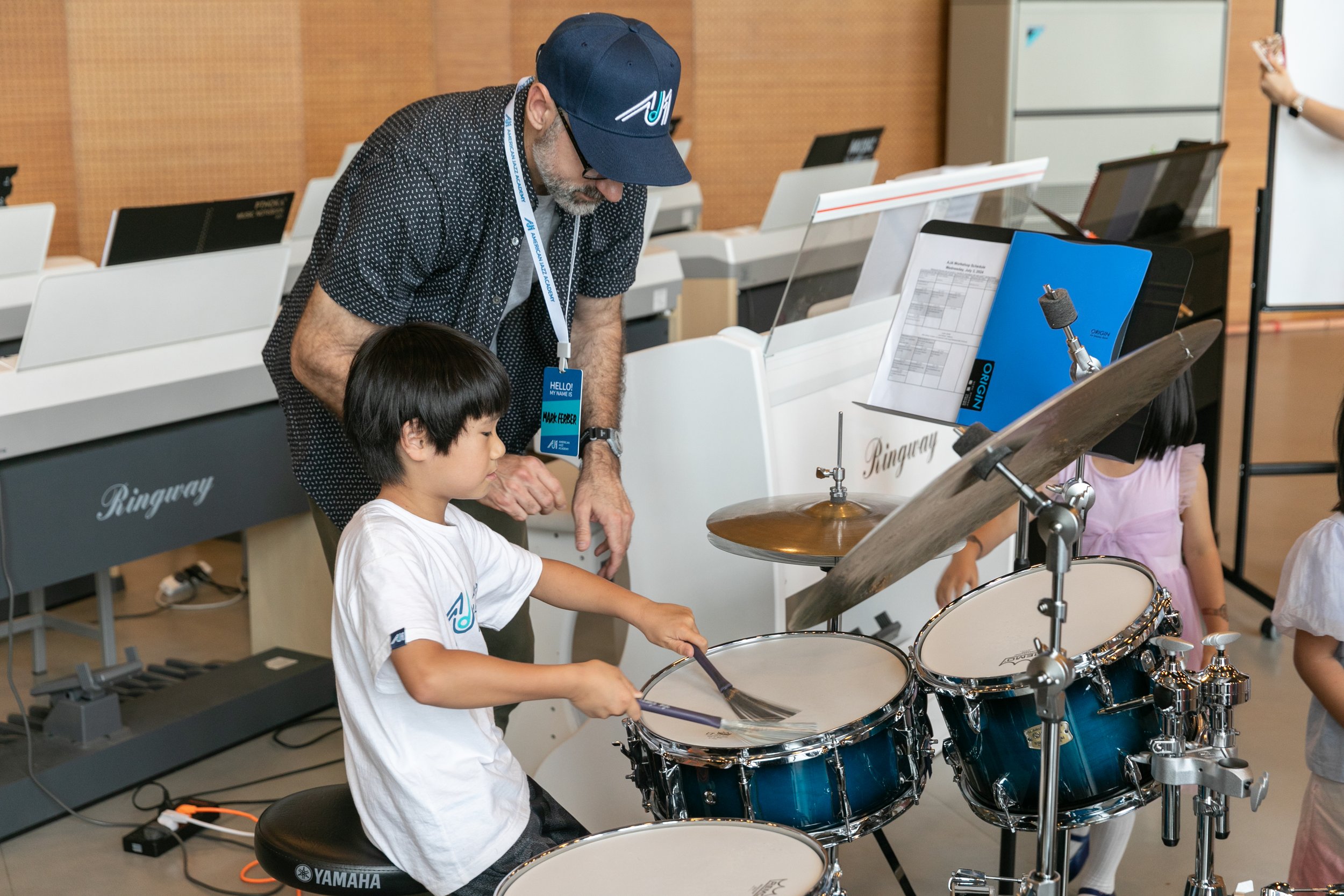
American Jazz Academy arrived as an idea with real ambition: a nonprofit dedicated to jazz education and performance, with plans to bring world-class experiences to students and audiences from Los Angeles to China. What it didn't have was a logo, a brand, a website, or any of the visual credibility needed to be taken seriously.
Some briefs you take for the work. This one I took for the mission. AJA was a chance to put 25 years of creative experience in service of something that genuinely matters. I came in pro bono, because the work felt necessary.
This is not a case study with a tidy ending. AJA is still building, still evolving, still writing the next chapter. My role in it continues.
Build credibility for an organization that doesn't exist yet.
AJA had the vision, the people, and the mission. What it didn't have was anything to show for it. No visual identity. No web presence. No materials a potential partner, investor, or student could hold in their hands or look up online. Before AJA could inspire anyone, it had to look like it belonged in the room.
The Approach
Become their in-house agency. Build everything from scratch.
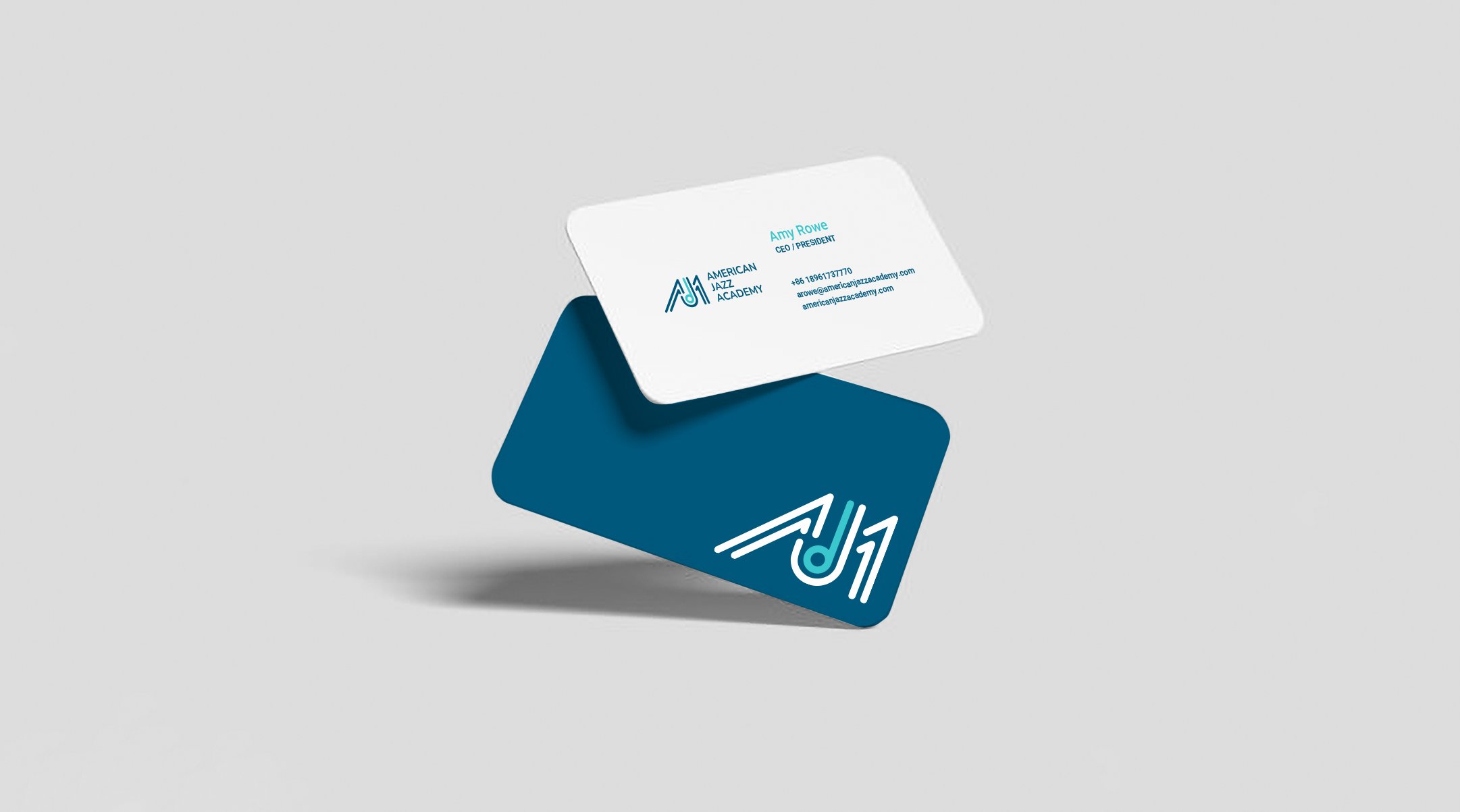
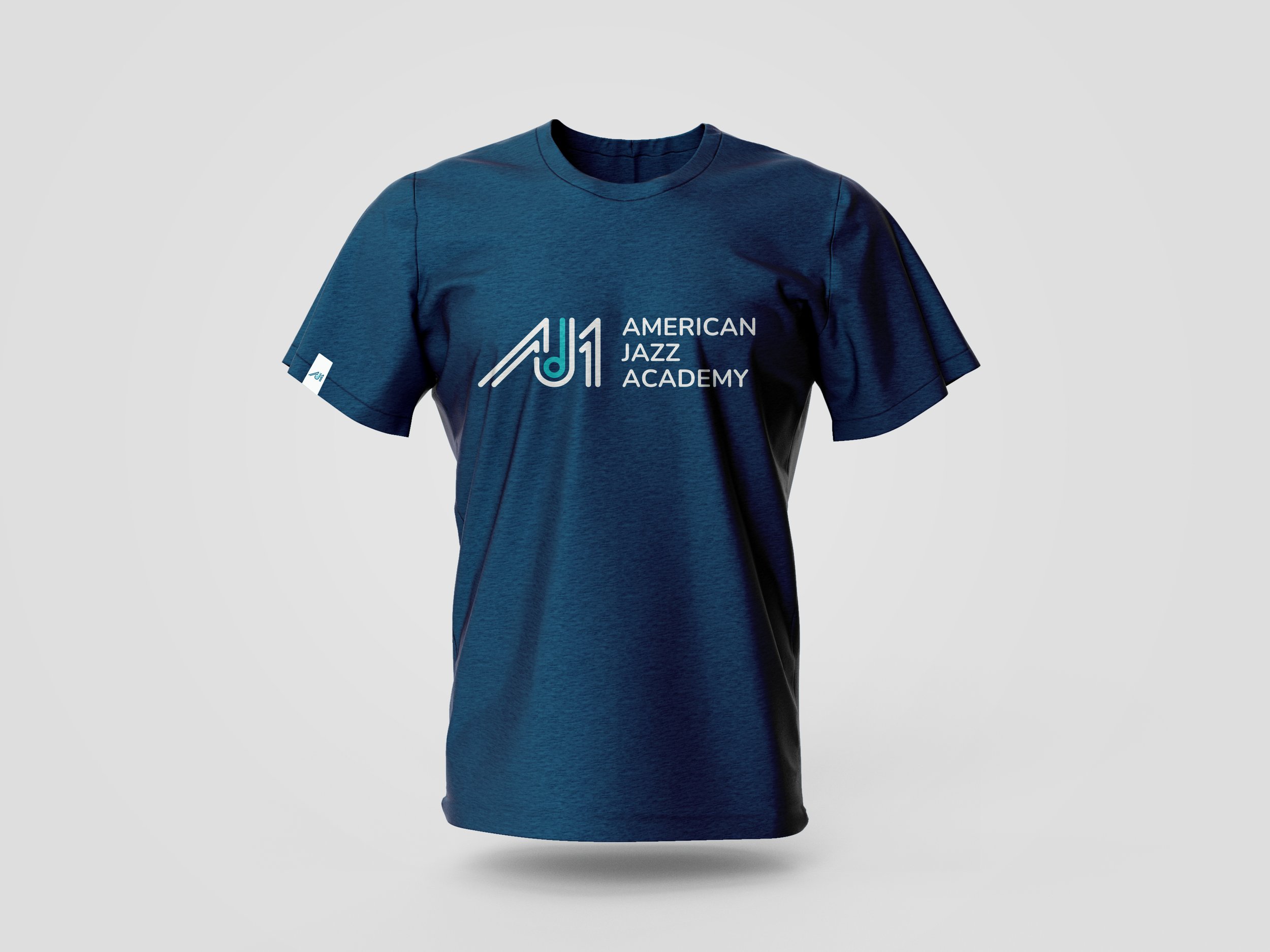
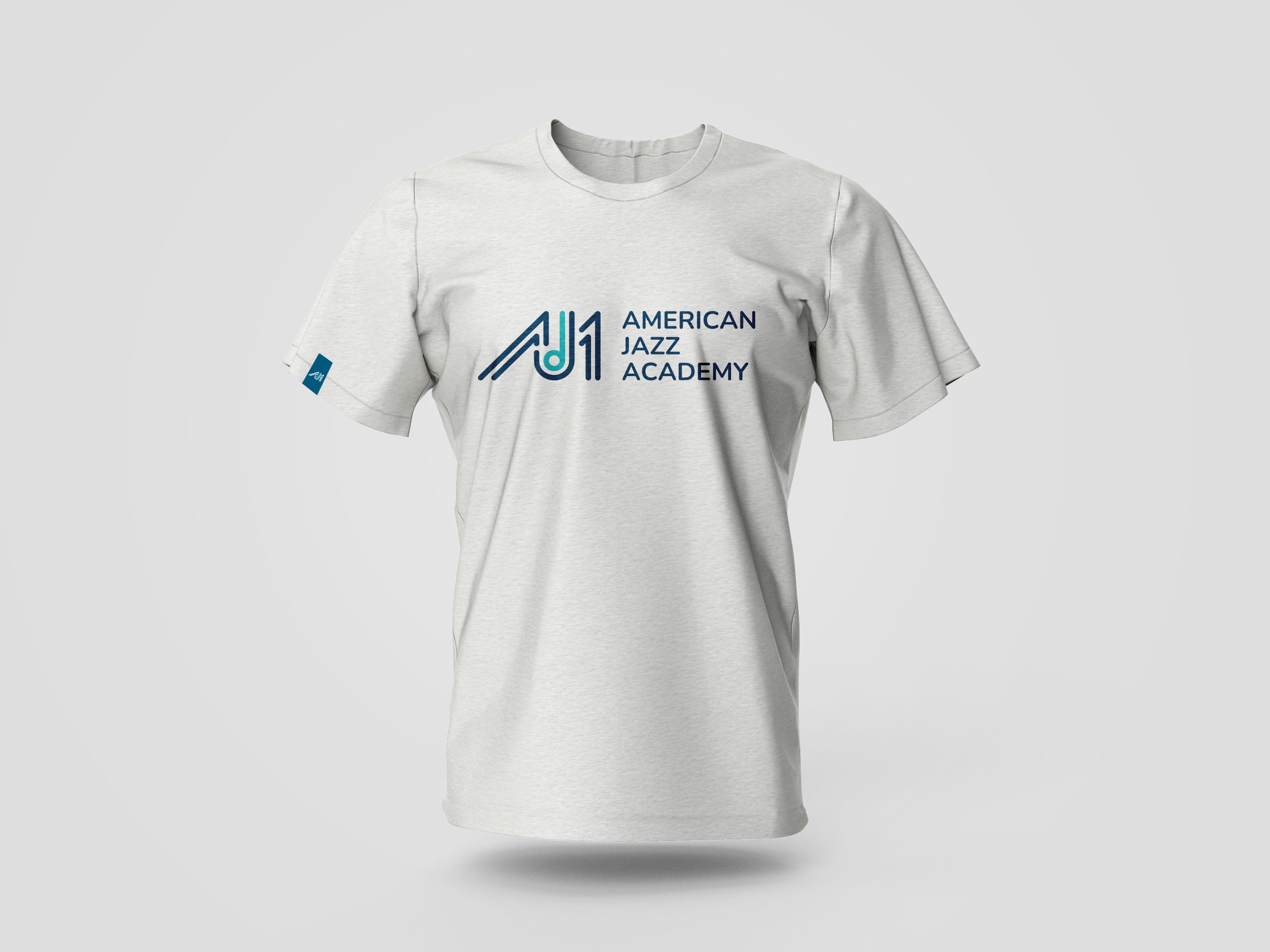
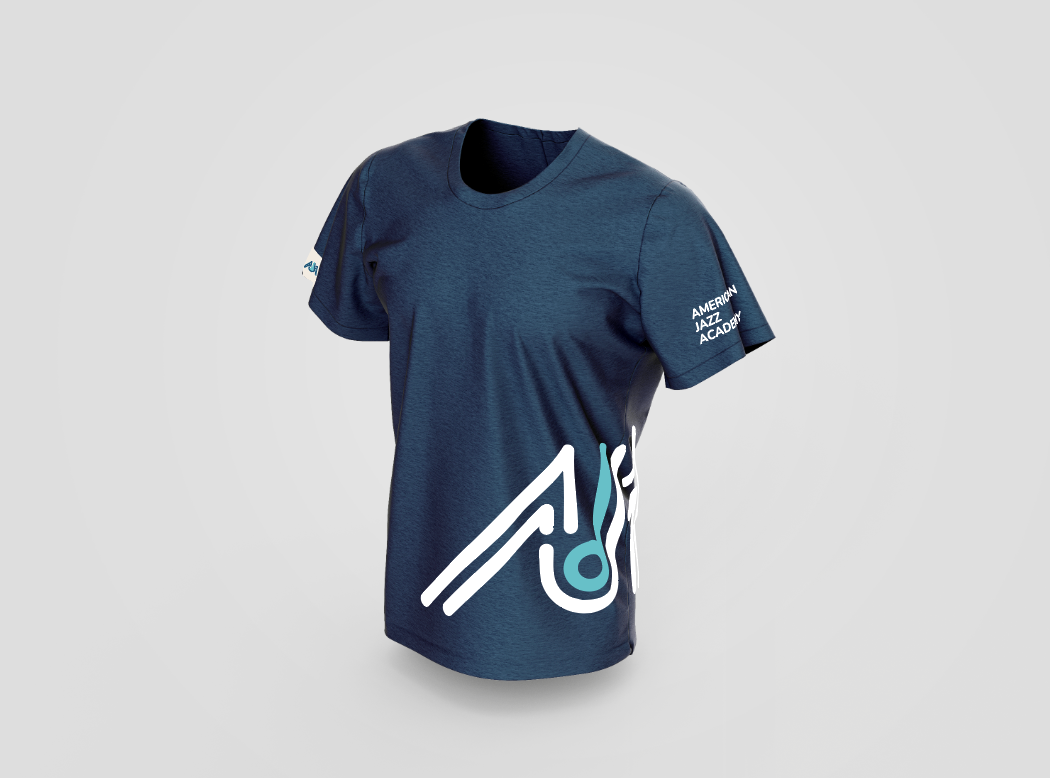
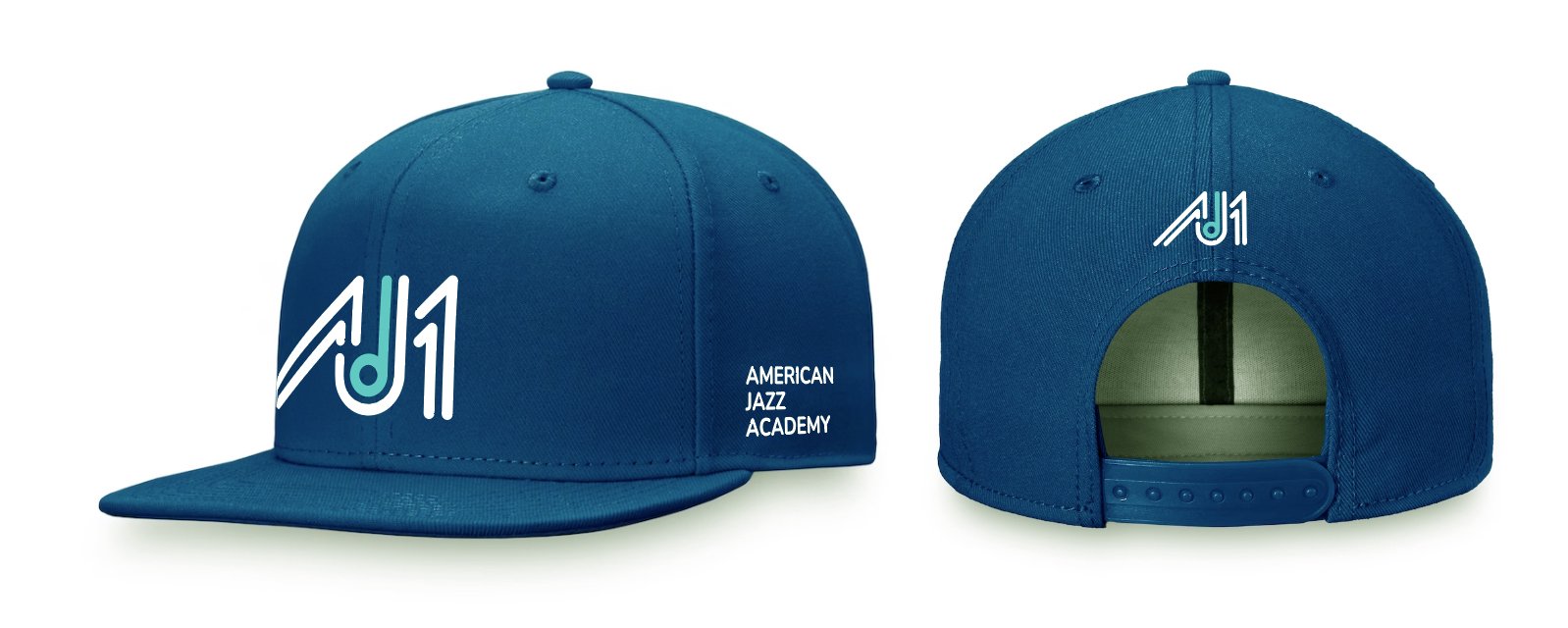
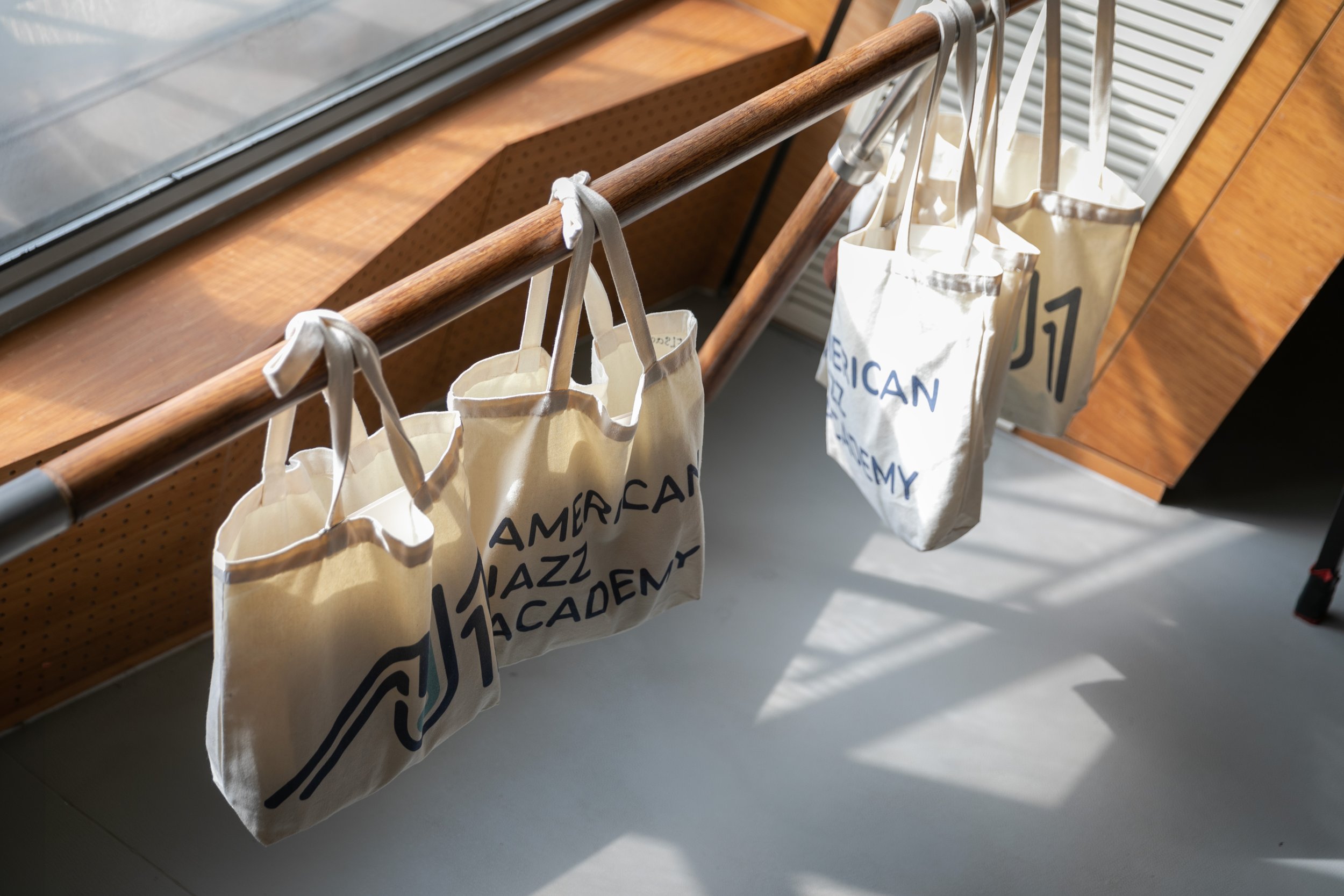
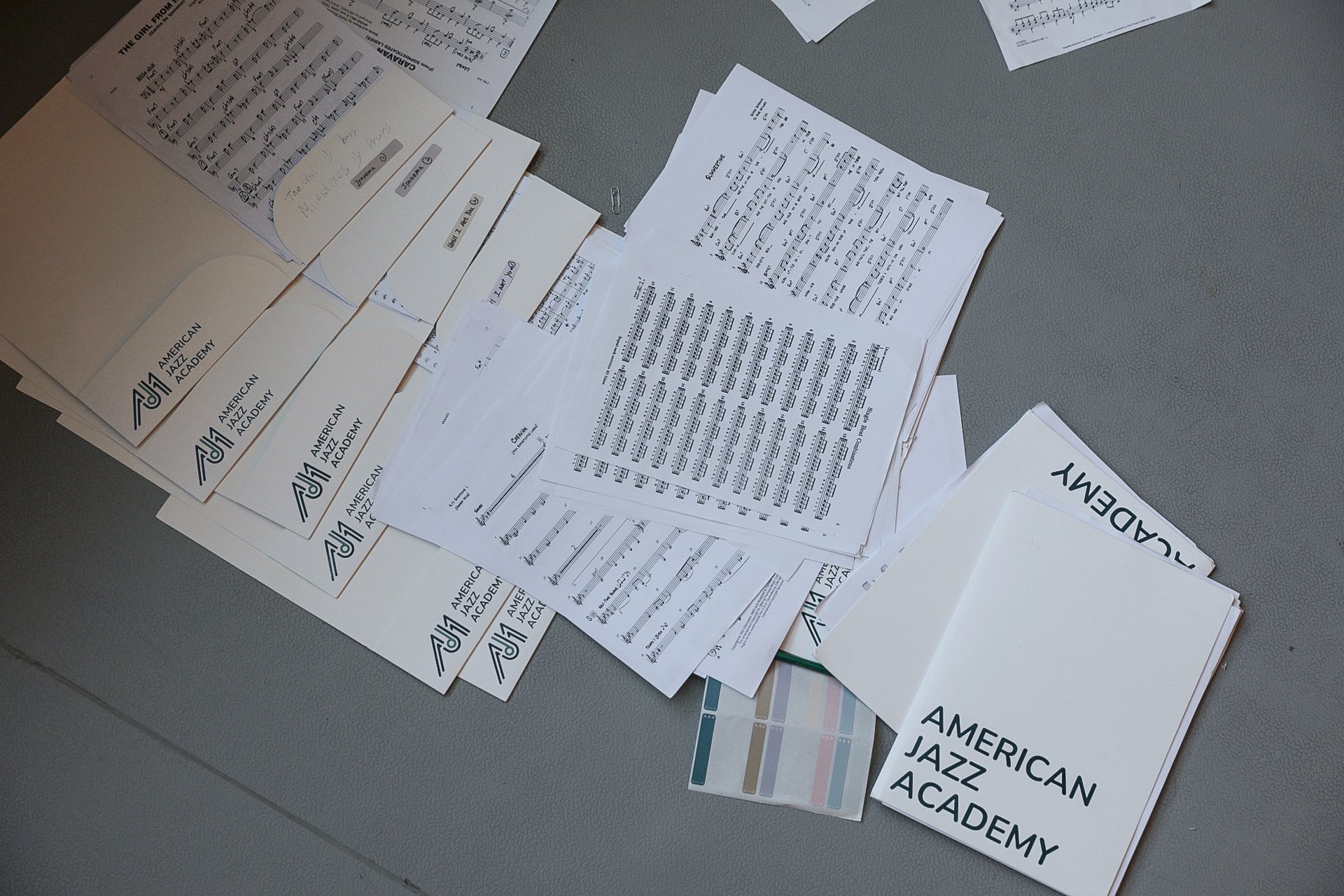
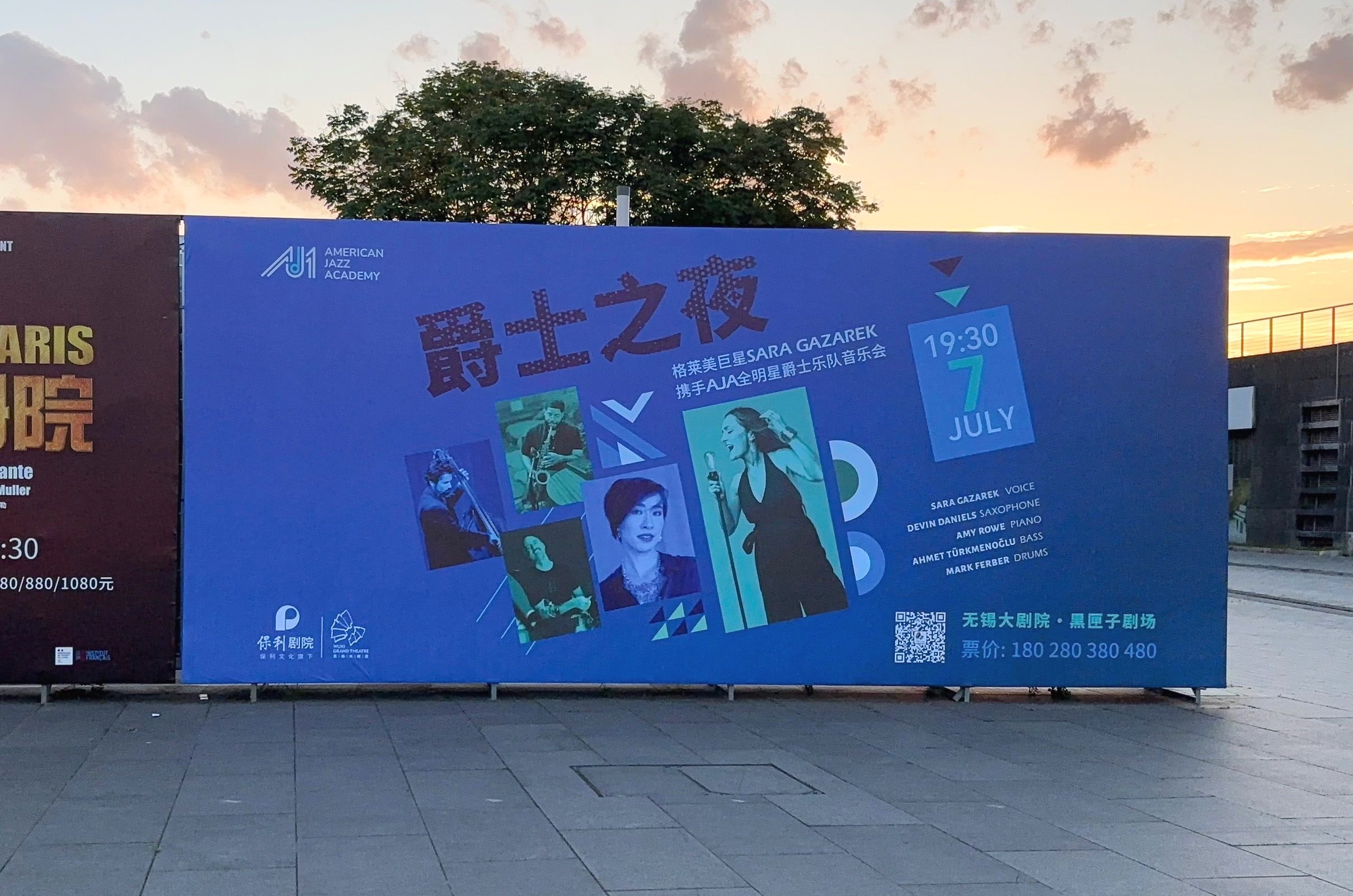
Rather than a single deliverable, the work became a full creative partnership. Logo, brand system, website, event marketing, merchandise, certificates, lanyards. Every surface the brand would touch. Each piece designed with the same intention: to make a young organization look and feel like it had been doing this for years.
The First Arrangement
A mark where music lives at the center. Literally.
The logomark is an abstraction of AJA. The shape needed to be abstract by design, a requirement for operating in China, where trademarks must be distinctive rather than literal.
That abstraction proved more defensible than anyone expected. Nike opposed the trademark, claiming it conflicted with Jordan Brand IP. The opposition failed. For a brand not yet two years old, surviving a challenge from one of the world's most aggressive trademark defenders was validation no brief could have written in advance.
Brand Applications
Promo Film
Still Playing
"The pursuit of great never stops. Ask any jazz musician."
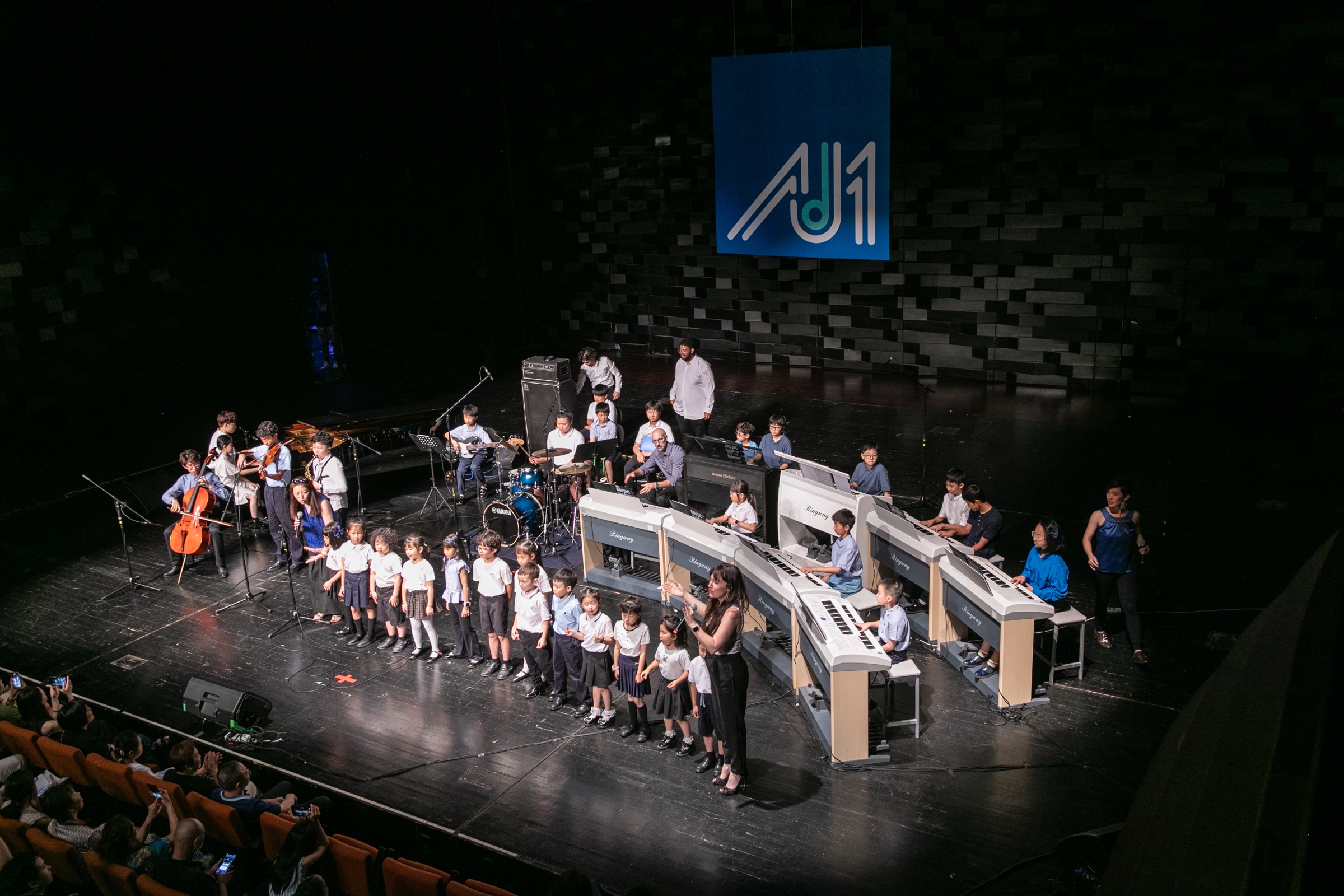
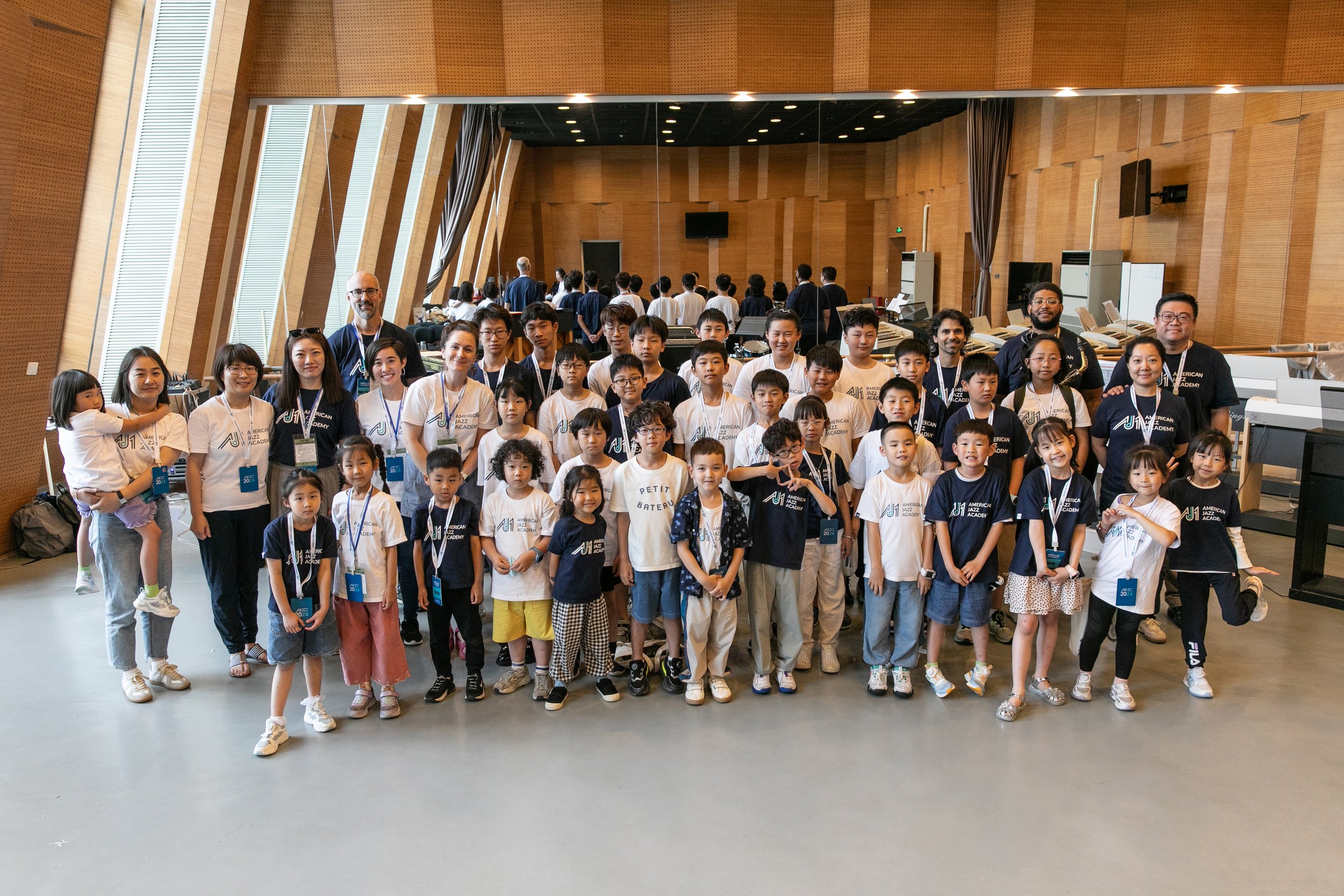
Since 2023, AJA has run multiple Summer Jazz Workshops, bringing students into immersive education experiences led by world-class faculty. Last year marked a significant milestone: a partnership with a major jazz organization in China to co-host Jam! Jam! Music Week, a multi-day summer event that put AJA on an international stage. The partnerships continue to grow. The programs continue to expand. A full website redesign is already underway. Some engagements are projects. This one is a commitment, to a mission worth believing in, and to the idea that great creative work can help something meaningful find its footing in the world.
On a crowded shelf, become the thing every recipe needs.
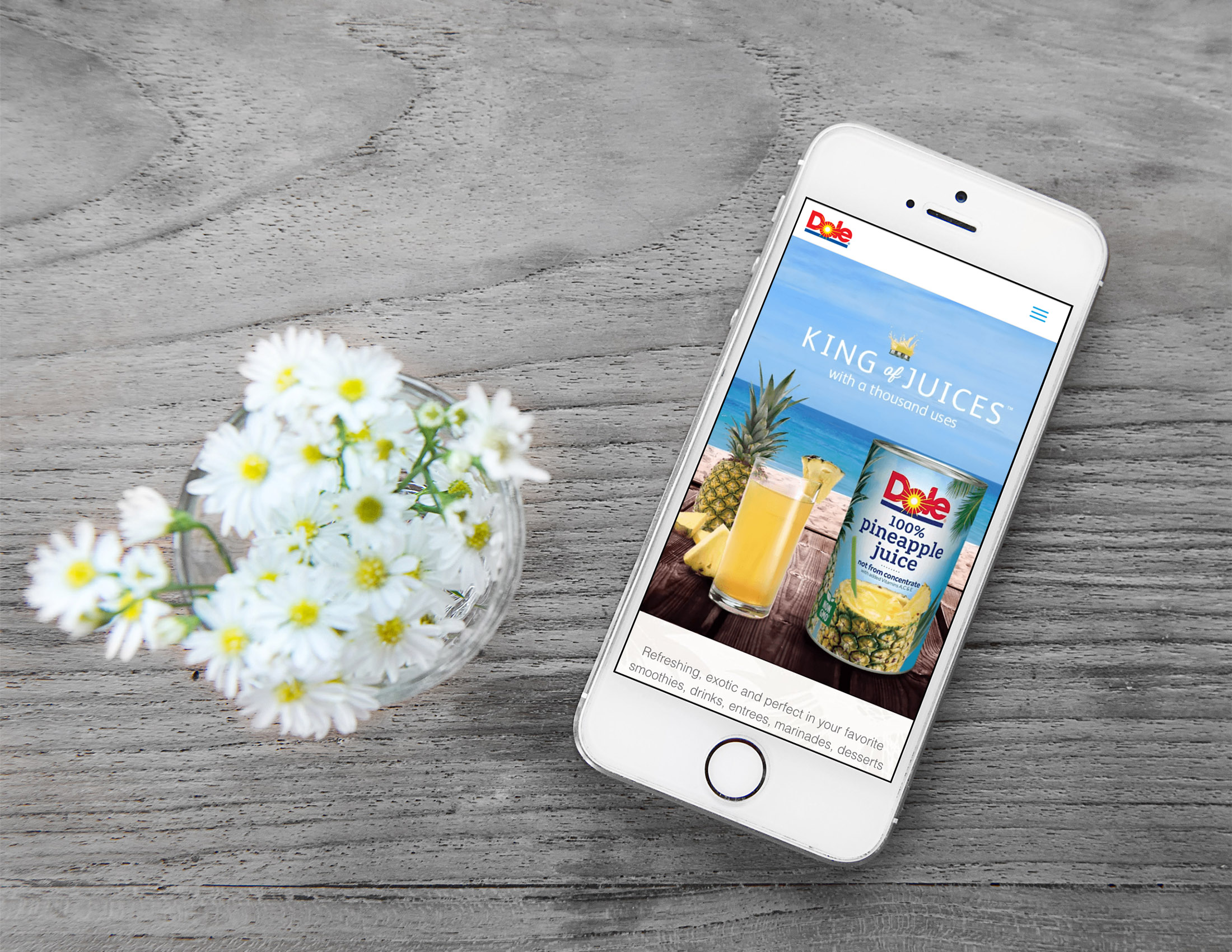
The canned pineapple-juice shelf was getting cluttered, and Dole had to stand out. The insight was simple: almost everyone loves a good cocktail, mocktail, or smoothie, and Dole 100% Pineapple Juice is the perfect mixer. So rather than sell a can, we sold a thousand reasons to reach for it.
On a modest budget, the answer was one connected engine. Shareable recipe content was seeded where people already pass food around, all of it flowing back to a single responsive home built to turn interest into action, and ultimately, double-digit sales growth.
My RoleCreative Direction, Art Direction, UI/UX, Web Design
255M
Consumers Reached
66M
Video Views
+500%
New Facebook Likes
+40%
Conversion vs. Benchmark
The Challenge
Stand out in a crowded category, on a budget that couldn't buy attention.
With limited media to spend, Dole couldn't out-shout the competition. The work had to earn its reach by being so useful and so shareable that the audience spread it for us.
The Approach
One recipe engine, every channel working in concert.
Recipes were both the message and the medium. Tasty videos, Facebook, and Instagram each did a job at the top of the funnel, generating reach and appetite, while a redesigned responsive site caught that traffic and turned browsers into buyers. Every piece handed off to the next.
The Engine · Social
"Put the recipes where people already share food."
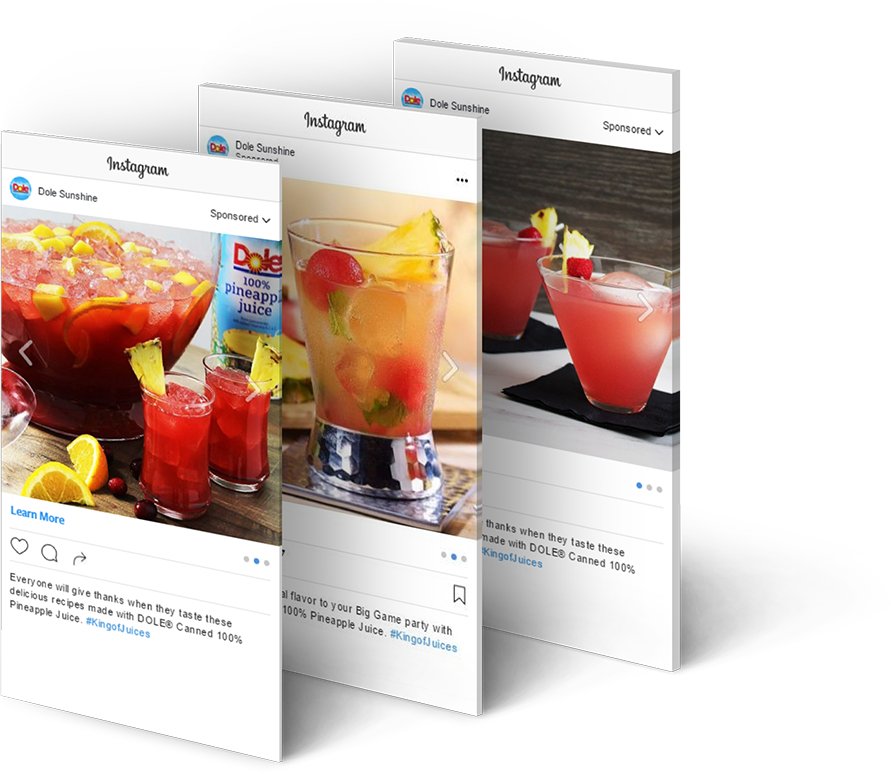
The top of the funnel ran across three fronts pulling in the same direction. A Tasty partnership did the heavy lifting on reach, custom Facebook posts kept Dole in the feed, and Instagram carousels tied recipes to the moments people were already cooking for.
Tasty · Friday Happy Hour: 255M reached, 66M video views, and a 500% lift in new Facebook likes.
Instagram: Holiday-timed carousels featured timely, enticing recipes. Every post drove to one destination.
The Destination · Website
"Every post led somewhere built to convert."
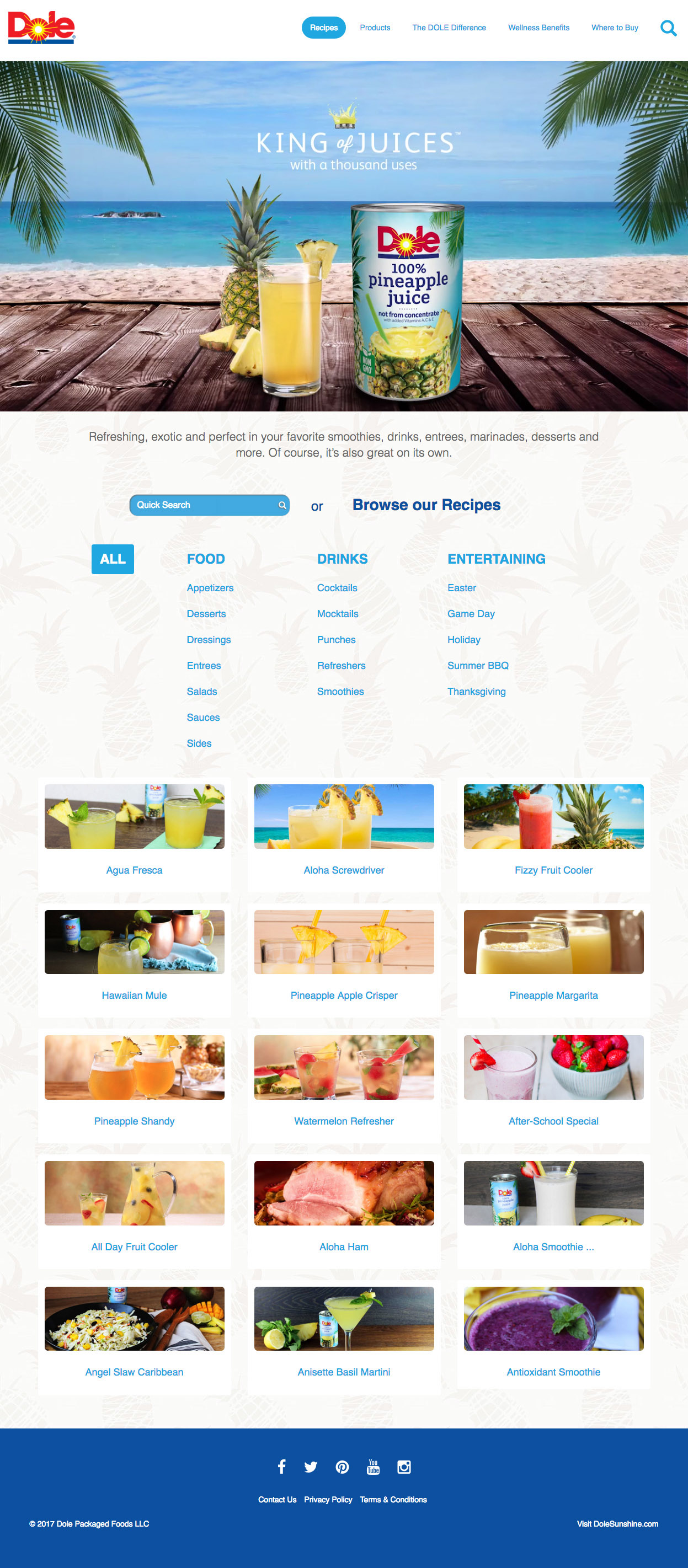
All that traffic flowed to a fully redesigned, responsive Dole site, a first for the brand, where the full range of pineapple-juice recipes lived. Built for phones in the kitchen and the supermarket, with clean layouts and rich recipe photography, it turned curiosity into action: click-through ran 76% above plan and conversion 40% above benchmark. A new CMS kept seasonal recipes flowing and maintenance costs down.
ResponsiveFirst for DoleRecipe MicrositeCMS
dole.com/king-of-juices
Reflection
"Give people something genuinely useful and they'll do your marketing for you."
King of Juices worked because every channel pulled in the same direction. The content created demand, the site captured it, and the recipes gave people a reason to come back. On a modest budget, the program lifted engagement and traffic and drove double-digit sales growth, proof that a clear idea, well-connected across channels, beats raw spend.
The web's biggest motorcycle magazine, now in your hands.
Common Tread is the leading media platform in motorcycling, drawing a million organic pageviews a month with stories that entertain, connect, and inspire riders of every kind. It had already built a devoted community online. The next move was to make that relationship physical.
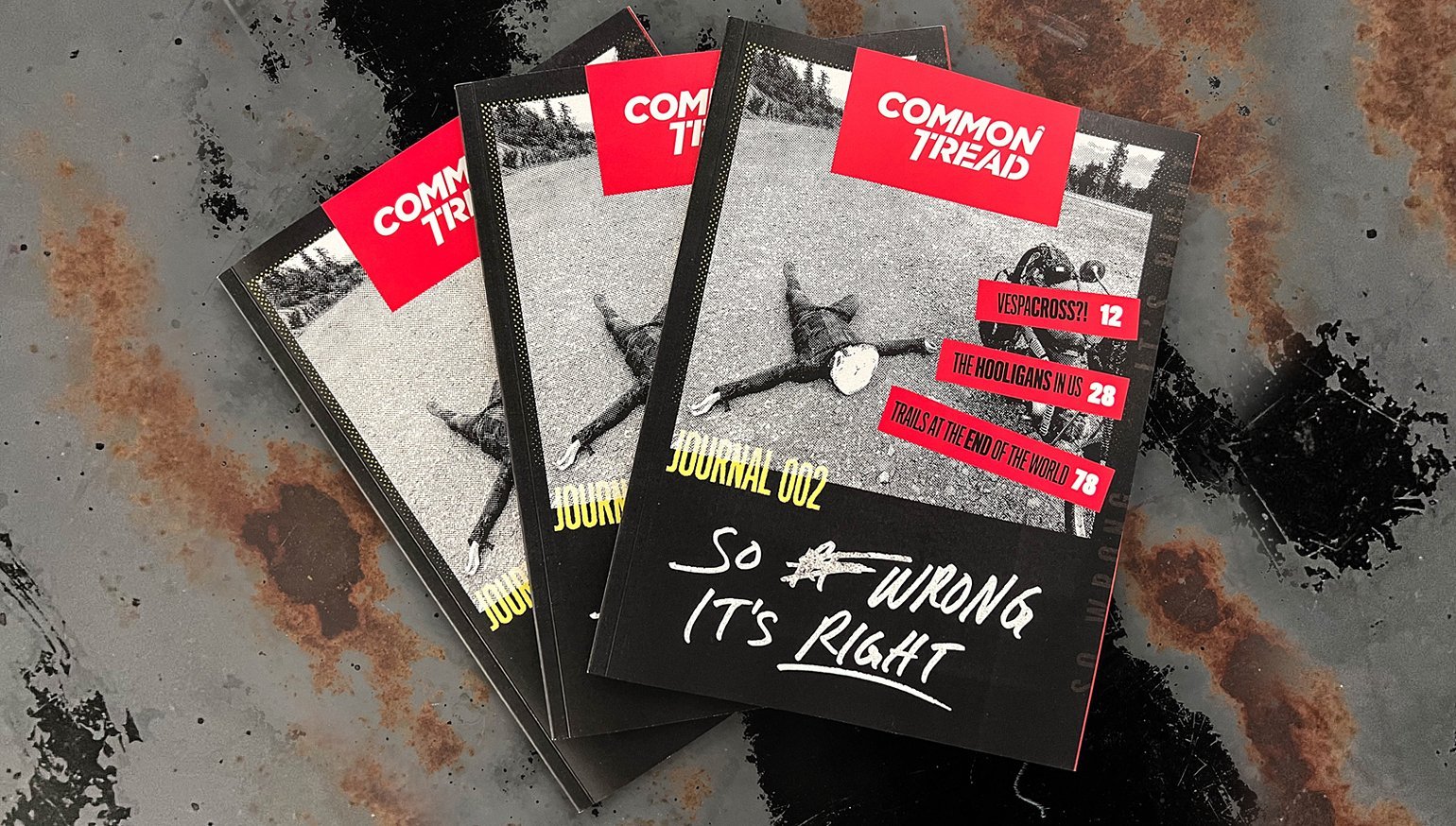
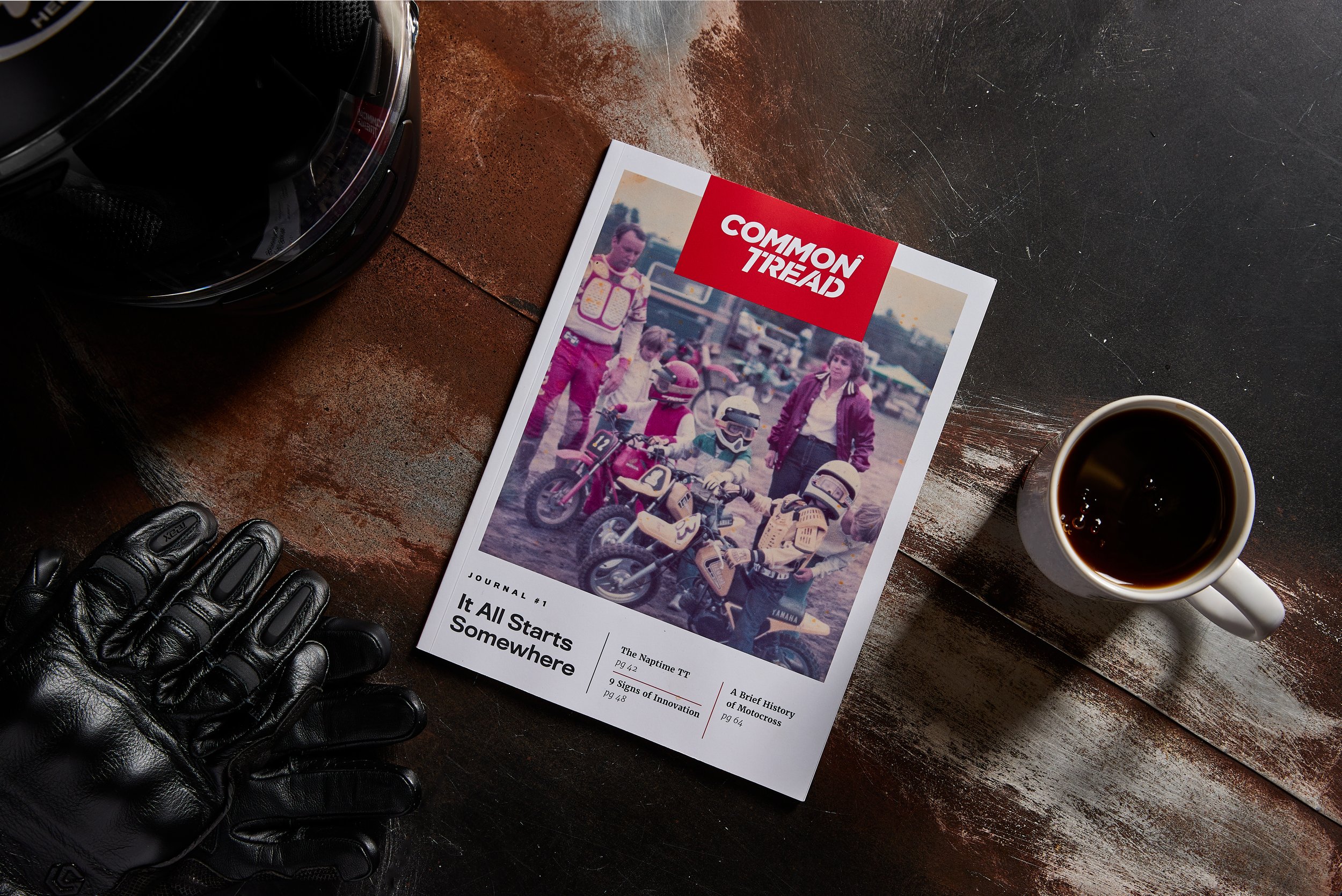
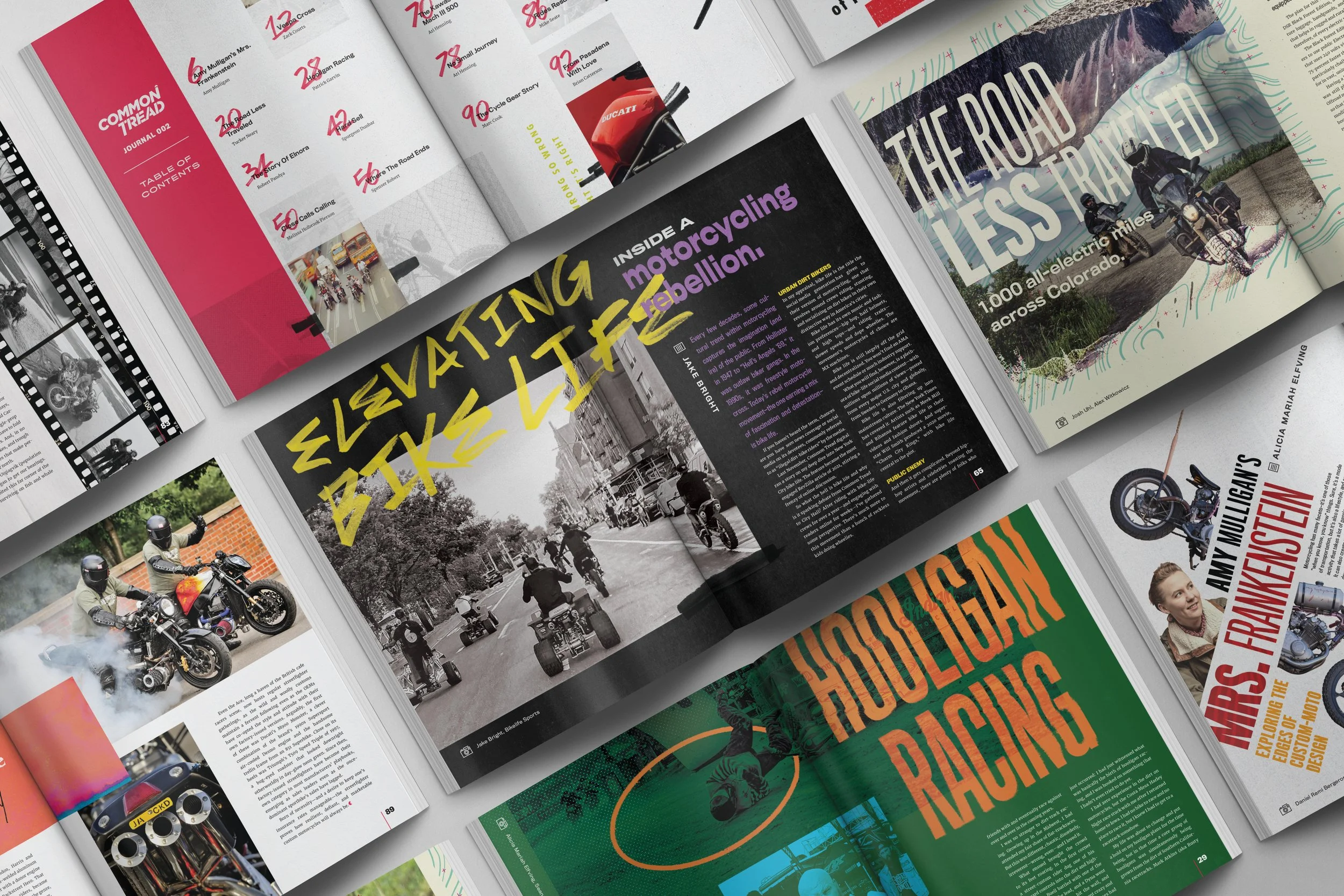
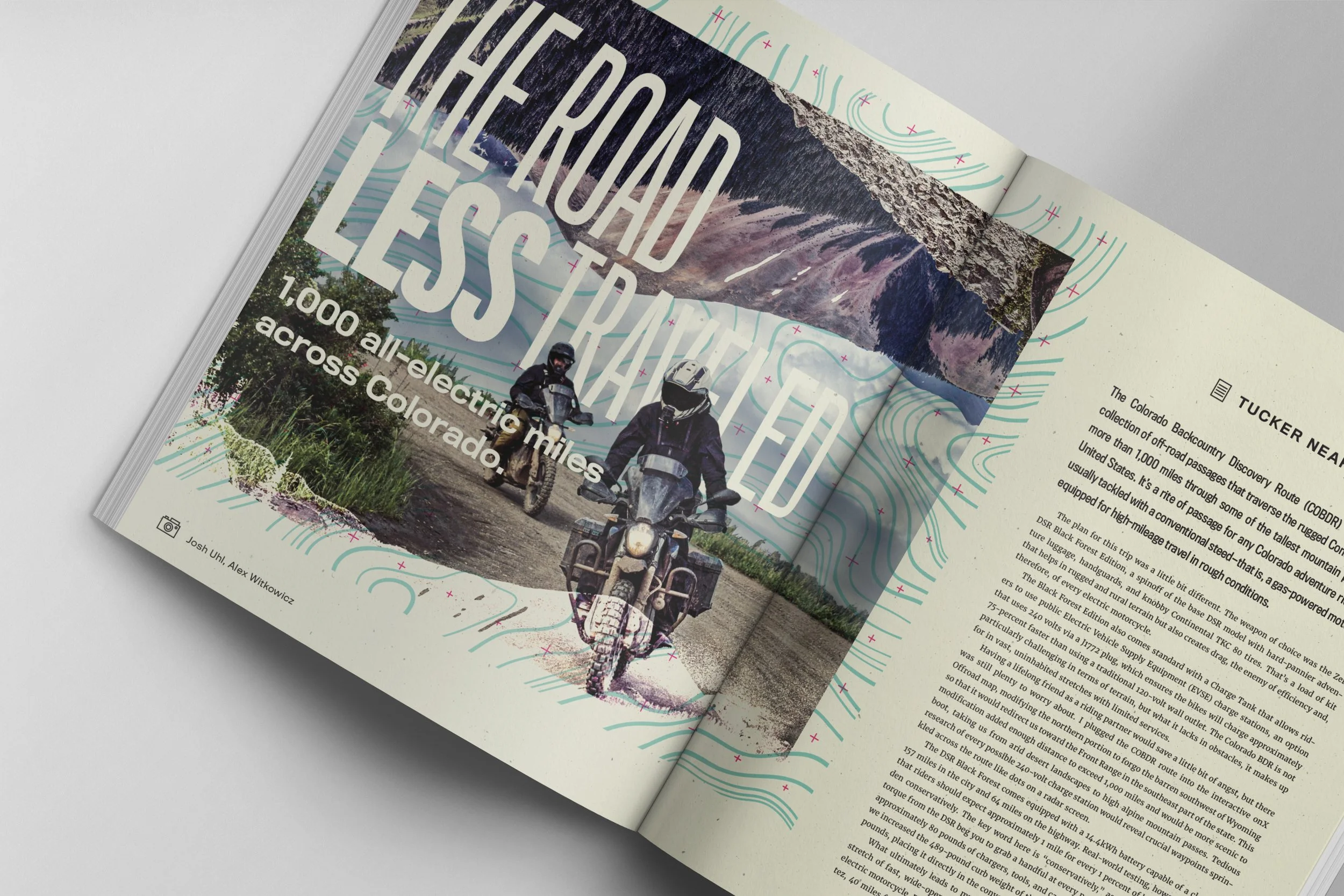
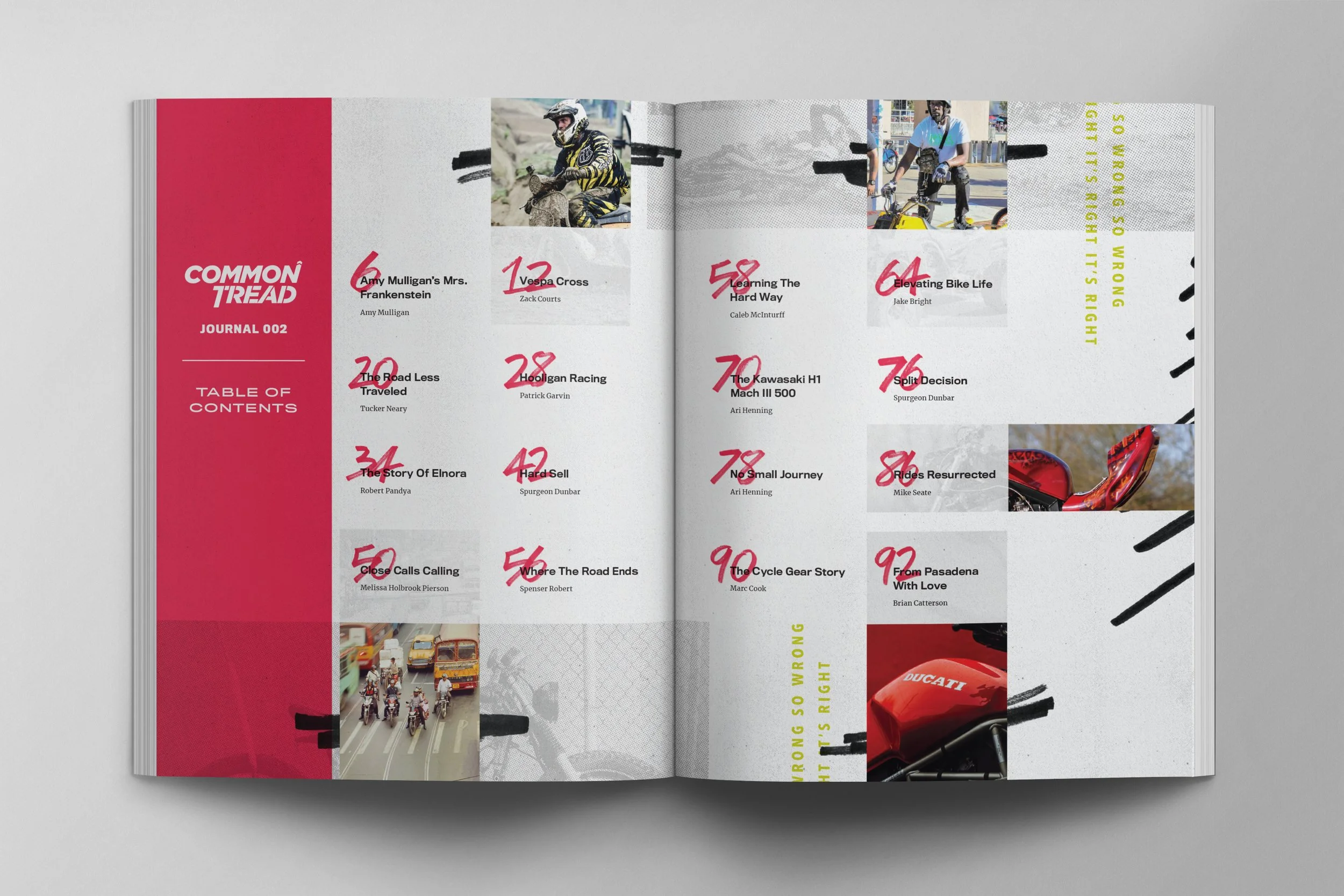
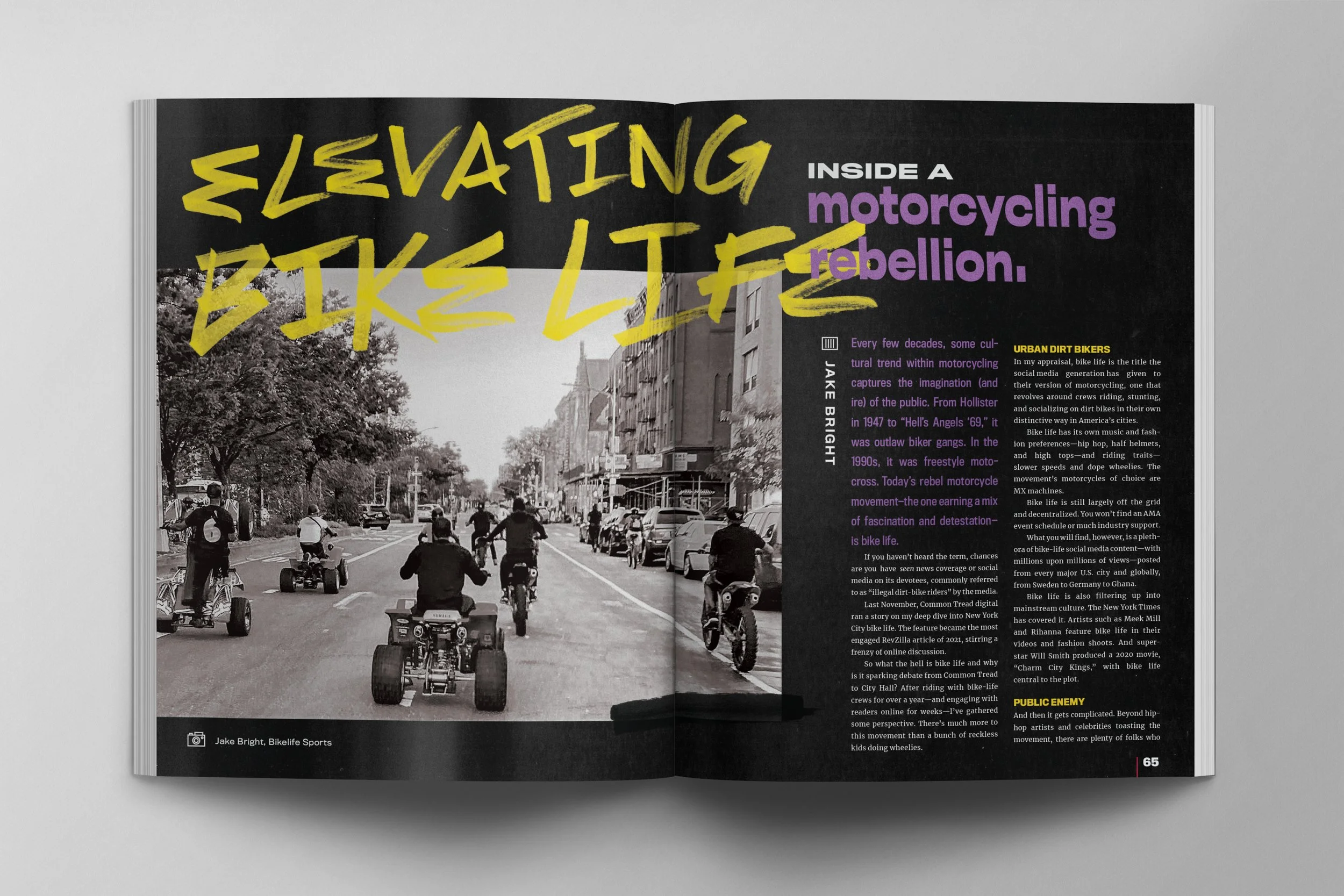
We extended Common Tread into print with the Journal, a premium publication that gave readers something to hold, and refreshed the brand's identity so it carried with the same confidence across the screen and the page.
My RoleCreative Direction, Branding, Editorial Design, Photography
The Challenge
Deepen a relationship with an audience already at scale.
Common Tread had reach and loyalty online. The opportunity wasn't more traffic, it was a deeper, more tangible connection with the riders who already loved it.
The Approach
Give them something to hold, under one confident identity.
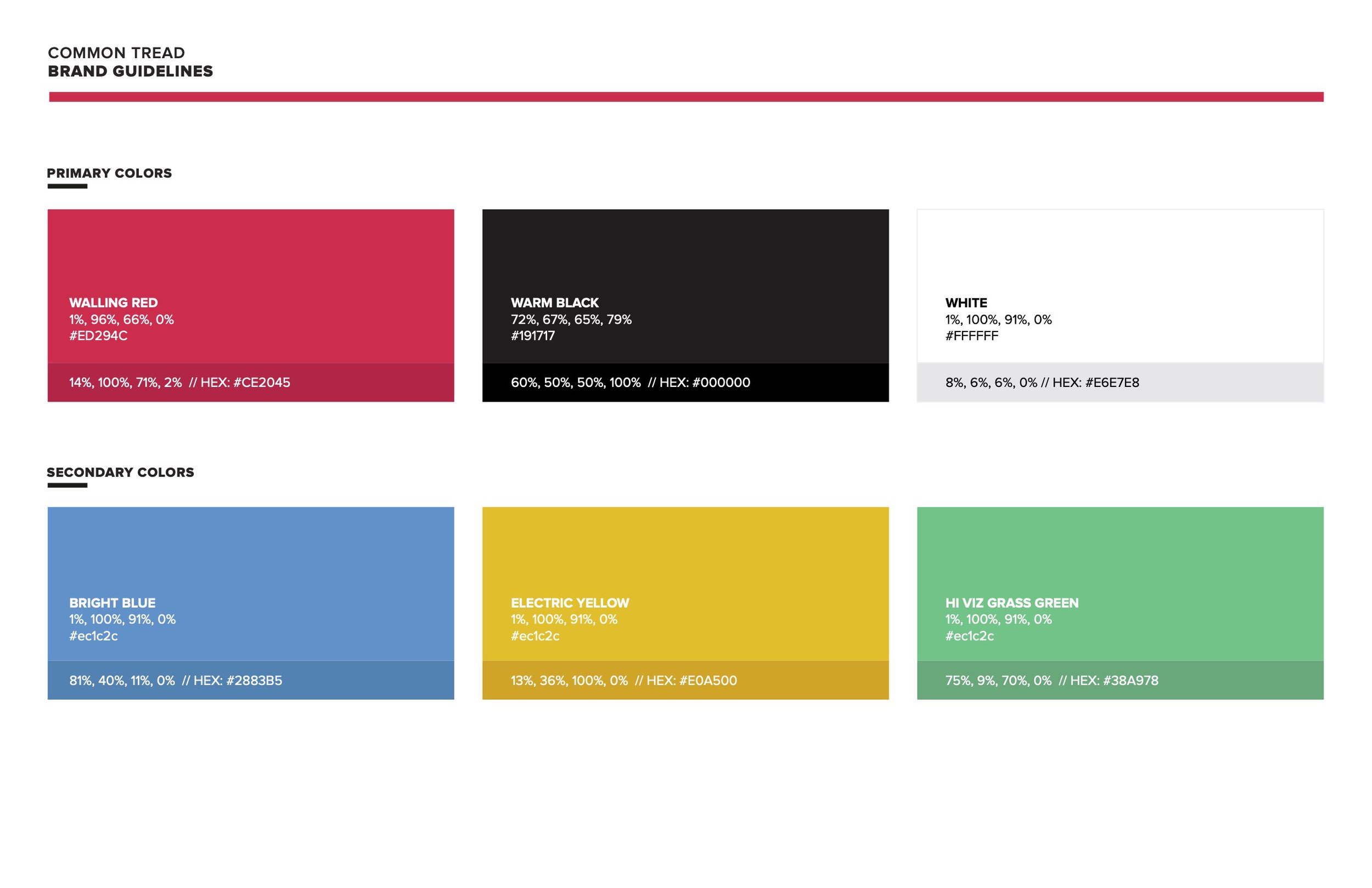
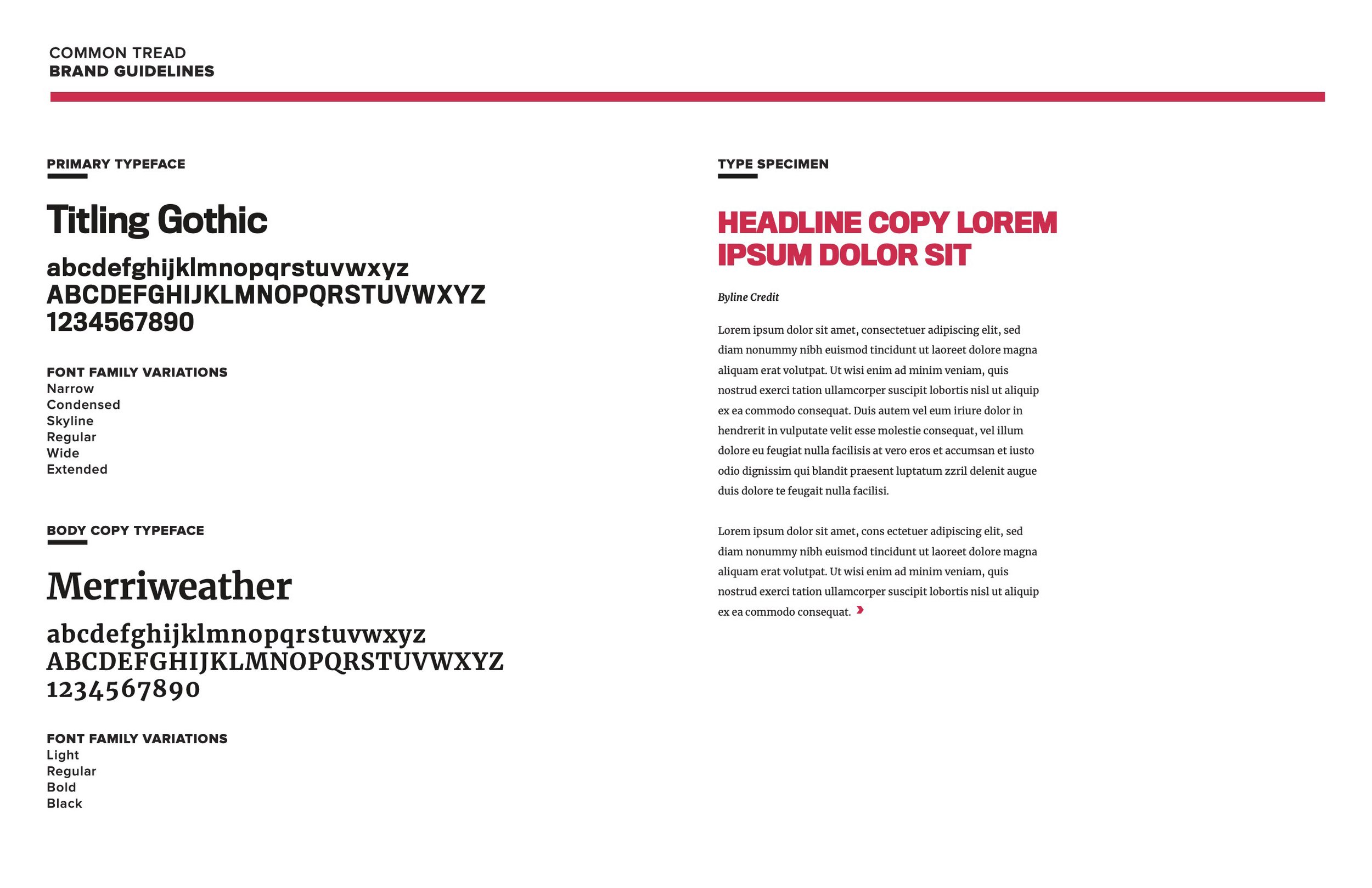
A printed Journal turned scrolling into sitting-down reading: immersive photography, long-form stories, and craft you can feel. A refreshed logo and visual system then tied the print and digital experiences together.
The Journal
A New Mark
"A logo built to lead."
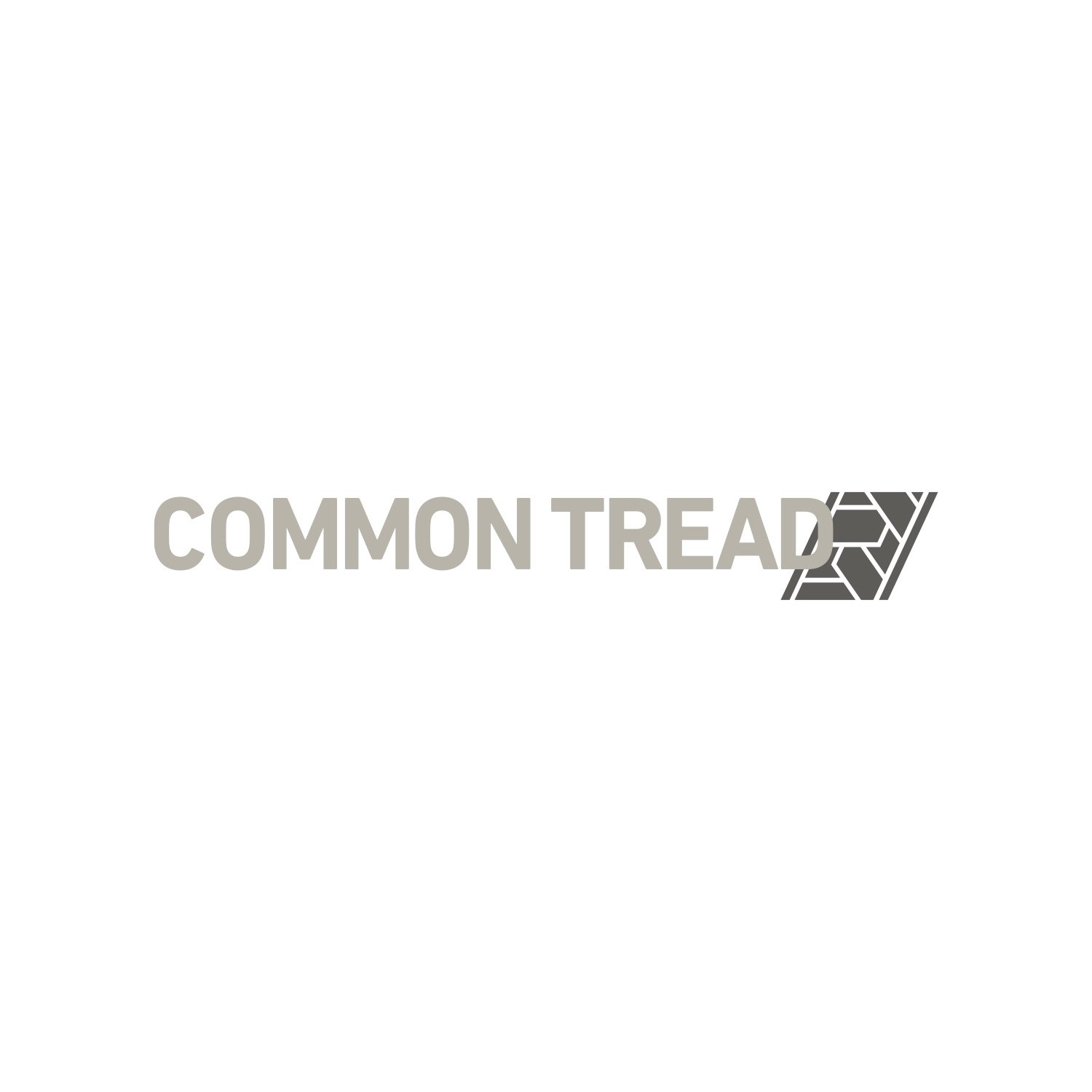
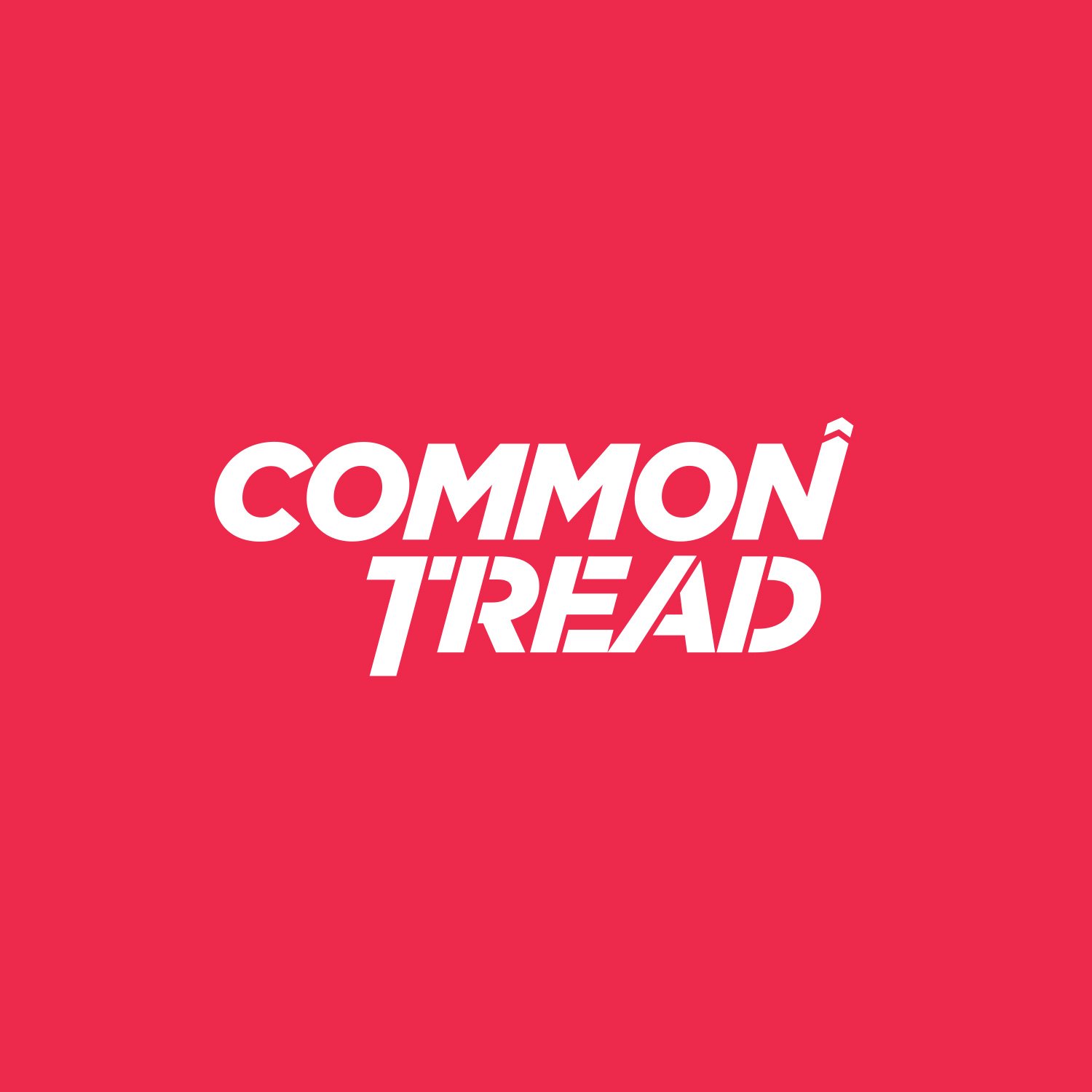
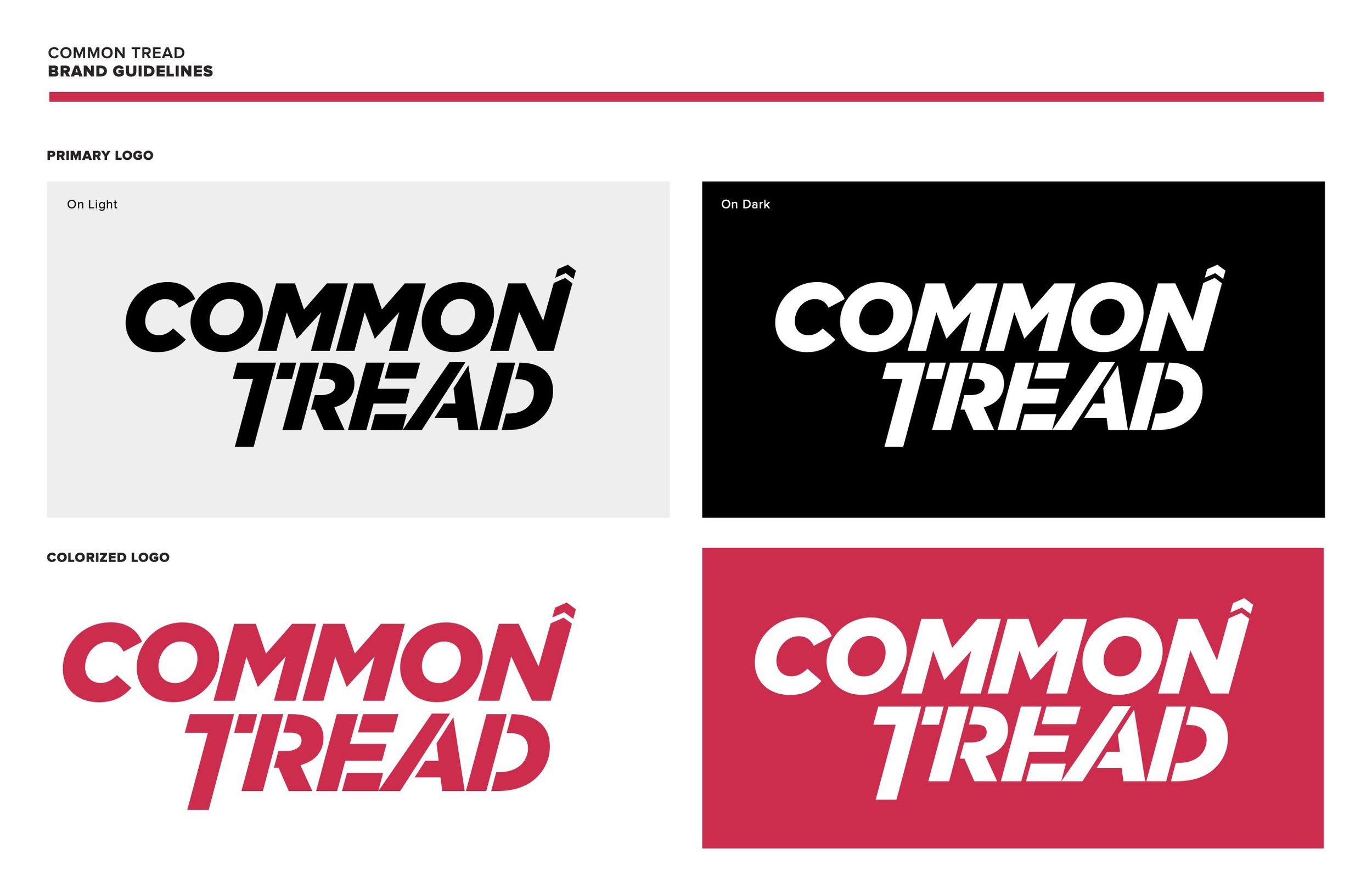
The refreshed Common Tread mark signals the brand's evolution. Streamlined and modern, it trades the old wordmark's softness for clarity and impact, flexing across every platform, from a magazine cover to a phone screen.
AfterBefore
Brand Guidelines
Reflection
"Even a digital-first brand feels something special in print."
Common Tread had already won the screen. The Journal proved the brand could own the page too, turning a million monthly readers into a community you could hold in your hands. A refreshed identity made sure it all felt like one Common Tread, wherever a rider met it.